

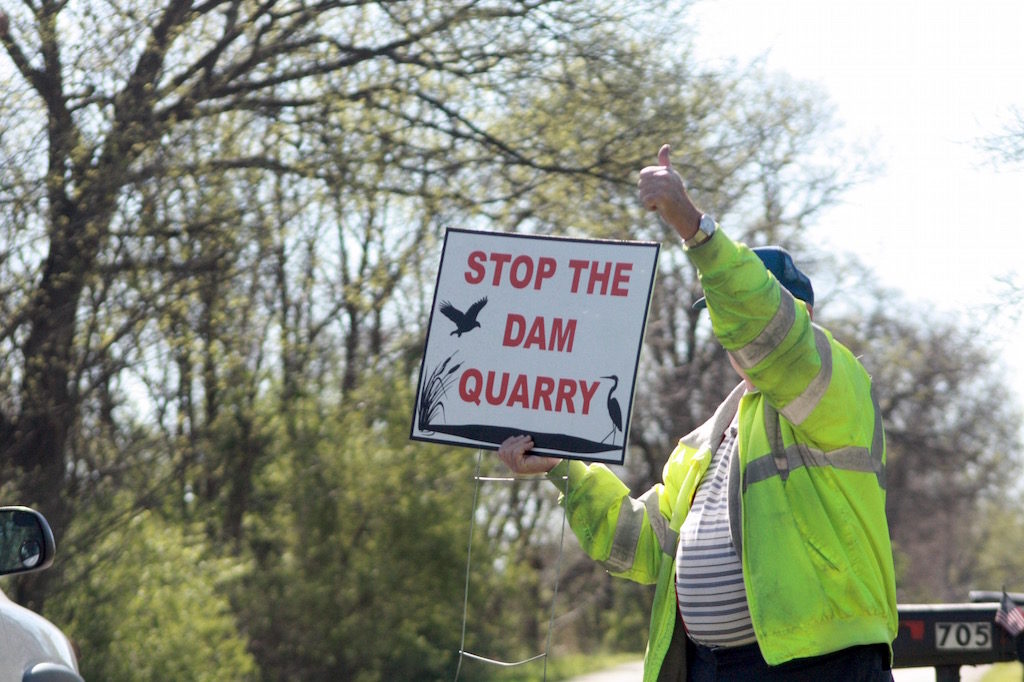
After a year of protests, a controversial rock quarry in Old Hickory has been approved for a state permit. The decision this week says that blasting operations won’t harm nearby wetlands or drinking water.
Concerns about this limestone quarry have been widespread. They touched on everything — from loud blasting, disturbances to wildlife and the structural integrity of the nearby Old Hickory Dam.
But in the end, state regulators had the most control over a water quality permit. Specifically, the National Pollutant Discharge Elimination System (NPDES) permit is issued to regulate the discharge of pollutants into rivers.
“We obviously empathize with the public, with a lot of their concerns — truck traffic … dust, noise, and things of that nature. However … we do not have purview or any kind of jurisdiction over those particular issues,” said Bryan Epperson, mining operations manager for the state Division of Water Services.
Regulators determined that rain water that falls into the quarry pit and gets dirty should be pumped out, treated, and allowed to flow into the Cumberland River. And the agency also promised to monitor that quarry water is disposed of properly.
Epperson said the vetting process took a year and actually included additional rounds of testing based on public questions.
(Read the full approval letter, and responses to citizen concerns in this PDF.)
Inspectors say the quarry company — called Industrial Land Developers — went above and beyond on testing.
Concerns ranging from polluted soil to mosquito breeding weren’t proven out. Several state and federal agencies — including related to emergency management — either declined to comment or did not find reason to intervene.
Nearly 100 opponents showed up in force to a public hearing in April. They also tried a lawsuit, which failed, and there was heavy pushback from city, state, and federal politicians.
Meanwhile, the company is still pursuing an air quality permit — related to dust in the air — from the Metro Health Department. A spokesman said the permit is under review and will require a 30-day public comment period, which should begin this summer.

 On Air - 90.3 WPLN-FM