
The Kurdish-led Syrian Democratic Forces (SDF) have reached a truce with Syria’s government following weeks of fierce fighting that left more than 150,000 Kurdish civilians displaced.
The deal, which was announced Friday morning, is meant to integrate Kurdish forces, territory and people into a unified Syrian state.
Syrian President Ahmed al-Sharaa issued a decree making Kurdish a national language, declaring Newroz a national holiday and granting formerly stateless Kurds Syrian citizenship. It is the first formal recognition of Kurdish rights in Syria since the country gained independence in 1946, but many Kurds remain skeptical, including members of Nashville’s community.
More: Middle Tennessee’s Syrian community celebrates after rebels oust Assad regime
Mehmet Ayaz lives in Nashville, but he grew up in a Kurdish village on the border between Turkey and Syria. He was born on the Turkish side, but his father’s family lived in Syria, near the city of Kobani.
“They are sisters. They’re one city divided by a fake border. During Eid and religious holidays, people go to this border and they throw gifts across the fences,” he said.
 Jake Simkin AP Photo
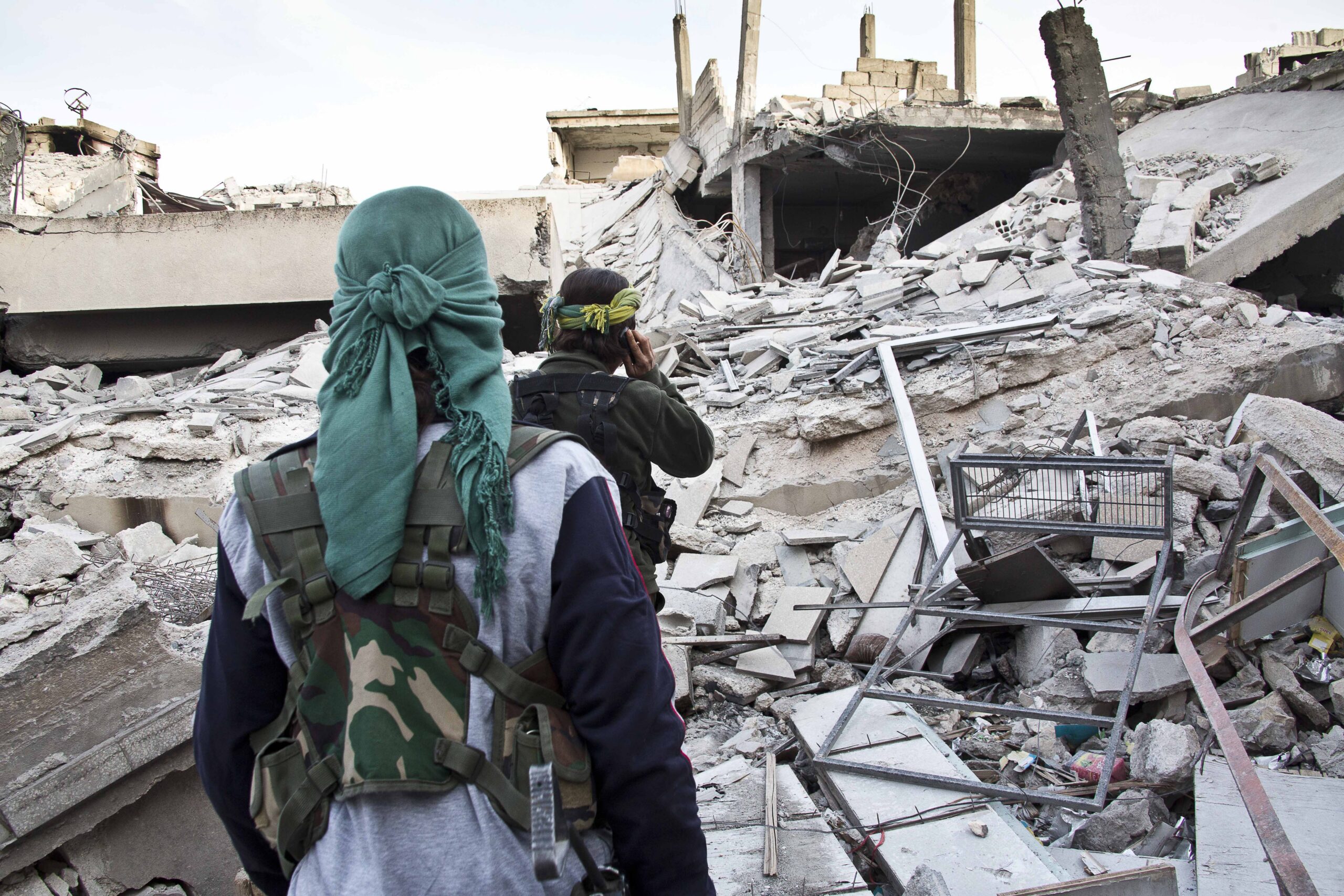
In this Wednesday, Nov. 19, 2014 photo, fighters from the Kurdish women’s self-defense force, known by its Kurdish acronym YPJ move to another secured point in the contested zone in Kobani, Syria. The site was destroyed in an airstrike and is said to be where kidnapped journalist John Cantlie appeared in a video broadcast by the Islamic State group.
In 2014, Kobani was attacked by the Islamic State group. Hundreds of thousands of people were forced to flee their homes, including most of Ayaz’s family. People rushed to tear down the border fences to clear a path to safety. After months of fighting, U.S.-backed Kurdish forces eventually retook the city. It was a major turning point in the fight against the IS group, and it came at a cost: hundreds of Kurdish fighters were killed, including Ayaz’s cousin Şukrî.
Since then, the Kurdish-led SDF has controlled wide swathes of Syria, including oil fields and prisons that hold IS fighters and their families.
Now, after weeks of fierce fighting, the Syrian army has taken that land back.
“It’s 2014 all over again but this time it is worse, way worse. My cousins, my uncles are on foot in this winter trying to escape town to town, village to village, not to be caught by these thugs,” Ayaz said.
 Emily Siner WPLN News
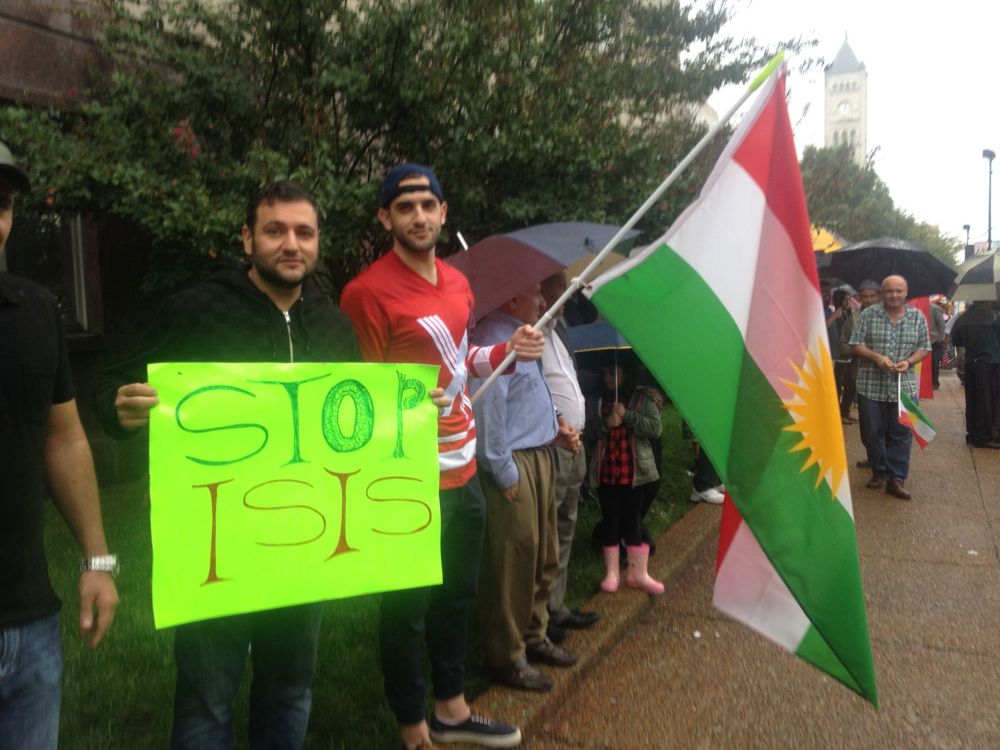
 Nashville Kurds protest in 2014 for the U.S. military to do more to avoid an ISIS-led massacre near the Kurdistan region of northern Iraq.
For the past few weeks, Ayaz has been receiving desperate farewells from family members in Syria convinced they were going to die. In one video Ayaz shared, Syrian soldiers filmed themselves laughing and destroying a memorial photo of his late cousin Şukrî.
The internet has been flooded with videos of Syrian soldiers vandalizing Kurdish fighters’ graves and bragging about violence targeting female Kurdish fighters. So even though this new truce should mean his family is safe, Ayaz said they don’t trust it — or the Syrian government, which he considers “ISIS in suits.”
“The words and actions are not the same. The officials are saying ‘integration.’ What they’re talking about is the destruction of the Kurds,” he said.
U.S. envoy Tom Barrack called the new truce “a profound and historic milestone in Syria’s journey toward national reconciliation, unity, and enduring stability.” But Ayaz disagrees.
“That is beyond betrayal,” he said.
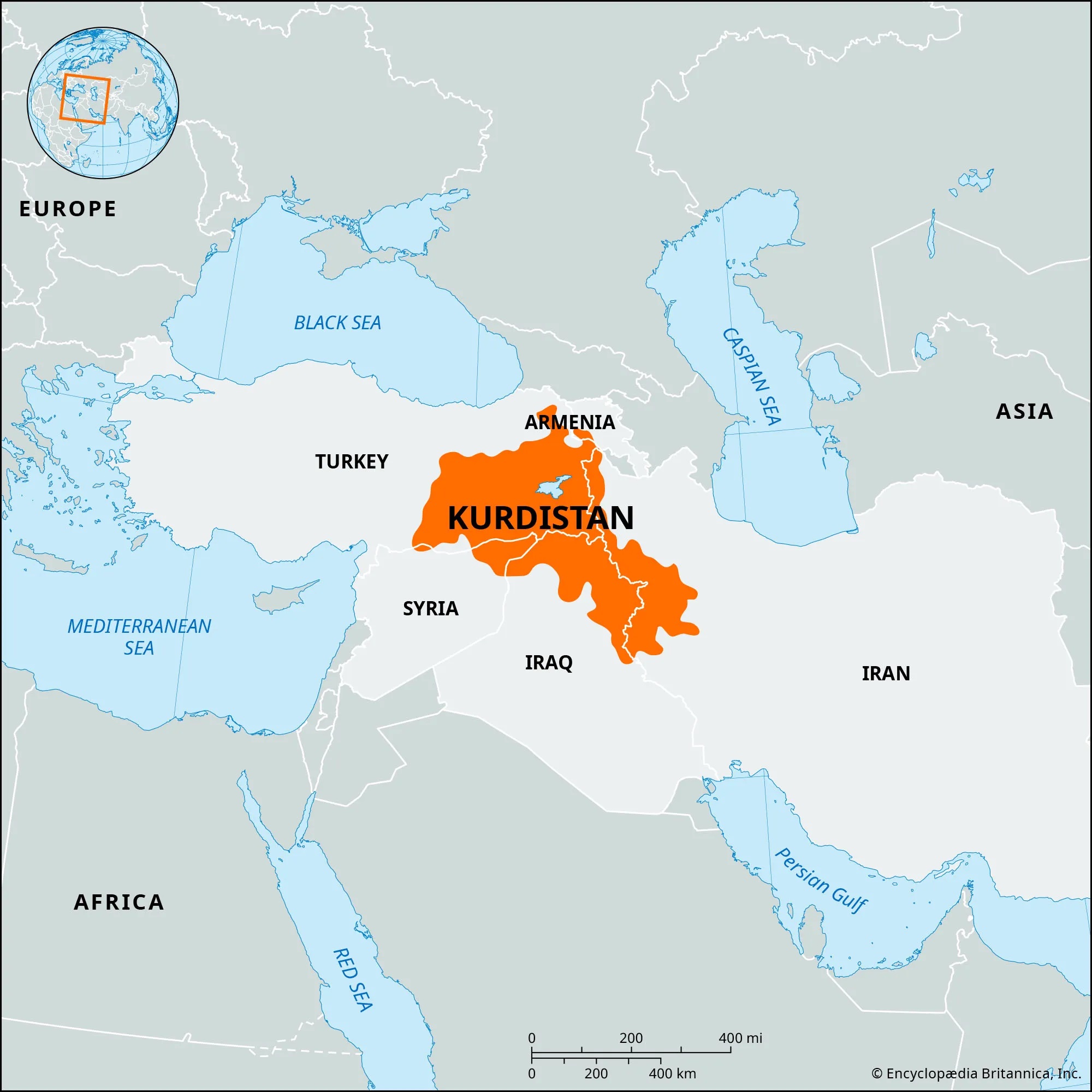 Encyclopedia Britannica
 Kurdistan is a region that falls across four nations: Iran, Iraq, Syria and Turkey.
Kurdistan is not a recognized country. It’s a region split across Syria, Turkey, Iraq and Iran. That means that the Kurdish people are very literally divided by borders and — like any large group of people — there are also political, religious and cultural differences.
But the shared outrage over the situation in Syria has been a source of unity.
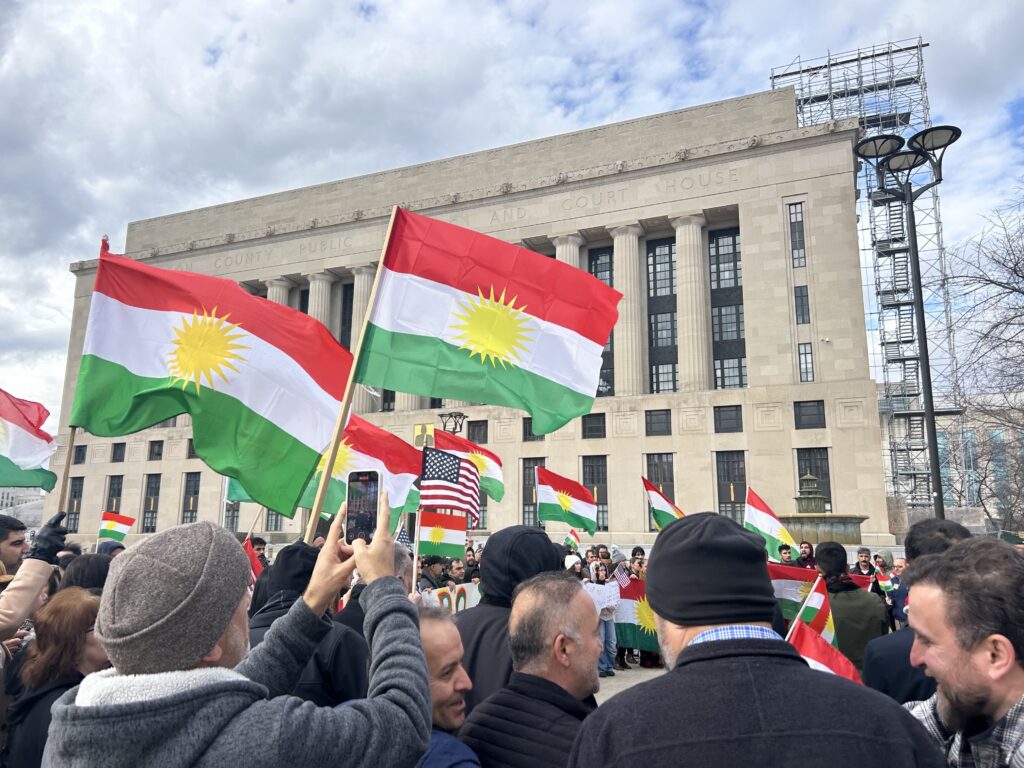
There have been protests in support of the Kurds in Syria in cities across the world, from Paris to Erbil to Washington. In Nashville, three separate community organizations joined forces to host solidarity rallies and raise money for those displaced by the violence in Syria.
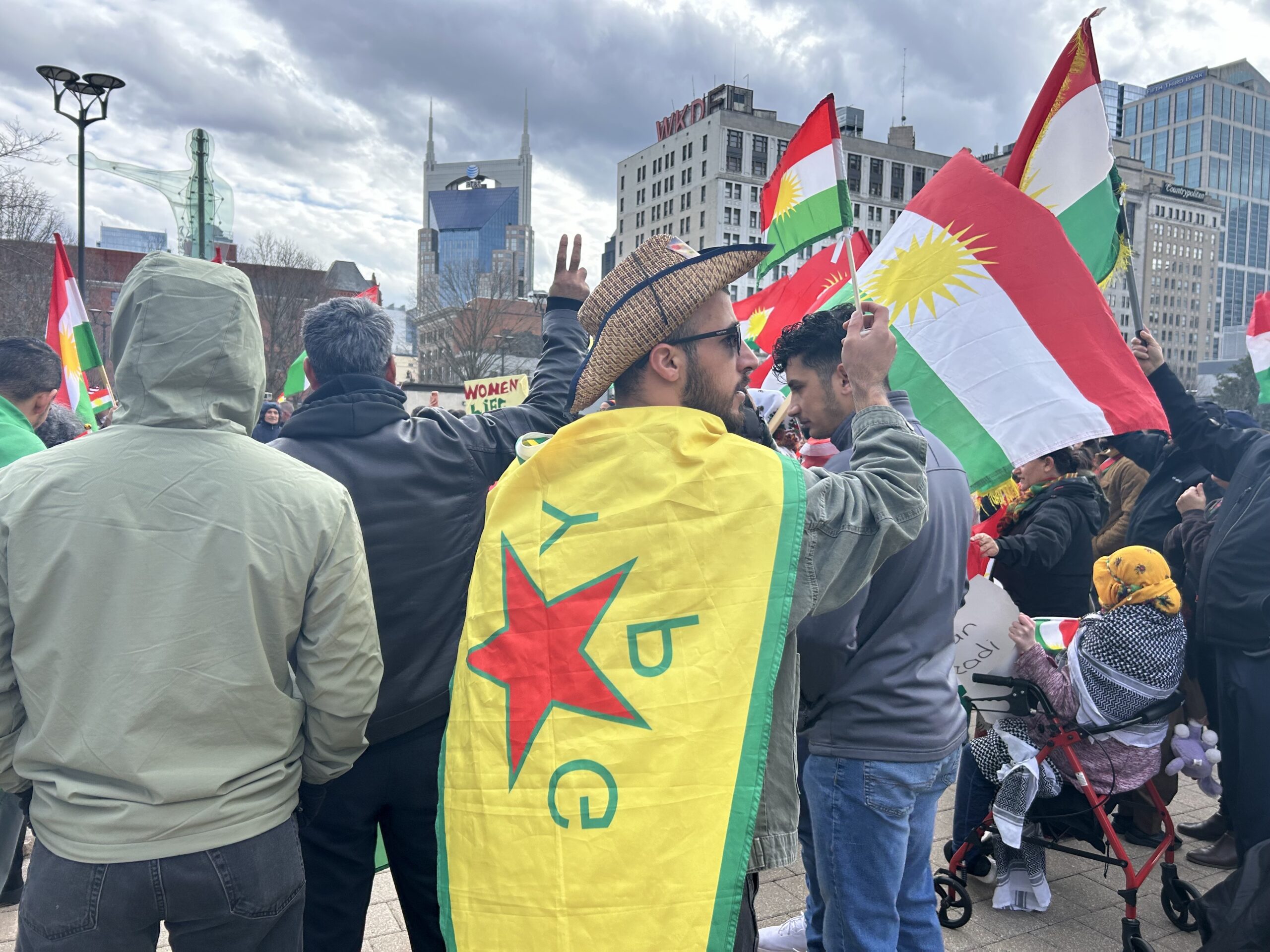 Rose Gilbert WPLN News
 A young Kurdish man wears a cowboy hat and a People’s Defense Units (YPG) flag at rally in downtown Nashville in support of Kurds in Syria on Jan. 17, 2026.
Unlike Ayaz, many of those taking part have no direct connection to anyone in Syria. Kayhan Ali was born in the city of Halabja in Iraqi Kurdistan. When he was four years old, the Iraqi army bombed Halabja with chemical weapons, killing thousands of Kurdish civilians, including much of Ali’s family. Ali survived, but the chemicals used in the attack left him with a lasting stutter and skin issues.
For him, what’s happening in Syria feels personal.
“It is like my brother and sister dying,” he said, “Nowhere in Kurdistan is safe. Nowhere. Like one day it can just like, we could get attacked. … The problem is with Kurdish, we have so many traumas in our life. Halabja is already forgotten.”
Ayaz said he and his family fear they will be forgotten as well. In the meantime, they’re waiting to see how this new truce plays out before they feel safe enough to return to their homes.
 On Air - 90.3 WPLN-FM