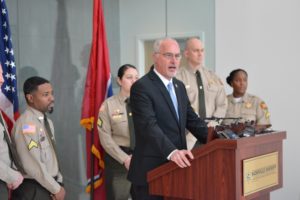
After 24 years as Davidson County Sheriff, Daron Hall will be retiring just a few months into his historic seventh term.
Education and transportation central to Nashville mayor’s new spending plan

Nashville Mayor Freddie O’Connell has filed his $554 million capital spending plan for next year, and it includes large investments in schools and transportation.
Trump can’t force election changes by blocking counterterrorism funds to states, judge says

A federal judge is blocking the authority of President Donald Trump’s administration to withhold some federal counterterrorism funding from states that don’t meet its election administration demands.
High demand is straining Nashville’s water system. Metro asks you to limit sprinklers

Water demand in the Nashville area has been high lately — so high, in fact, that Metro Water Services set a new record for hourly demand earlier this month. Now, officials are asking people with automated sprinklers to rethink their scheduling.
The Hermitage announces ‘generational’ transformation

The presidential home of Andrew Jackson is unveiling plans for what it calls a “generational” transformation at The Hermitage.
Auto racing opponents say they have signatures to remove speedway from Nashville Fairgrounds

A petition seeking to remove auto racing from the Nashville Fairgrounds appears to have cleared a key hurdle.
Here’s where Nashville’s lawsuits against the Trump administration stand
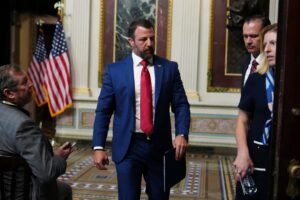
Metro Nashville has filed seven lawsuits against the federal government over funding losses since President Donald Trump began his second term.
Research labs and retail: Vanderbilt’s ‘Innovation Neighborhood’ gets approval over contentions

Retail, restaurants and research labs are coming to the parking lots around Vanderbilt University.
Nashville’s airport to become Dolly Parton International with Gov. Lee support

Gov. Bill Lee has taken up a growing push to rename the airport for the late singer. While the name change technically goes against airport policy, the Metro Nashville Airport Authority is pushing forward with the change anyway.
 On Air - 90.3 WPLN-FM