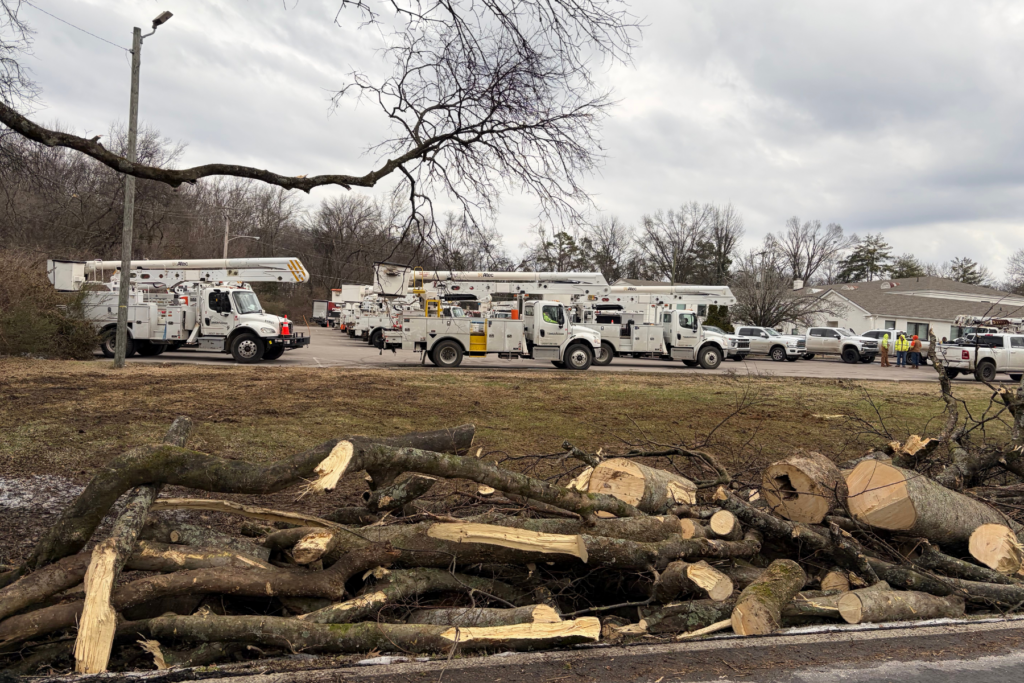
Nearly three months on, city, state and federal agencies are still seeking to support residents affected by Winter Storm Fern.
Earlier this month, FEMA approved more disaster relief, including individual cash assistance. That federal approval came 72 days after the state requested it. Under the Trump administration, FEMA aid has been slower to arrive for impacted communities, according to reporting done by the Associated Press.
So far, 84 individuals have been approved for that assistance, totaling just over $267,000. The agency has also obligated more than $3.8 million to local governments and recovery groups.
More: NES failed to heed ice storm forecast, independent review finds
The Tennessee Emergency Management Agency, the state-level partner to FEMA, will soon open a Disaster Recovery Center in Nashville, to help residents apply for support. But representatives for the agency are urging residents in need to seek out other forms of supplemental support.
“This assistance is not intended to make someone whole,” Kristin Coulter with TEMA told reporters last week. “Disaster assistance is designed to help meet basic needs and support recovery. But it may not cover every loss. And that’s why we strongly encourage anyone who still has unmet needs to reach out to Nashville VOAD, which can help connect survivors with additional community-based support and resources.”
VOAD, which stands for Volunteer Organizations Active in Disasters, has been distributing funds to various non-profits offering direct aid to residents.
There’s also support from the Metro Action Commission, which provided nearly $500,000 in housing assistance after the storm.
Now, MAC plans to reopen the application portal on April 27 for residents still struggling with the ice storm’s impact.
The agency has $700,000 available, and has loosened the income eligibility requirements for who can apply. It’s now open to residents who make up to 100% of the Area Median Income — which is $80,375 for a single-person household, and $114,813 for a family of four. Residents can apply for mortgage, rental or utility assistance at Nashville.gov/MAC.
“This level of support reflects more than financial assistance,” said Jamekia Bies, executive director of MAC. “It demonstrates our shared commitment to ensuring that residents who were impacted and meet the requirements of the program have the opportunity to regain stability, rebuild, and move forward.”

 On Air - 90.3 WPLN-FM