
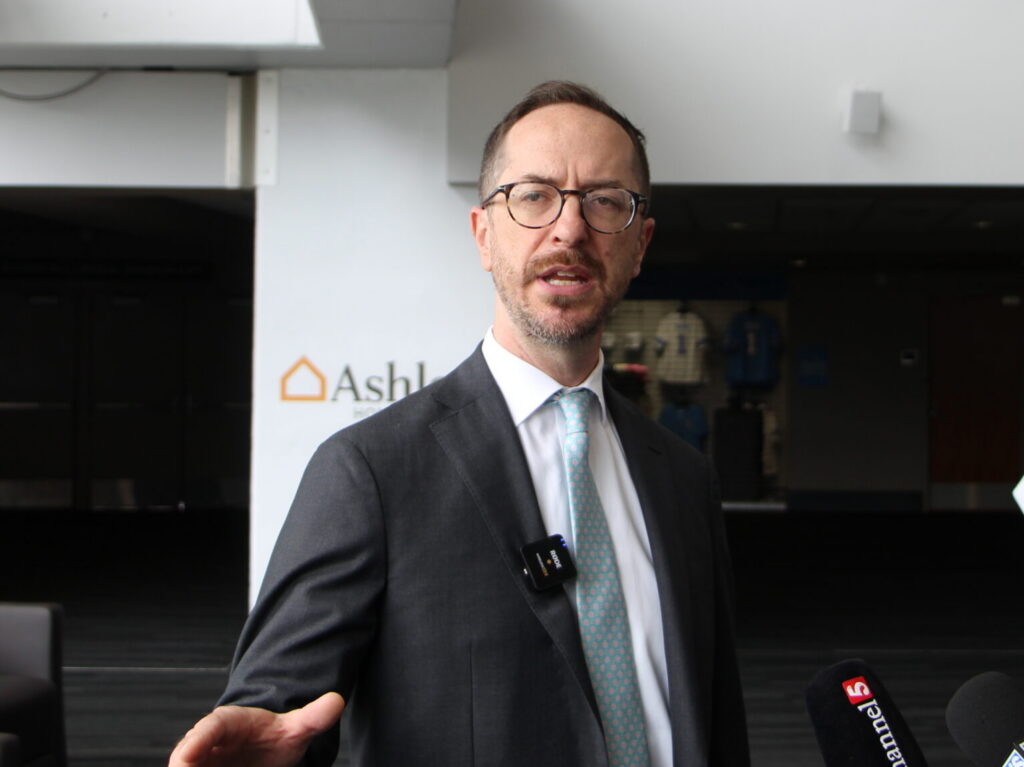
Nashville Mayor Freddie O’Connell has unveiled his proposed $3.8 billion city budget for the upcoming fiscal year.
That’s after O’Connell identified his budget priorities in his annual State of Metro address, including a grocery tax reduction, and new amounts of local business support and affordable housing investment.
The $3.8 billion budget marks the first time during O’Connell’s tenure that the spending amount was stagnant from one year to the next. Last year’s budget also came in at $3.8 billion — a 15% increase from the previous year, driven by a substantial property tax increase. Since then, many Nashvillians — particularly local business owners — have sounded the alarm on rising property tax bills, with some saying increased property values have threatened businesses’ abilities to remain in operation.
The property tax rate in this budget remains the same, as O’Connell told reporters last week that any adjustment of the rate between reappraisals would be “atypical.”
“The history of Metro is that we try to align property tax rate with the assessment process,” O’Connell said. “We have no plans to depart from that.”
The mayor’s only tax adjustment comes in the form of a half-cent grocery tax reduction. If approved, this would bring the grocery tax rate to 1.75%, down the current 2.25%. Nashvillians would still be paying a total 5.75% total tax on groceries, as the state applies its 4% tax.
The stagnant budget also reflects the “economic realties of the local, state and national economic environments,” as noted in a release from the mayor’s office announcing the proposal. Revenues from the city’s general fund over the last year remain flat.
Still, the $3.8 billion has some changes from last year’s priorities. Select budget details include:
- $69 million toward the Unified Housing Strategy. This includes $22 million to the Barnes Housing Trust Fund from the city’s general fund and $7 million for an affordable housing revolving loan pilot
- $55.9 million additional funding for Metro Schools
- $8.5 million to the Davidson County Sheriff’s Office to address an increased number of inmates. Metro filed motions last week over the Tennessee Department of Correction’s failure to take custody of people who had been sentenced to state custody
- $2.4 million for the Eviction Right to Counsel program
- $396,000 for the Mental Health Cooperative, supporting people experiencing mental health crises
- $385,000 for the Office of Family Safety’s partnership with the Nashville Children’s Alliance to support children who have experienced abuse
This budget is merely the first proposal. Typically, Metro Councilmembers offer “substitute” versions, which they must agree upon by the end of June. Otherwise, the mayor’s budget would take effect.
Community members wishing to weigh in on the mayor’s proposal will be able to do so at the Metro Council’s budget public hearing, scheduled for June 2.

 On Air - 90.3 WPLN-FM