

A years-long fight over a reform to protect domestic violence victims in Tennessee has come to an inconclusive end.
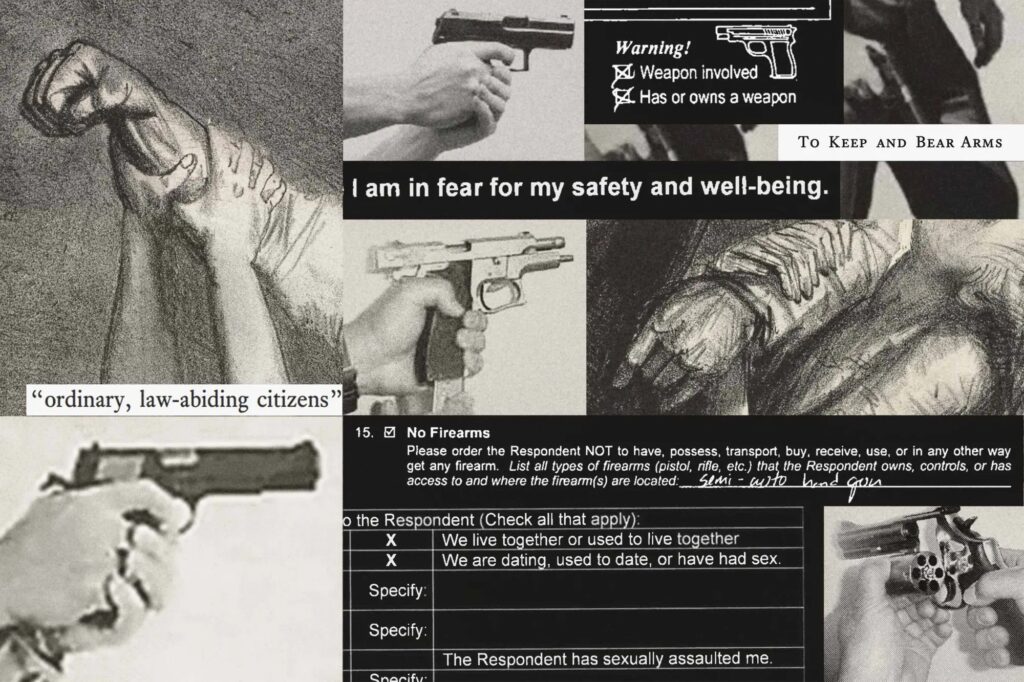
Advocates have been asking the Domestic Violence State Coordinating Council to alter a state form called a firearms dispossession affidavit, which is required in cases where an abuser is court-ordered to give up their guns.
But the form doesn’t require the name or address of the person they are giving their guns to — a dangerous loophole that puts victims in danger.
At its most recent meeting in March, the DV council debated whether it even has the power in statute to change the form for the whole state. Some members said it does, while others claimed it doesn’t.
In the end, the group voted to write a letter to local judges across the state recommending they amend their forms to require the name of the recipient of the guns. The council stopped short of changing the standard form for statewide use.
“It’s disappointing to see that a body that is there to really create change for domestic violence victims and survivors wouldn’t use its authority to make such a small change that could have an impact in this work,” says Becky Bullard with Nashville’s Office of Family Safety.
More: Guns in Dangerous Hands investigation
Individual counties have already begun to adopt the amended form after reporting from WPLN and ProPublica found that rural Scott County had made the change as part of several reforms to protect domestic violence victims. It’s possible more counties will follow suit after receiving the recommendation from the DVSCC.
Bullard says while it is a step in the right direction, this type of incremental progress can make things complicated for victims.
“It’s exhausting for victims to have that kind of a patchwork system where justice looks different from one county to another,” she said.
DVSCC’s chair Melanie Bean told WPLN last year that the only way to ensure all of Tennessee’s 95 counties adopt the amended form would be a legislative fix. During the March meeting, members of the council encouraged the public to contact their lawmakers.
That suggestion frustrated some, as it followed a legislative proposal that has already stalled.
The proposal was introduced last year by Sen. Becky Massey, a Knox County Republican, and Rep. Kelly Keisling, a Republican whose district includes Scott County. The measure was pushed to 2026 after opposition from the National Rifle Association.
This year, Massey decided to not move forward with the legislation. Instead, she said the groups she worked with to introduce the bill are contacting local leaders to fix the issue at the county level.

 On Air - 90.3 WPLN-FM