

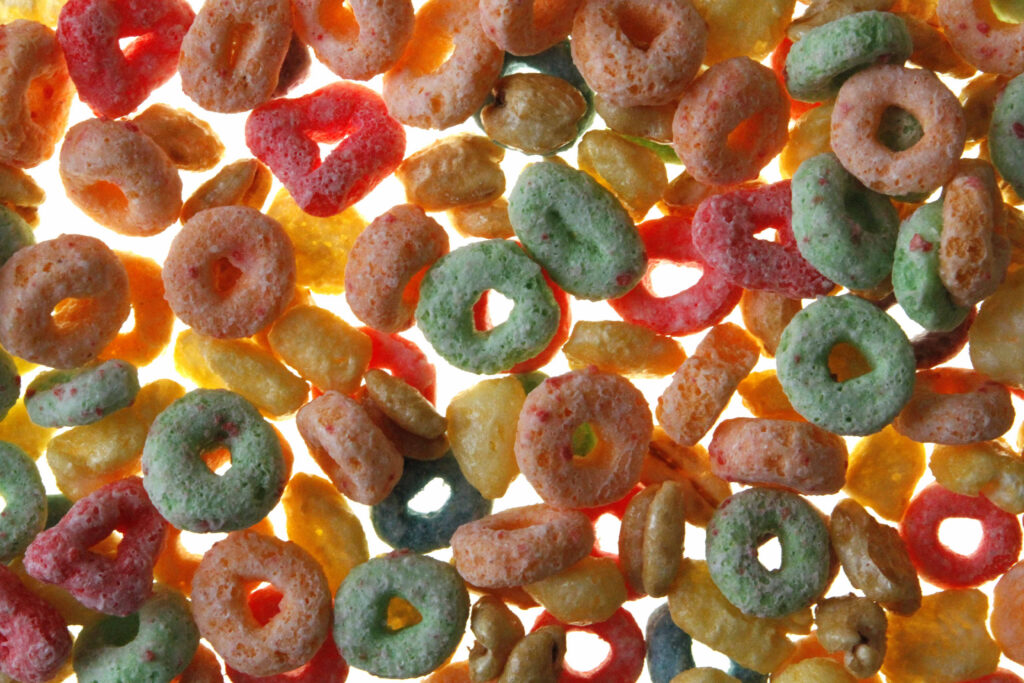
Tennessee lawmakers have banned a long list of synthetic dyes in school meals.
Senate Bill 2423 bans several dyes. The governor would have to sign off on the measure for it to become law.
Artificial food coloring has been one of the Make America Healthy Again movement’s main targets. Tennessee lawmakers tied themselves to that movement earlier this year, when they brought U.S. Health and Human Services Secretary Robert F. Kennedy Jr. to the state capital.
He spoke at a press conference on Feb. 2, touching on a broad array of health topics. But he really homed in on childhood obesity. He advocated for cutting back their screen time and their junk food intake.
“Eat real food,” he said to loud applause.
Rep. Michele Reneau, R-Signal Mountain, carried the bill in the House. During the floor hearing on Monday, she tapped a common MAHA talking point: parental choice.
“Parents can still purchase whatever they choose for their families,” she said. “This legislation only applies to meals served through school nutrition programs where children do not have the ability to choose what they are served.”
She specified that the dyes would be allowed in foods available outside cafeteria meals — like in vending machine snacks.
Concerns about food dyes — especially red ones — are far from new. They were banned from cosmetics more than three decades ago because of cancer risks. And although there is no evidence that the dyes cause cancer in humans — as opposed to some animals —there’s been a push to get them out of foods ever since.
Some research shows they are tied to hyperactivity and other behavioral issues, especially in kids.
Bans like these were popular in progressive places like the EU and California. With the MAHA movement, powerful conservatives are joining in.
Here in Tennessee, this bill passed with bipartisan support. There wasn’t much debate.
Outside of Tennessee, these kinds of policies draw criticism on two major fronts.
On average, foods with synthetic dyes have more than double the sugar of foods without dye. That’s because they’re common in candy and sugary drinks. Critics say pulling the dye out of the product won’t make them any healthier.
Other criticisms are a bit broader. They juxtapose RFK Jr.’s pledge to make America healthy while the agencies he oversees have slashed their budgets for medical research, hospital funding and health coverage programs like TennCare.

 On Air - 90.3 WPLN-FM