
A U.S. Supreme Court ruling has cleared the path for Tennessee Republicans to redistrict another seat in their party’s favor ahead of the November midterms.
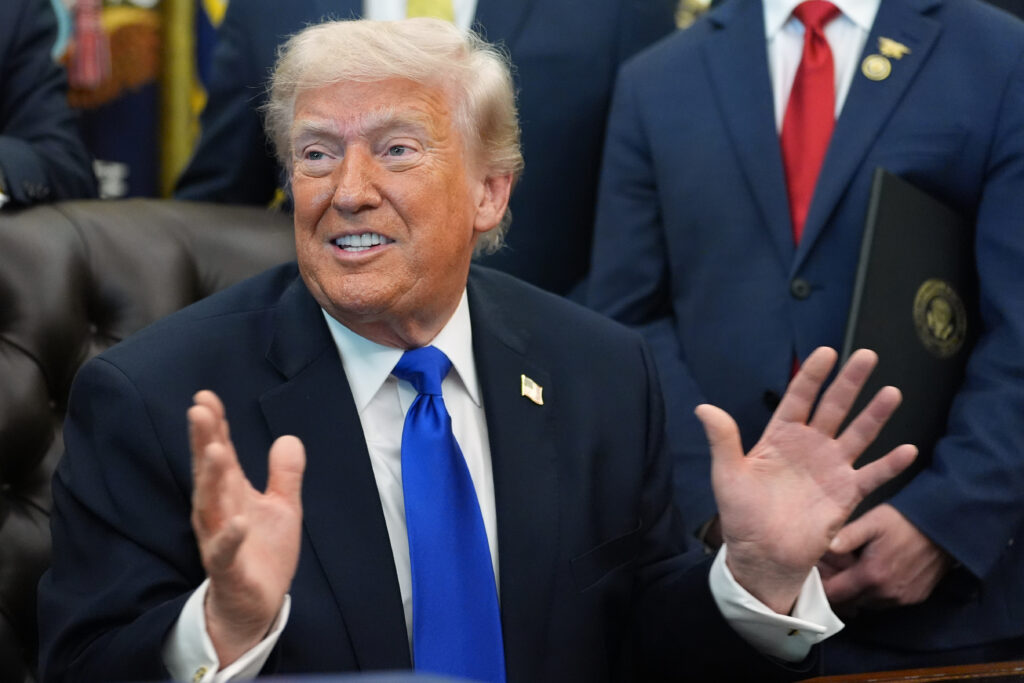
President Donald Trump and U.S. Sen. Marsha Blackburn, R-Tennessee, have called for state lawmakers to draw new maps to eliminate the state’s remaining Democratic seat in Congress.
Memphis was spared from a 2022 redistricting effort that saw Nashville’s Democratic stronghold split into three Republican districts, flipping District 5 red. The predominantly Black and Democratic city had been protected by federal law that prohibited racial gerrymandering, but in a 6-3 decision Wednesday, the Supreme Court negated that aspect of the Voting Rights Act.
Now, Blackburn, who is running for governor of Tennessee, is proposing new maps that would group portions of Memphis in the western corner of the state with rural areas in the middle of the state. The drive across her proposed District 8 would span more than 200 miles.
“It’s essential to cement (Trump’s) agenda and the Golden Age of America,” Blackburn posted on X. “I’ve vowed to keep Tennessee a red state, and as Governor, I’ll do everything I can to make this map a reality.”
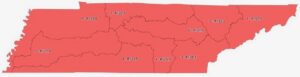
U.S. Sen. Marsha Blackburn’s proposed congressional maps
Reactions mixed
Some Republican leaders are hesitant to reconvene in Nashville. Outgoing Senate Speaker Randy McNally, R-Oak Ridge, told WPLN News that the timeline might not be feasible.
“Tennessee currently has a strong, fair and legal map which has withstood court scrutiny. With the filing deadline passed and qualified candidates already running for election, redistricting congressional seats at this time would present several logistical challenges,” McNally wrote in a statement. “I will be talking with leadership in both the House and the Senate to discuss the feasibility of the question over the coming days.”
Lawmakers can only reconvene to consider new maps if Republican Gov. Bill Lee calls a special session. Lee’s office has not responded to WPLN’s request for comment, but Trump posted on social media Thursday that he had spoken with Lee and confirmed he was on board.
“He stated that he would work hard to correct the unconstitutional flaw in the Congressional Maps of the Great State of Tennessee,” Trump said. “Likewise, all of the other Political Representatives of Tennessee have promised to do so. This should give us one extra seat, and help Save our Country from the Radical Left Democrats.”
Lee told reporters that he had a conversation with the president, but did not commit to calling a special session.
In a statement, House Speaker Cameron Sexton, R-Crossville, said he was discussing the implications of the SCOTUS ruling with “the White House and other individuals.”
Responses in Memphis
The plan could unseat U.S. Rep. Steve Cohen, D-Memphis, who has represented Memphis and District 9 in Washington for a decade. Cohen faces a Democratic challenger in 31-year-old State Rep. Justin J. Pearson, who achieved national recognition as one of the so-called “Tennessee Three” who faced expulsion for a gun reform protest on the state House floor.
Memphis Democrats have criticized the SCOTUS decision for diluting the power of Black and Latino voters and are asking their Republican colleagues to reject Blackburn’s call.
“Voters should choose their elected officials — not the other way around,” said State Sen. Raumesh Akbari, D-Memphis. “Republicans have the power to cut grocery bills, lower costs and give working families real relief, but they’d rather spend it on gerrymandering Memphis. The Tennessee General Assembly should refuse. No legislator who believes in democracy should pick up this torch.”
State Sen. London Lamar, D-Memphis, said the move “dishonors the ancestors who marched, bled and died for our right to vote and be represented.”
“If the General Assembly follows this wicked call, they will be laying bricks for a new Jim Crow South where politicians choose their voters and silence communities who resist their political agenda,” Lamar said.
Update: This story was updated Thursday to include statements from President Donald Trump, Senate Speaker Randy McNally and House Speaker Cameron Sexton.
 On Air - 90.3 WPLN-FM