

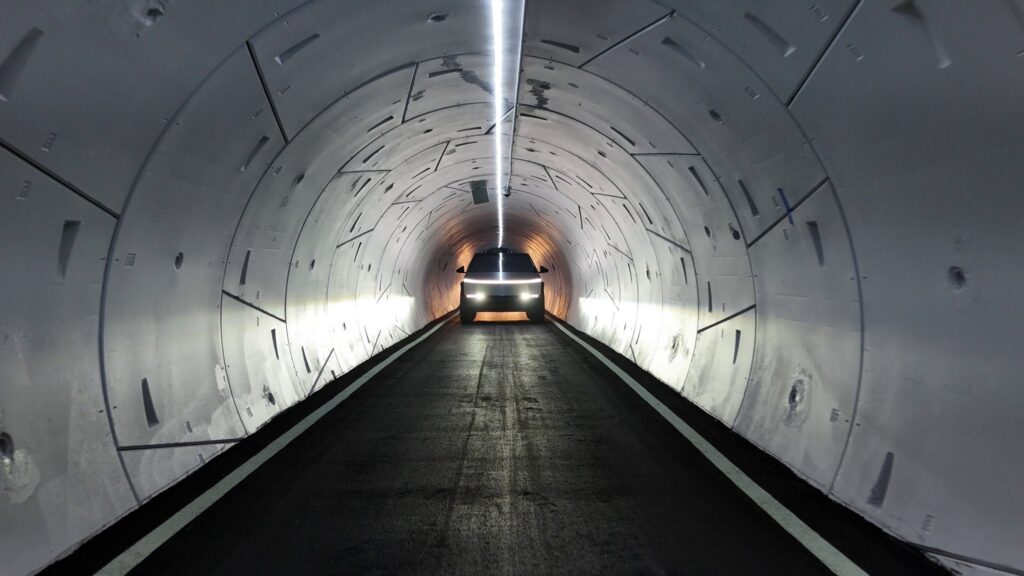
The Boring Company secured a crucial green light this week in its plans to build a 10-mile tunnel system between downtown and the Nashville International Airport.
The company finalized a long-term financial deal on Wednesday with the Metro Nashville Airport Authority, the airport’s governing body, after months of negotiations.
Under the deal, the Boring Company will pay the airport an annual licensing fee of $300,000 to use airport property for up to 50 years. The fee will increase 3% annually, equating to $3.4 million in the first 10 years and $34 million over five decades.
The license allows the company to use about 900,000 square feet of airport property, part of which would be used for passenger drop-off and pickup.
If the tunnel becomes operational, the company will also pay the airport a fee of $5 per drop-off and pickup, similar to fees paid by rideshare companies Uber and Lyft. The Boring Company has not begun construction on the tunnel yet but said it plans to open the first segment of the Music City Loop in early 2027, pushed back from a previous estimate of late 2026.
The airport estimated that it could generate about $300 million in pickup and drop-off fees over 50 years. At $5 per trip, that equates to about 1.2 million trips per year, or about $6 million in annual revenue.
Zoomed in, that figure means the Boring Company would complete an average of 141 trips per hour each day. A car on the airport side of the tunnel system would need to discharge or scoop up people, and their luggage, faster than every 30 seconds.
That traffic level suggests as few as 150 or as many as 500 passengers per hour — which is far below Boring Company estimates but higher than one made by an airport commissioner last week.
Airport passenger estimates range from just 75 to 30,000 people per hour
Boring Company President Steve Davis claimed the tunnel will be able to carry between 20,000 and 30,000 people to and from the airport in a single hour. That figure is, technically, impossible with the current proposal to only use Tesla cars carrying up to four passengers in the 10-mile, one-way tunnels at “up to 70 miles per hour.”
For reference, an average of 550 cars with Uber and Lyft run through the airport per hour each day, MNAA President Doug Kreulen said during a committee meeting last week. That could equate to as many as 1,000 to 2,000 people.
Airport officials are expecting a much lighter load from the tunnel. Nancy Sullivan, chair of the airport authority’s board of commissioners, suggested last week that the Boring Company may transport 1,800 passengers per day, or about an average of 75 people per hour.
Under that estimate, the airport could make a maximum of between $750,000 and $3 million in fee revenues each year, depending on the number of passengers per trip.
How the airport makes money
The Nashville airport secures most of its net income through “nonoperating” revenues, according to its most recent annual financial report. In fiscal year 2025, the airport made just $4 million in net operating income, while banking $72 million in nonoperating revenues and $34 million in “capital contributions.”
Nonoperating income includes investment income, passenger facility charges, customer facility charges, insurance reimbursements and federal and state grants.
The airport authority did not respond to WPLN’s questions about which line items constitute dollars collected from rideshare fees.

 On Air - 90.3 WPLN-FM