


The Boring Company president Steve Davis repeated boastful assertions about a planned tunnel system underneath Nashville for nearly two hours during a virtual town hall on Monday night.
The company hosted a live conversation on the social platform X (formerly Twitter), another company owned by Elon Musk. People posted comments and questions that were funneled by a local PR firm.
“The session was promotional, not informative,” Tennessee state Sen. Heidi Campbell, D-Nashville, told WPLN News. “Since our state and our city have required zero accountability, The Boring Company representatives seem eager to tell us whatever sounds good to push this through.”
Davis, the former operational head of the Trump administration’s Department of Government Efficiency (DOGE), maintained a cheerful tone while offering claims about the plan to build tunnels for a Tesla-only transportation service across 10 miles of land between downtown and the Nashville airport.
Here are five key points from the conversation:
Davis suggested that feedback on the project from local officials, regulators and stakeholders has been “universally positive,” but multiple officials have expressed serious concerns about the level of communication and oversight on the project.
“The majority of this route is in my district, but no one has reached out to me,” Metro Councilman Russ Bradford told WPLN News.
He attended the virtual town hall Monday night and rejected the idea that the company has engaged in meaningful public discourse. He also noted that Davis effectively skirted addressing the environmental and safety risks associated with tunneling in Nashville.
“They seem really flippant about a lot of the concerns,” Bradford said.
Davis claimed the tunnel will have “zero impact” on Nashville’s water quality, but The Boring Company has already faced water violations in Las Vegas.
The planned route between the Nashville airport and downtown will cross Mill Creek, a tributary of the Cumberland River, and the tunneling process could impact how water moves underground through the surrounding limestone terrain.
It is difficult to know the full extent of potential impacts without an official environmental assessment, which is typically required for major infrastructure projects. To date, the company has not applied for a permit with the Tennessee Department of Environment and Conservation.
Davis suggested that the company will release an independent assessment in December. The company requires permits to begin drilling, he said, which could begin as soon as next month or early next year.
The company has already been documented causing water pollution at its operation in Las Vegas, which houses its only active tunnel system.
In September, Nevada state regulators accused the company of violating environmental regulations 800 times in the last two years. The Nevada Division of Environmental Protection ordered a “cease and desist” of construction activities.
Davis insisted that the construction project is safe, but local workers have already filed complaints to the Occupational Safety and Health Administration.
One of the contractors involved in the Nashville project dipped out this week. Shane Trucking and Excavating walked off the job on Monday night citing problems getting paid, poor communication and safety concerns underground, the Nashville Banner’s Sarah Grace Taylor reported.
“Where we’re digging, we’re so far down, there should be concrete and different structures like that to hold the slope back from falling on you while you’re working,” Willie Shane told the Banner. “Where most people use concrete, they currently have — I’m not even kidding — they currently have wood. They had us install wood 2x12s.”
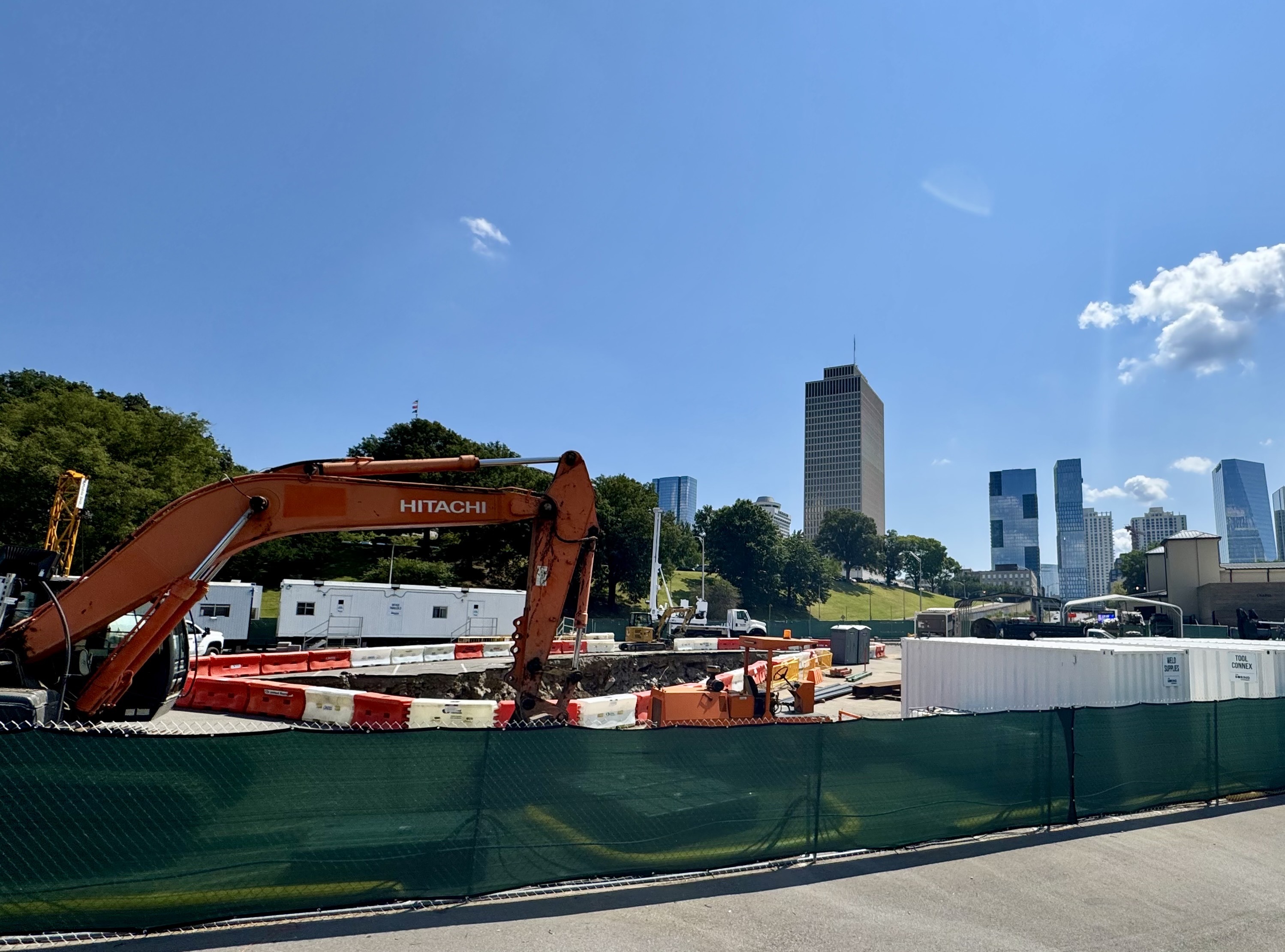 Caroline Eggers WPLN News
Contractors with The Boring Company conducted two digs in a state-owned parking lot on Rosa Parks Boulevard in Nashville on September 9, 2025.
The company has violated conditions of workplace safety in Las Vegas. In May, two firefighters were permanently scarred during a training exercise after exposure to toxic chemicals related to tunneling activities. Nevada safety officials fined The Boring Company $400,000, though the state dropped the penalties hours later after meetings with Gov. Joe Lombardo’s office, Fortune reported.
Two years ago, an investigation by Nevada’s OSHA found that employees of The Boring Company were potentially exposed to serious injuries, after workers complained about ankle-deep water in the tunnels, muck spills and severe chemical spills. The company was fined $112,000. Boring disputed the allegations and contested the violations.
Davis said the company will give away limestone excavated from the tunneling site as a “donation.” One official said this raises an important question: Did the state of Tennessee gift mineral rights to the company?
The Boring Company received free land from the state for the tunneling project, and it may have included mineral rights to the limestone, according to state Rep. John Ray Clemmons, D-Nashville.
“There are so many things that are wrong with this,” Clemmons told WPLN News, suggesting that it seems like the state may have approved the project without checking important boxes in writing.
To build about 10 miles of parallel tunnels between the airport and downtown, the company will have to excavate a significant amount of limestone, which is considered a valuable resource.
Details are unclear on who owns the minerals. Davis implied Monday that The Boring Company does — even suggesting that people interested in the limestone should email the company directly.
“Our plan is not to mine and then start selling this material,” Davis said during the town hall.
Davis claimed that Nashville’s limestone offers protection against geohazards, but geologists have warned that the city is a “sinkhole hotspot.”
Nashville has karst terrain. Most of the city, including the planned tunnel route, sits atop limestone. This underground terrain is full of cracks and holes, which allows water and soil to swiftly move through it, and many areas have thin layers of soil over the bedrock.
“The best protection, to be very frank, is the rock itself,” Davis said.
Davis suggested that the limestone rock in Nashville is less likely to settle, meaning the ground is less likely to move downwards, than some types of terrain that have sand or heavy soil. That is true, but it misrepresents the city’s sinkhole risk.
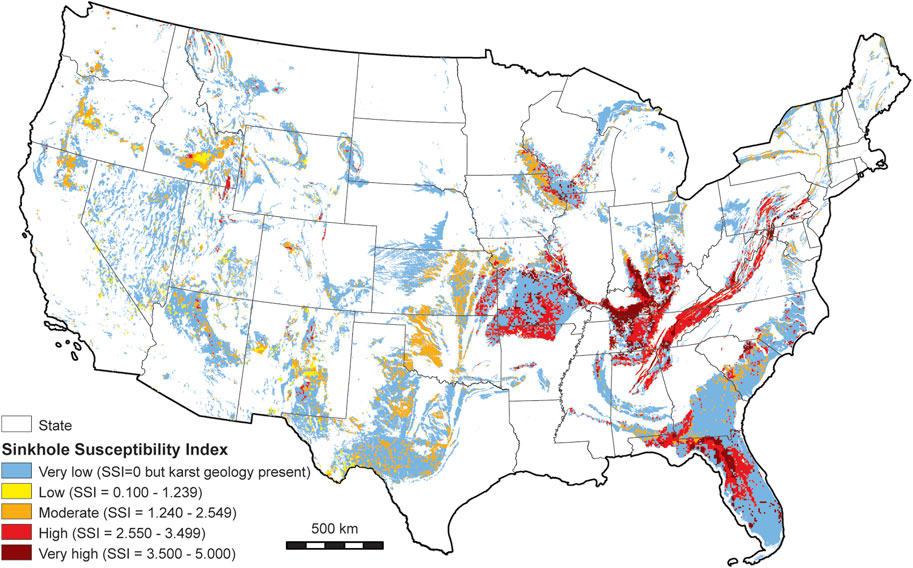 Courtesy U.S. Geological Survey
 Researchers at the U.S. Geological Survey found that sinkhole risks exist under downtown Nashville.
Limestone is fairly easy to scratch, but Nashville’s terrain also has areas with tougher minerals mixed in that create a hard rock. The company may need to blast these areas in order to tunnel, which could create new fractures nearby. When the rocky maze is changed, the pathways of water can change, allowing water to enter new areas, fill in caverns and potentially open up sinkholes.
“Anytime you do any kind of alteration of the landscape in karst, there’s always a chance that it could create a higher potential for sinkhole activity,” said Jason Polk, a karst expert and professor of geoscience at Western Kentucky University.
The geoengineering community has developed better methods of preventing and remediating sinkholes to ensure safe developments in recent years, Polk said.
But The Boring Company has not revealed how it will handle Nashville’s underground terrain. The company started geotechnical borings the same day it began some construction in September. Davis promised more borings and settlement monitoring on Monday.
Bradford, the Metro councilman, would like to see more data and plans for potential complications during construction.
“If they do have an issue,” he said, “who is responsible for the damages?”

 On Air - 90.3 WPLN-FM