

Sign up for alerts on breaking news and exclusive reporting from NPR
Tennessee hasn’t yet revealed exactly what went wrong when the state failed to kill Christa Pike on Sept. 30, despite staff injecting two lethal doses into her arm. Republican Gov. Bill Lee has since paused all executions and called for an independent review of the state’s lethal injection protocols, and Pike is still alive.
But Pike’s attempted execution was not the only one badly mishandled under the leadership of Frank Strada, Tennessee’s top prison commissioner, whose resignation was announced on Oct. 3. A similar review had already been conducted in Arizona, where three lethal injection executions were bungled while Strada was the deputy director of the Arizona Department of Corrections, Rehabilitation & Reentry.
How those executions were carried out holds clues to what may have happened behind closed doors during Pike’s attempted execution.
Follow: Execution updates from WPLN
In 2023, Democratic Gov. Katie Hobbs asked retired federal Judge David Duncan to conduct a comprehensive review of those three failed executions. Duncan spent nearly two years reviewing more than two dozen boxes of execution records, interviewing around 50 internal employees and external experts and visiting the prison where Arizona had executed people.
In an exclusive interview with NPR, Duncan explained how the prison used egregious and sometimes illegal methods under Strada’s leadership in Arizona.
Records he reviewed indicated that shortly before one of the botched executions, staff members were told to search the internet about how to execute people, he said.
“There was a directive from a superior to an underling saying, ‘Look up in Wikipedia to see what the appropriate dose should be,'” said Duncan.
The controlled substance used to execute prisoners in Arizona, a drug called pentobarbital, was stored in a way that could easily have led to mistakes, he said.
“It was in a locked refrigerator in a jar at the Florence prison,” said Duncan, referring to the Central Unit of the Arizona State Prison Complex in Florence, where prisoners were executed in Arizona. “And the jar had no label of any kind on it. I said to the person who showed it to me, ‘That could be my mother’s minestrone soup.'”
Because pentobarbital is a controlled substance, federal law requires containers of it to be labeled so that it can be clearly identified. But the Mason jar allegedly holding Arizona’s supply of pentobarbital didn’t even describe how much of the drug was in it, Duncan said, though he estimated by looking at it that it was “mostly filled.”
All major pharmaceutical companies in the U.S. refuse to provide their drugs for use in lethal injection executions, so states often turn to unconventional, and sometimes illegal, methods of obtaining them. In 2015, for example, the Food and Drug Administration confiscated execution drugs that Arizona and Texas had tried to import from India.
Some states have since turned to small compounding pharmacies to make the drugs to order for them. But some of those pharmacies that have supplied execution drugs have been reported to be plagued with problems too, including safety and cleanliness violations.
When Duncan asked to know the expiration date of the drug in the jar, he was told by a prison official that there was a document from the compounding pharmacy that made the drug that said it had no expiration date.
“And I said, ‘Well, I was supposed to be able to see all of the documents. I don’t remember seeing a document about that,'” Duncan said. “And she said, ‘I destroyed it.'”
Three executions “cloaked in secrecy”
That lack of transparency was evident in other aspects of how executions were carried out under Strada’s leadership, Duncan said, including regarding the team that inserted IVs into the prisoners and how medical staffers were paid.
In all three botched executions in Arizona, in Pike’s in Tennessee and in a previously botched execution of Tony Carruthers in Tennessee on May 21, which was ultimately called off, staff repeatedly tried and failed to insert the IVs into the veins of the prisoners. And in all five of those cases, prisoners were left bloody or in pain, according to witness reports.

“She looked at the staff in the room, and she said there’s one spot that was burning and hurting,” said Catherine Sweeney, a reporter for WPLN News who witnessed Pike’s attempted execution, describing how Pike responded when pentobarbital was first administered to her. “She was saying that she felt like her vein was going to burst.”
The IV team in Arizona was not composed of doctors, Duncan confirmed. They were often current Department of Corrections employees who were not experienced in inserting IVs or independently vetted.
“They were solely selected by the Department of Corrections,” Duncan said. “So you’re left with people who’ve essentially not only had never done lethal injection before, but haven’t done the most analogous thing to it.”
Duncan said he was told the IV team in Arizona practiced injecting saline into a person’s arm twice a year. But when he asked to view one of the team’s practice sessions, he wasn’t allowed, the retired judge said. He was also not allowed to interview any members of that team.
Doctors were involved in executions in Arizona to an extent, Duncan reported, and they were paid “hundreds of thousands of dollars” in cash.
“The doctor stands in a separate room that has a window, and it has closed-circuit television and a piece of plastic pipeline that runs from a panel of syringes to the inmate,” Duncan said. “They paid him in cash in a brown paper bag.”
Duncan questioned a lawyer for the Arizona Department of Corrections about whether the agency had prepared tax forms for employees who were paid in cash to help carry out executions. But shortly after asking that, he was fired by Governor Hobbs, Duncan said, and he never received an answer.
When asked why she fired Duncan, Hobbs previously said he had not been “up to the task.”
“I’m grateful for the work he did,” the governor said in 2024. “But we decided to go in a different direction.”
Duncan believes he was dismissed because she didn’t like the information he uncovered in Arizona, including his conclusion that lethal injection executions shouldn’t be carried out because of the state’s lack of transparency.
“It is so completely cloaked in secrecy that there is no opportunity for anybody who’s involved in the process to share the lessons learned, to learn from mistakes or develop any expertise in best practices,” Duncan said. “That made it virtually, and maybe even conclusively, impossible to effectively apply this as a method of execution.”
Parts of Tennessee’s execution protocol are nearly identical to Arizona’s
Some of the problems Duncan found in Arizona may have been carried over to Tennessee through the states’ execution protocols.
Strada was hired just one month after the Tennessee Department of Correction (TDOC) finished an investigation into the protocol that it had been using before his arrival, which called for using three drugs instead of one. A report published at the end of that review in 2022 confirmed that Tennessee had repeatedly failed to test those drugs for potency and toxins before trying to use them to execute people, although the protocol at the time required testing.
The report also showed that a pharmacy owner had voiced concern with how the three-drug plan included a weak pain reliever that could cause prisoners to suffer. “Nevertheless, TDOC chose to proceed,” the report states.
When Strada was hired by Tennessee in 2023, the state switched to using just one drug — pentobarbital, the same drug that was used in Arizona when Strada oversaw the botched executions there. Tennessee also then switched to a new execution protocol. Sections of that new protocol, which was being used when Pike’s execution was attempted, are nearly identical to the one used in Arizona under Strada’s leadership.
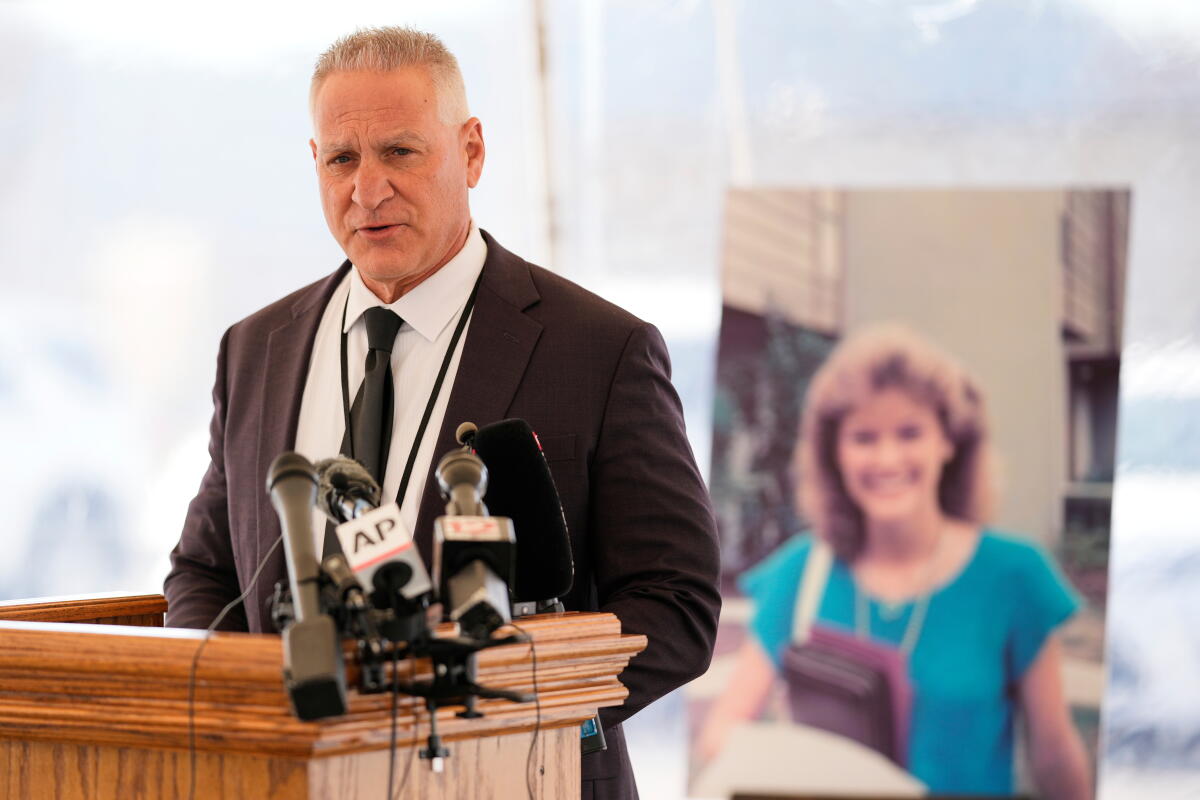
TDOC said in a media advisory that it “followed every step of the State’s lawful, established execution protocol approved by the Attorney General’s Office” in Pike’s attempted execution. A press officer at the Tennessee Department of Correction did not answer NPR’s questions about how much of that protocol was copied from Arizona’s or what role Strada played in the similarities, and the press officer referred NPR to Governor Lee’s office.
But the bungled executions show similar patterns. Some of the sections that are most similar in the Arizona and Tennessee protocols are the sections that direct the IV team in how to execute people — and in all five mishandled executions under Strada, in Arizona and Tennessee, the IV team struggled to place IVs in the prisoners’ veins.
Arizona’s protocol from 2022 required that “The IV Team Leader shall ensure the catheters are properly secured and properly connected to the IV lines and out of reach of the inmate’s hands.” In Tennessee, the 2025 protocol says: “The Special Operations Team Leader ensures that the catheters are properly secured, properly connected to the IV lines, and out of reach of the inmate’s hands.”
Both protocols also state that the IV team has to consist of two or more people who could be physicians, physician assistants, nurses, emergency medical technicians, paramedics or military corpsmen. But just like in Arizona, when lawyers for the condemned asked Tennessee to provide information about the training of the people selected to be on the IV team in Tennessee, or the opportunity to interview them, officials refused.
“We don’t know anything about the qualifications of the personnel,” said Kit Thomas, a federal attorney who sued Strada and another Tennessee prison official last year on behalf of a group of death row prisoners. “The state has opposed our efforts.”
That lawsuit alleges that lethal injection executions with pentobarbital violate the Tennessee Constitution, partly because of the state’s lack of transparency. Lawyers have not been able to get any information from Tennessee about how the state obtained its pentobarbital, how it was made, how it is stored and its current quality and potency, Thomas said.
“We filed this lawsuit in March 2025, before the botched executions of Tony Carruthers and Christa Pike,” said Thomas. “Before that, we were saying there was a culture of noncompliance, secrecy and recklessness. And that is even more true today than it was a year and a half ago.”
Copyright © 2026 NPR
Transcript:
MICHEL MARTIN, HOST:
The woman who survived two lethal injections last week, Christa Pike, is conscious and speaking at a hospital. Frank Strada was the commissioner of the Tennessee Department of Corrections who oversaw the failed execution attempt on Pike, who had been convicted of murder in 1996. Strada resigned over the weekend. Before taking that job, he was the top prison official in Arizona. And during his time there, three executions by lethal injection also failed. NPR’s Chiara Eisner has been looking into this pattern, and she’s with us now. Good morning, Chiara.
CHIARA EISNER, BYLINE: Good morning, Michel.
MARTIN: So those failed executions in Arizona – how similar were they to what happened in Tennessee?
EISNER: Very similar. So all three of those 2022 botched executions in Arizona used pentobarbital. That’s the same drug that was used to try to execute Christa Pike and Tony Carruthers. The attempt to execute Carruthers in Tennessee was also botched earlier this year. And in all of those executions, staff struggled to insert the IVs into the prisoners’ veins and their arteries. That left several of these people bloody and in pain. So that’s at least five executions Strada oversaw that were botched in both states in similar ways.
MARTIN: And what about the protocols in both states? How similar were they?
EISNER: Parts of the protocols for both states are written down. And you can see that some of the sections are word-for-word identical. Another similarity is what is not written down in those protocols. Here’s attorney Kit Thomas. She’s representing Tennessee prisoners in an ongoing lawsuit against Strada and another prison official about what was omitted.
KIT THOMAS: We have no idea where the department is obtaining these drugs from. I mean, there are so many questions about the quality, potency, quality-assurance testing of these drugs that we have repeatedly asked the department for answers to, and they’ve repeatedly refused to answer.
EISNER: In his resignation letter, Strada defended his department’s handling of Pike’s attempted execution. He said it was handled in line with, quote, “established protocol.”
MARTIN: OK. But the lawyer you just quoted, Kit Thomas, is complaining about a culture of secrecy under Strada in Tennessee. Was there a similar situation in Arizona?
EISNER: There was. After those three botched executions, Governor Katie Hobbs ordered an independent investigation by retired federal Judge David Duncan. And for nearly two years, Duncan looked through 28 boxes’ worth of execution records. He interviewed around 50 people, including staff on the Arizona execution team and outside medical experts.
That man – Duncan – was fired at the end of his investigation, which says something about the secrecy in and of itself. Hobbs said he went beyond his assigned role. But Duncan says Hobbs didn’t like what he discovered, including about the state’s lack of transparency around executions. He told me that staff weren’t able to discuss best practices with almost anyone.
DAVID DUNCAN: Nobody is watching. They are in these cones of secrecy that allow them to repeat mistakes. You see it in the records when department employees are told to check Wikipedia to see what the appropriate dosages should be.
MARTIN: OK. Wait a minute. He’s saying prison staff are checking Wikipedia to determine what dose to use to execute…
EISNER: Yep.
MARTIN: …People?
EISNER: Yep. That’s what he said the records he reviewed showed. And that’s an indication of what he discovered were the other main problems with lethal injection. Those were – prisons can’t obtain high-quality drugs, all major pharmaceutical companies refuse to provide drugs for executions, and they can’t get highly trained people to administer them. A key example of that is what Duncan found in his investigation about how execution drugs were stored.
DUNCAN: At the Florence prison, in a locked closet, was a refrigerator with a single jar in it that was unmarked. And they pointed that out and said, that’s our pentobarbital.
EISNER: Pentobarbital is a controlled substance. There are federal rules regarding how it should be labeled. An unmarked mason jar doesn’t fit any of them. And without labeling, mistakes can easily happen, like administering the wrong drug in an execution, which did happen in Oklahoma in 2015.
MARTIN: That is NPR’s Chiara Eisner. Chiara, thank you.
(SOUNDBITE OF MUSIC)
 On Air - 90.3 WPLN-FM