

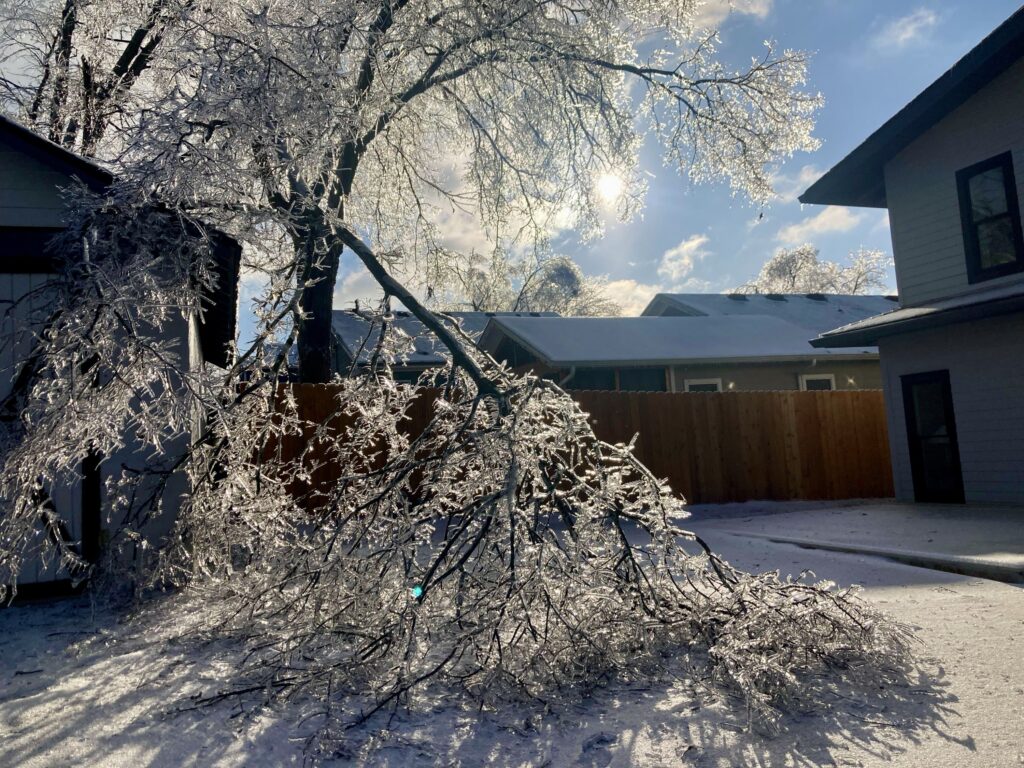
Nashville experienced a record volume of homes and businesses without power on Sunday, affecting as many as 500,000 people.
The partial blackout may last for days for many households, and new outages may form Monday as gusts of wind strike tree limbs already laden with ice.
“It is a little early, still, for us to know exactly the impact,” Brent Baker, vice president at the Nashville Electric Service, said Sunday. The power company covers all of Nashville and parts of six other counties.
Nearly half of its customer base lost power on Sunday afternoon. NES tracked a record 230,000 simultaneous outages, exceeding the previous high set in 2020.
The company deployed about 300 lineworkers across its service area for repairs on Monday. NES reported about 175,000 outages at 11 a.m.
Since each outage represents a home or business, the number can disguise the extent of the impact.
Here’s how it happened
The situation began Saturday morning. Snow dusted the city, prompting families to carry sleds to parks and neighborhood hills. But then the snow turned to sleet, and sleet transitioned to freezing rain.
By nightfall, frozen water fell from the sky, blanketing areas with upwards of half an inch of ice. The level of ice is rare for the area but “historic ice accumulation is not well documented,” said Tennessee state climatologist Andrew Joyner, with most sources pointing to 1994 as the last comparable ice event.
Before sunrise, many residents woke to the sound of thunderous claps of trees ripping apart, followed by mini avalanches of snow and ice.
Tree limbs snapped, utility poles cracked and electricity wires drooped towards the ground.
The situation continued to worsen Sunday morning as temperatures oscillated between just above and below freezing, causing a fast melt and refreeze process that hardened layers of ice. Occasional gusts of wind split trees further apart.
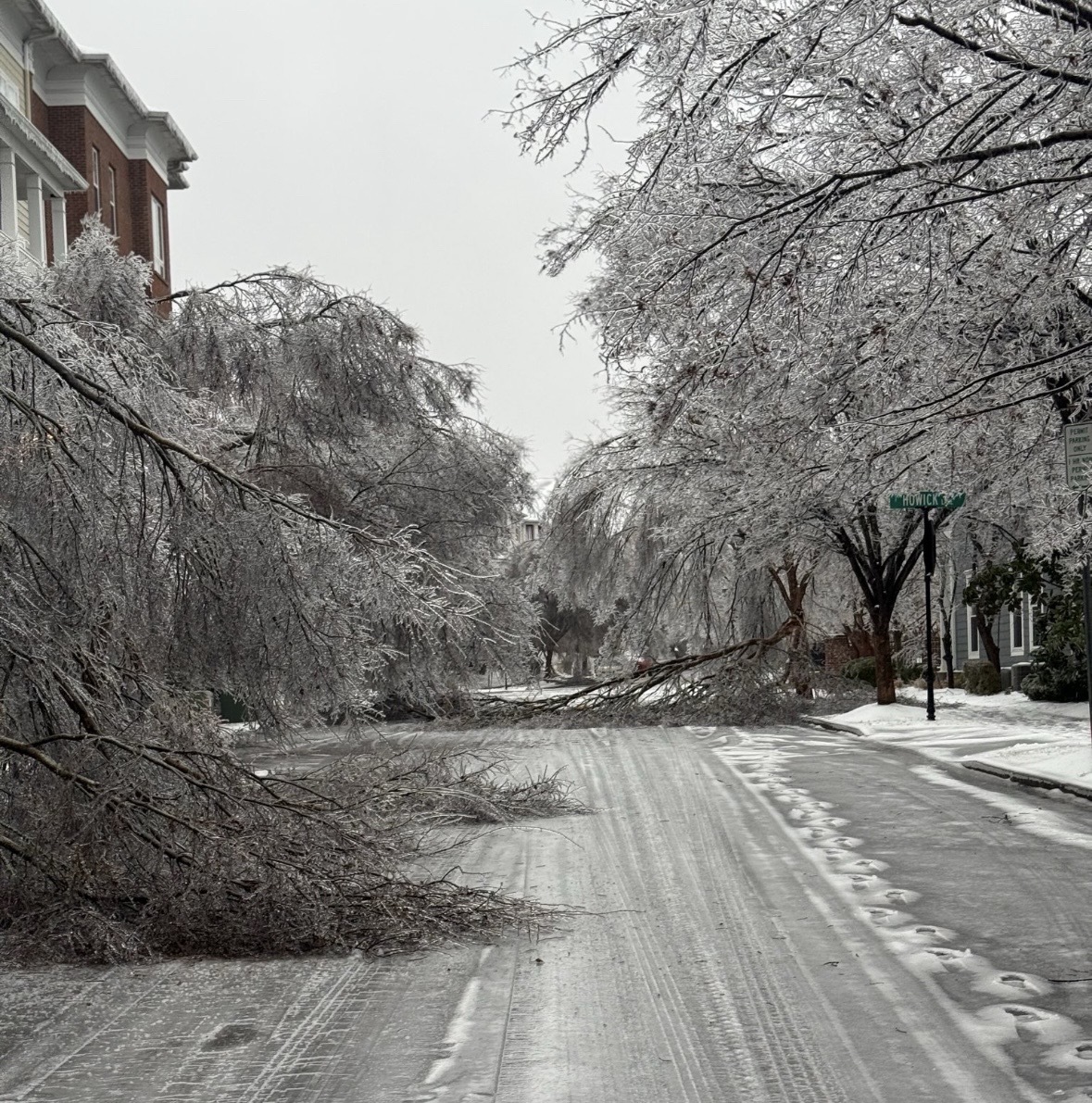 Courtesy Allie LaCombe/X
 Trees coated in ice split apart across Nashville on Jan. 25 and Jan. 26, 2025.
By Sunday afternoon, half the city lacked power, leaving many folks with a dilemma: bundle up and wait for power, or face dangerously icy roads to seek warmth.
Some residents faced bitter temperatures for hours to chip away ice from their driveways and cars. Other folks escaped to hotels, many of which sold out by evening. Not long after dark, streets appeared eerily empty.
Upwards of 500,000 people may have lost power
Nashville houses a population near about 700,000 people. The city has a shared government and population count with Davidson County, which includes six satellite cities and some unincorporated communities. The metropolitan area population exceeds about 2 million people.
Davidson County contains about 300,000 households with an average of 2.2 people per household, according to the U.S. Census Bureau.
The Nashville Electric Service covers all of Nashville and parts of six other counties.
With 230,000 customers without power at peak Sunday, the statistic suggests as many as 500,000 people may have lost power across the Nashville area alone.
NES set a new record for the highest number of simultaneous outages, surpassing the May 2020 windstorm event that knocked out power for about 200,000 customers.
What to expect next
NES is working across the city to replace broken utility poles and hang new electricity wire.
On Monday morning, the power company provided an update of 175,000 outages and more than 100 broken utility poles. NES restored power to about 60,000 customers overnight. The company recommends that residents check the parts of their homes that receive electricity from utility power lines in case they need electricians to help restore power.
Some residents may not see power restored for a few days and may need to find shelter.
“We are letting people know this is going to be a prolonged event, likely multiple days,” said Baker, the NES vice president. “Trees are the biggest challenge, even trees across roads. A lot of the work is also removing debris from the road to be able to get to the damage.”
Additional outages are expected Monday as winds move through the area. The National Weather Service warned Monday that any partial ice melting or slush on roads will quickly refreeze.
Regionally, the Tennessee Valley Authority provides electricity to local power companies like NES and Middle Tennessee Electric. The utility, which serves about 10 million people, reached a demand level of about 28 gigawatts on Monday morning, far from its peak of 35 GW set in January 2025.
TVA faces some vulnerability to winter storms due to its heavy reliance on fossil fuel infrastructure, particularly methane gas plants. The utility recently invested hundreds of millions of dollars into its system to enhance reliability after its coal and gas plants failed during a winter storm in December 2022 and triggered rolling blackouts.
TVA faced challenges with ice on its transmission lines Sunday, including one failed line serving Williamson County, but expects its system to remain stable this week.

 On Air - 90.3 WPLN-FM