
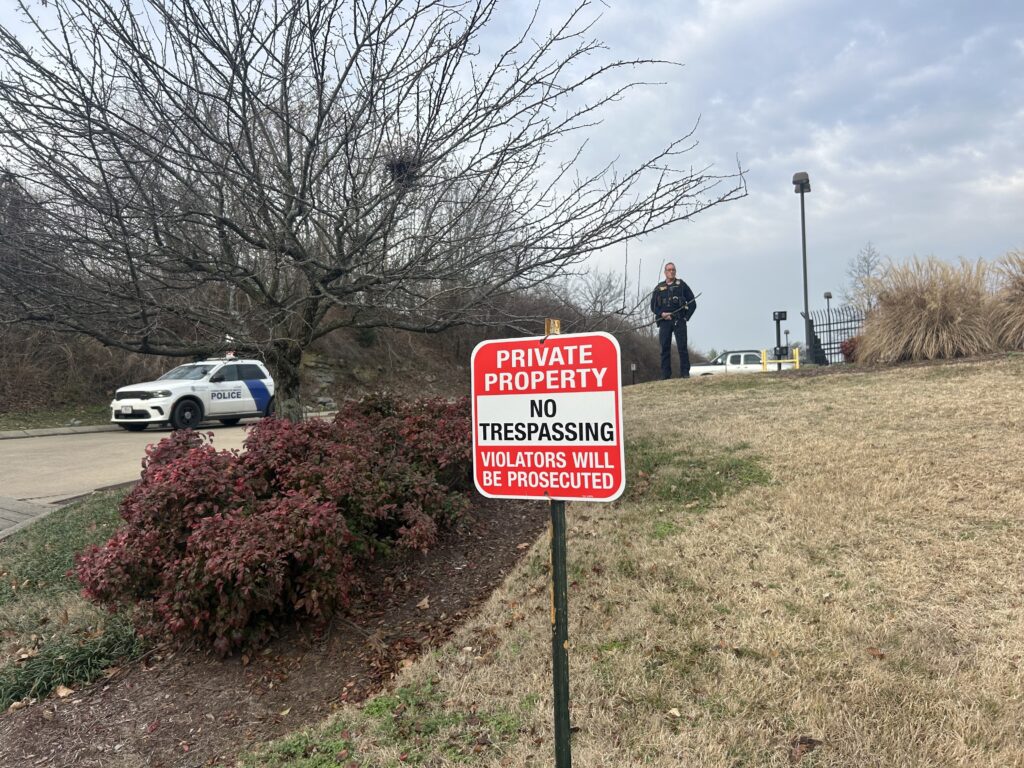
Killing to protect property is on its way to being permitted in Tennessee.
Lawmakers in both chambers have approved a bill that expands the use of deadly force. Currently, it is permitted only in cases of self-defense. Under the approved bill, lawmakers are allowing deadly force to protect against burglary, arson, robbery, aggravated robbery, grave sexual abuse or aggravated cruelty toward animals.
The bill was amended from its earlier form, which permitted deadly force in cases of trespassing. Advocates had expressed concern that this could impact homeless populations, or people accidentally walking or driving on to other properties.
The amendment does broaden the terms in permitting deadly force even if the target is facing away from the person who is armed. The original bill stated that deadly force was not permitted if the person was turned away.
The amendment also clarifies that deadly force is only permitted if the person is not engaging in any criminal activity that would constitute a felony or a Class A misdemeanor.
Opponents, including Nashville Rep. Justin Jones, said they fear the “shooter-first” mentality it promotes.
“What we’re encouraging is vigilante-style violence,” Jones said Thursday. “We’re encouraging escalation. There’s been multiple instances — people like Trayvon Martin, who had a Skittles and an iced tea, was killed by a neighborhood watchman who saw he was a threat. People like Ahmaud Arbery, who were jogging and were killed because these men thought he was in the wrong neighborhood. This is about life or death.”
Once signed by the governor, the law would go into effect July 6.
Reported April 6:
In Tennessee, residents are allowed to protect against theft or trespassing on their property through use of force, as long as it’s not fatal.
Deadly force is only permitted in the case of self-defense, given “a reasonable belief that there is an imminent danger of death, serious bodily injury or grave sexual abuse.” But a new bill, which is set to be heard by the House Judiciary Committee Tuesday, would allow for wider use of deadly force, expanding the scope to include property crime.
“It basically says that if deadly force is your last and only option to protect your private property, you can use it,” Rep. Kip Capley, the bill’s sponsor, said during a subcommittee hearing last month.
Deadly force is defined in the Tennessee state code as “the use of force intended or likely to cause death or serious bodily injury.” The bill says it would be allowed in cases of preventing “actual or attempted” trespass, arson, damage to property, including damage to livestock, burglary, theft, robbery or aggravated cruelty to animals.
There are restrictions — the bill says that deadly force is not justified if the trespasser is facing away, or if there are other methods to protect the property.
“You have to reasonably believe that you can’t protect your property otherwise,” Capley said. “So it’s, you know, we’re not shooting the pizza man.”
But many people are concerned.
Stephen Crump, the executive director of the Tennessee District Attorneys General Conference, testified against the bill. He said district attorneys were concerned about its breadth.
“Somebody stepping into your ditch or stepping into your yard, somebody turning around in your driveway would authorize the use of deadly force,” Crump said. “We think that is a significant departure from what we have previously used self-defense for and believe that this is, again, very problematic.”
Housing and homelessness advocates have also expressed their apprehension.
“When we think about trespassing or the issues that happen with that, our unhoused friends are squarely in the middle of those types of bills,” said Tracy Beard, the coalition coordinator for Housing for All TN. “So what you’re going to see with a bill like that being passed is a huge potential for life being lost, unnecessarily.”
Tennessee last updated the deadly force law in 2021, when it made it easier for people who had acted in self-defense to prove they were immune from lawsuits.
Update: This story was updated at 6:05 p.m. Thursday, April 23 to include the legislative outcome.

 On Air - 90.3 WPLN-FM