

What are we doing to keep the connections to Nashville’s civil rights past alive?
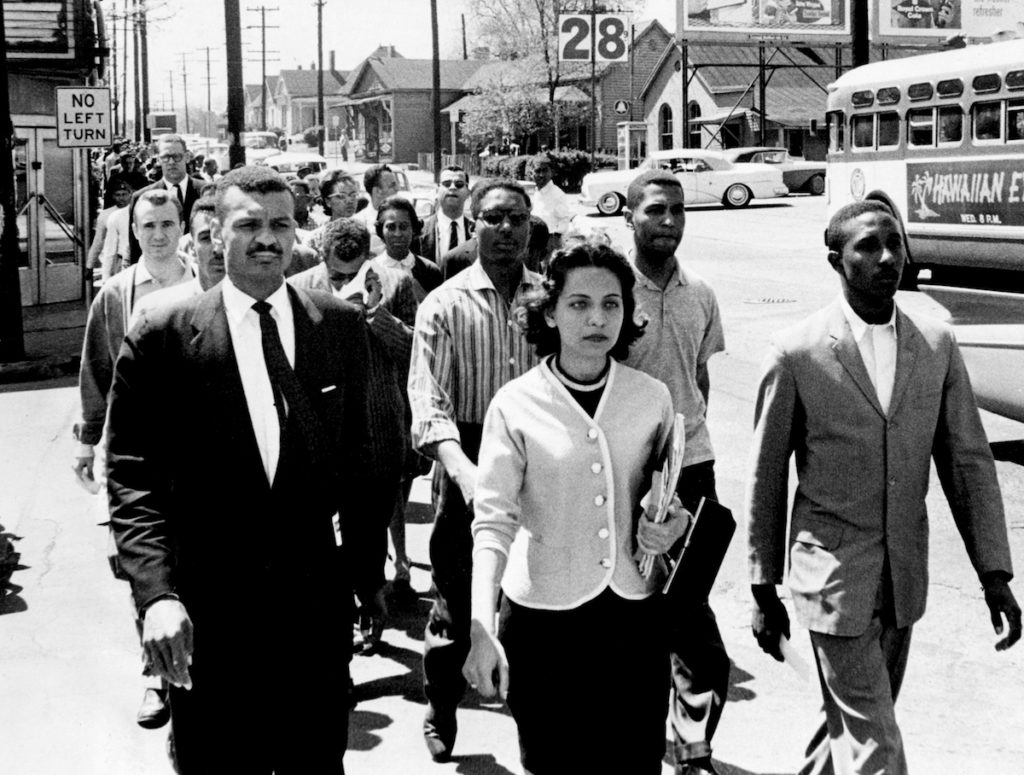
Last weekend, activist and organizer Diane Nash was honored near the spot where she challenged Nashville’s segregation laws, but many other places like those are in danger of being forgotten around the city. Plus the latest newscast and this week’s What Where WhensDay.
Below is a partial transcript of the episode:

It’s April 24, 2024. On this day in 1913, the Woolworth Building opened in New York City. It was headquarters for a five and dime store that helped revolutionize retail in the United States, with locations across the country, including Nashville. And in 1960, the Woolworth here was a key location in the lunch counter sit-ins organized by students at Fisk and TSU. It was an important moment in the city’s history, but also in the overall effort to improve Civil Rights.
I think sometimes we in Nashville underestimate just how important this city’s student activists were to the Civil Rights movement at a really pivotal moment. Their sit-in wasn’t the first, but it was one of the most extensively organized. It was sustained, and it was successful. For decades, Black folks had been trying in all kinds of ways to push back against Jim Crow discrimination, and the Nashville students made it happen. That was inspiring to so many people who needed encouragement that they could actually effect change.
The individuals who were doing things here were also significant leaders in the national cause. There was John Lewis who went on to help lead the march in Selma and ended up in Congress. James Lawson became a noted voice for passive resistance. And at the time of those sit-ins, Diane Nash was already a co-founder of the Student Nonviolent Coordinating Committee, or SNCC – a national group that organized college students across America.
This past weekend, Diane Nash was honored near the spot where those sit-ins found victory. If you don’t already know the story, student protestors would sit at downtown lunch counters, ask to be served and refuse to leave when they weren’t. When they were removed and jailed, more students would move in. And the ones in jail refused to post bail, essentially considering their jail time an extension of the sit-ins. It went on for two long months, with one of the city’s most prominent Black citizens at the time, the attorney Z. Alexander Looby, representing all of the students in court. It came to a head when his home was bombed. Thankfully, no one was hurt. But the students had a strong reaction. Hundreds marched in silence from Jefferson Street to the courthouse, downtown. They were met on the steps by Mayor Ben West. And Diane Nash asked West a pointed question with genius simplicity: “Is it wrong to discriminate solely because of race?” Ultimately, he had to say it wasn’t okay.
The following year, when the initial Freedom Rides seemed as if they would end almost as fast as they began, the same group of students took over the effort and pushed into the Deep South, knowing they were risking prison time, if not their lives.
So, why don’t more Nashvillians understand just what happened here, and how important it was? Well, for one thing, we haven’t really done that much to preserve the places that could help tell the story. Back in November, the annual list of endangered historic buildings in the city was completely devoted to important Civil Rights sites, including the homes where so many of the organizers lived and met with their compatriots. If nothing else, you’d think Looby’s home would be kept special. After all, it was an attack on that structure that played such a galvanizing part in a really key moment. But no, that’s one that’s considered endangered.
Now, the city has named a plaza on the courthouse grounds for Diane Nash. And if you haven’t been to the Civil Rights Room in the downtown library, it’s a very special place that I’d recommend everyone visit.
But there is something about preserving a home that helps people really put themselves in a past moment in time to feel the humanity of the people who lived there. If you look around the handful of stately antebellum homes that have survived in Middle Tennessee, those buildings don’t necessarily stand now because of their architectural value — I mean, I’d be happy to direct you to several books in the library’s Nashville room with lovely renderings of beautiful structures that were not preserved. No, in almost every case, they’ve been kept because it helps us remember the people who lived there – Andrew Jackson, the Overtons, the McGavocks. We can connect to them in a special way when we’re in their physical space.
On the other hand, if all we’re able to save is their name, then the name just becomes another word, with little meaning to most people. And previous generations of Black Nashville History have already suffered that fate. For example, you may have heard of the J.C. Napier housing project. You probably haven’t ever heard that the man J.C. Napier led Civil Rights efforts in this city at the turn of the 20th century and ended up running the U.S. Treasury during the Taft administration. He was a remarkable man. And where are you going to go now to connect with who he was as a person?
This is why those homes on the endangered list are so important. It’s why there’s such an effort to protect Fort Negley, which was built by Black laborers during the Civil War. It’s why people rallied in hopes of saving the Morris Memorial Building downtown, designed by a landmark Black architect, once served as the great physical embodiment of Napier’s generation of Black Nashville (who, by the way, were an audacious and creative group of people, who aren’t anywhere near as well known as they should be anymore).
The Morris Memorial Building was purchased by developers in December. They say they’ll keep it, but the interior will likely be gutted as it’s remade into a hotel.
Credits:
This is a production of Nashville Public Radio
Host/producer: Nina Cardona
Editor: Miriam Kramer
Additional support: Mack Linebaugh, Tony Gonzalez, Rachel Iacovone, LaTonya Turner and the staff of WPLN and WNXP
 On Air - 90.3 WPLN-FM