
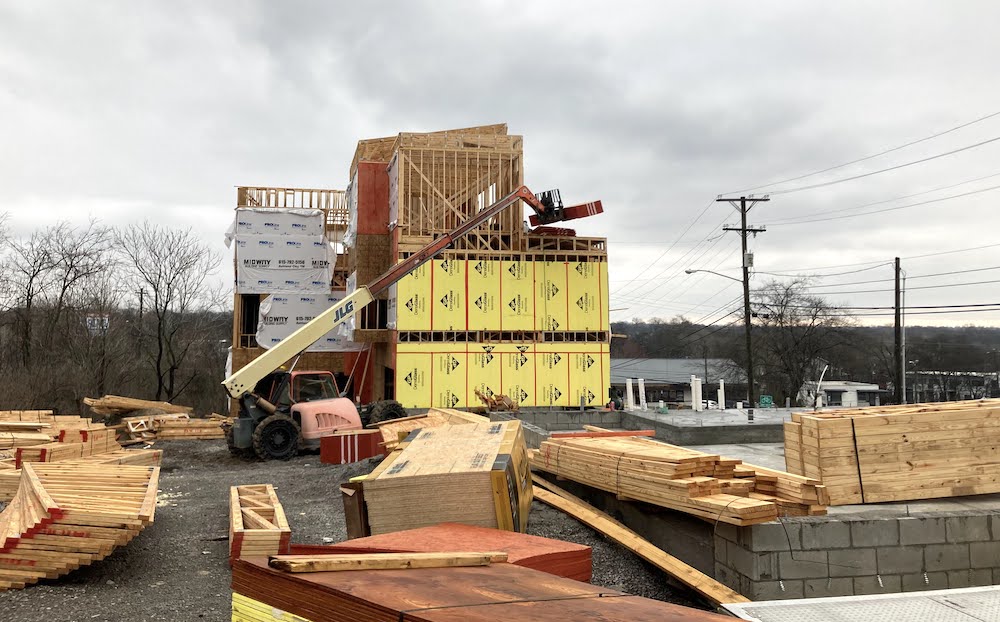
Nashville is altering its zoning code.
The changes are part of a broader effort to expand the city’s affordable housing stock. Earlier this year, a housing and infrastructure study from Metro’s Planning Department found that Nashville will need approximately 90,000 more units over the next decade to keep up with demand. The report found that a significant increase in demand, alongside slow development, has caused shortages and inaccessible pricing.
One approach to speeding up development is to adjust a city’s zoning code to allow for denser housing. It’s a controversial approach that has sparked a vicious debate between those in favor of zoning changes (often called YIMBYs, an abbreviation of Yes In My Backyard) and those against (NIMBYs, or Not In My Backyard).
Still, the city has moved forward with changes. Earlier this year, District 20 Councilmember Rollin Horton successfully rezoned the neighborhood he represents, the Nations. And Metro’s Planning Department has been championing four zoning bills meant to address the housing shortage — two of which have now been approved by the Metro Council.
One bill lets more people build detached accessory dwelling units or “DADUs” — like garage apartments or in-law suites. The legislation greenlights detached units in parts of the city’s Urban Services District, making it possible for property owners to build one without having to apply for a DADU overlay. It would also add the overlay as an option in the city’s General Services District.
The other bill — and the more controversial of the two — will add two new zoning districts to Nashville’s array of existing options.
District 3 Councilmember Jennifer Gamble, one of the sponsors, told WPLN News the new districts will allow for different types of “middle housing” — like quadplexes, or courtyard apartments.
“Families who are just starting out — like I was almost 30 years ago — are not able to afford to buy a home for their family just because of the rising costs,” Gamble said. “These new housing types are smaller footprint, require less land, require smaller square footage to try to keep those costs down, but still providing quality housing, quality housing for families to invest in.”
These new districts will not be automatically applied to neighborhoods. Rather, councilmembers or property owners can seek to rezone properties using the new options.
Other zoning bills from the planning department are still under council consideration. Those seek to limit building heights in some neighborhoods, to change the process for approving duplexes and to create an incentive program for developers to build more affordable multi-family housing.

 On Air - 90.3 WPLN-FM