


Summer nights have been extremely hot in Nashville.
In the last two weeks, Nashville’s average low temperature was nearly 76 degrees Fahrenheit — roughly the city’s average high temperature in May.
And this past week was even hotter.
The average low temperature from July 23-29 was 77 degrees, more than 6 degrees warmer than average, according to the Southeast Regional Climate Center, which has data going back about 90 years. (Nashville set its highest minimum temperature of 85 degrees in 1954.)
For the summer season thus far, the city’s low temperatures have been the hottest ever recorded. Between June 1 and July 29, the city’s average minimum temperature was 71.8 degrees. Nashville was nearly this hot at night over the same months in 2022, according to National Weather Service data.
Nashville has also been sizzling during the day.
On Thursday, the city hit at least 90 degrees for the 30th day in a row, surpassing the streak of 28 days set in 2022 as the fifth-longest heat streak on record. Nashville set the record with 34 days in 2007, and three other years share the next record of 31 days.
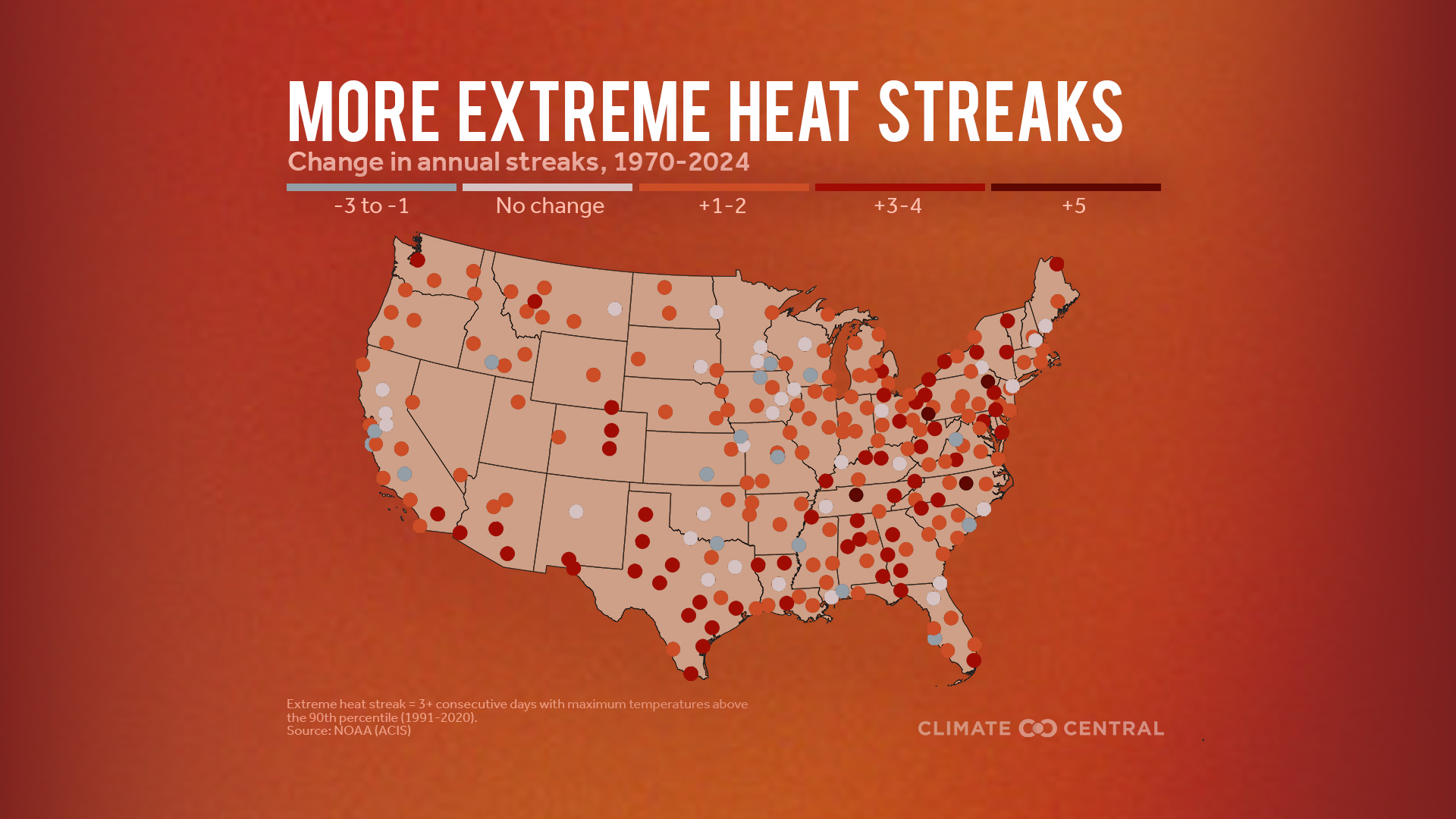 Courtesy Climate Central
 Nashville is experiencing more heat streaks each year.
High temperatures have been compounded by humidity, which has pushed the heat index to 115 degrees, according to the weather service.
Heat waves are becoming more frequent and intense because Earth is heating up. Extreme heat is dangerous, killing more people in the U.S. than all other weather-related disasters combined. Air quality can worsen, power demand surges and risks for heat-related illness increase.
Nashville has experienced its two hottest years on record during the past two years, but heat records aren’t always broken in the summer months.
If this summer season were over now, 2025 would rank as Nashville’s third-hottest summer.
But that could flip in August. The weather service’s forecast for the next week includes milder temperatures and possible thunderstorms.

 On Air - 90.3 WPLN-FM