
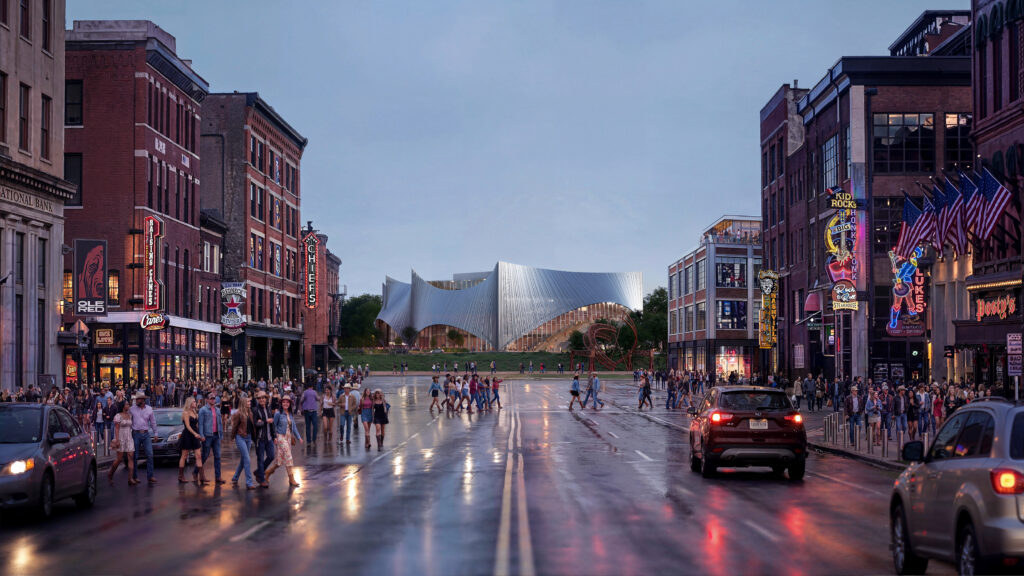
In a few years, when Nashvillians and tourists look down Lower Broadway toward the river, they’ll see sweeping waves of metal encasing a new Tennessee Performing Arts Center.
The new facility will be situated within Nashville’s redeveloped East Bank, across the Cumberland River from downtown. The mostly industrial area is in the middle of a long-term transformation, as the city seeks to revitalize an area that has long sat largely empty, housing mostly concrete and a scrapyard.
More: Metro reaches deal with TPAC for performing arts center on East Bank
The new TPAC, which will be relocating from its current downtown location near the state capitol, will play a key role in the East Bank’s revitalization. The project — which was finalized in an agreement between Metro and TPAC late last year — will be costly. The state has dedicated $500 million toward construction, contingent on TPAC raising private matching dollars and Metro’s involvement.
The city, along with TPAC, will be footing the infrastructure bill. At one point, negotiations over the division of infrastructure costs threatened to derail the deal. Under the terms of the final agreement, Metro is responsible for $42 million more than in the original plan.
“This new center represents a commitment to Nashville, to Tennessee, and the role the arts play in shaping who we are and who we’re becoming,” said Jennifer Turner, TPAC’s CEO.
Now, designers have provided a glimpse of what the new facility will look like.
 Bloomimages Courtesy of TPAC
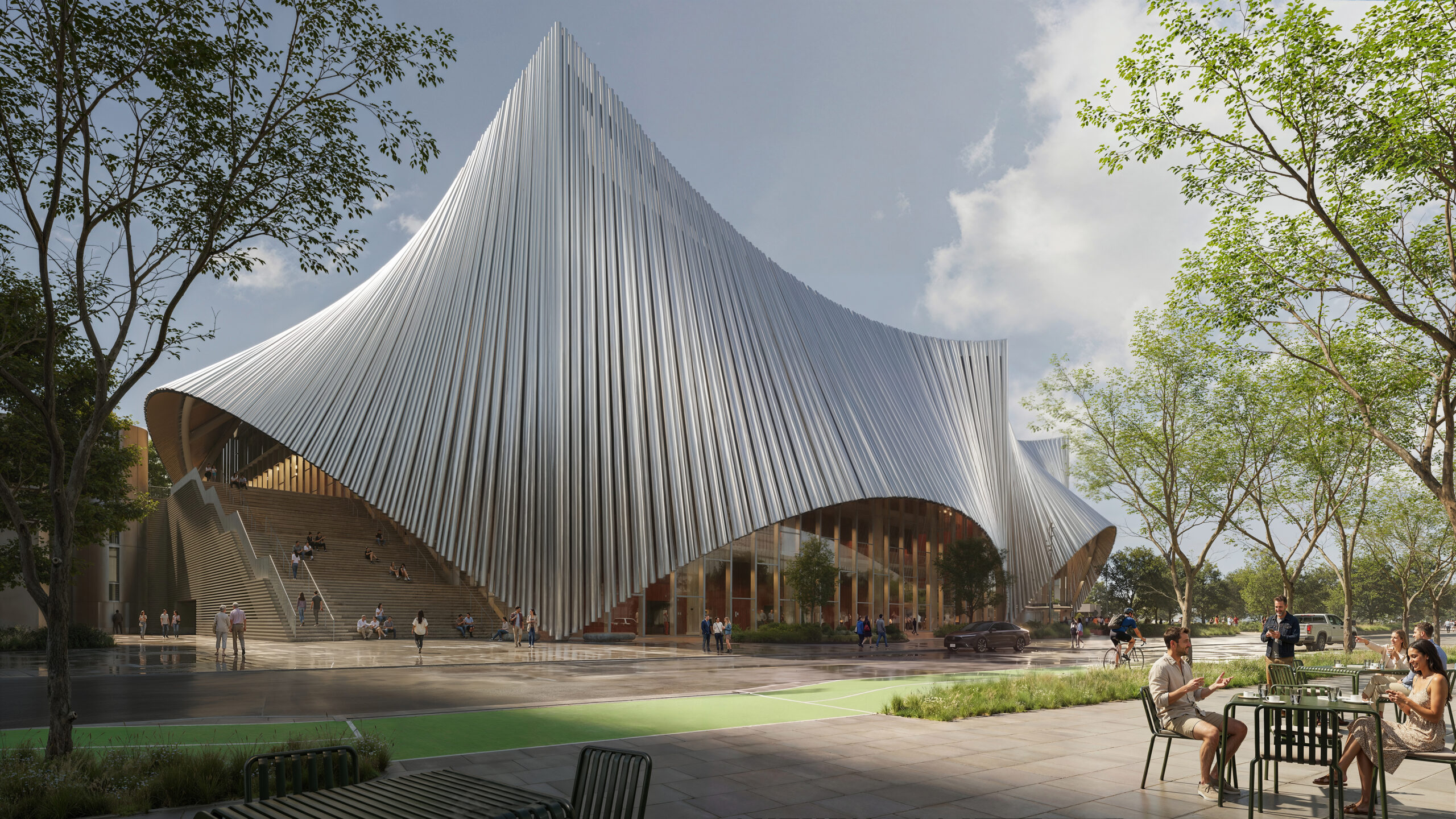
The new TPAC will be situated on Nashville’s East Bank.
The project is led by prominent Danish architect Bjarke Ingels, in collaboration with William Rawn Associates and Nashville-based HASTINGS Architecture.
“We tried to see if this kind of canopy that becomes the invitation wrapping around the building could be a sort of architectural manifestation of music and performance,” Ingels said. “We imagine the future TPAC to be this kind of rhythmical enclosure.”
Turner, the CEO, says the location and architecture allow for it be enjoyed by passers-by as well as theater-goers.
“I don’t see this as a space that you have to have a ticket to enjoy,” Turner said. “You’ll be be able to come and enjoy the gardens, both on the plaza and the bridge level. You’ll able to come and be a part of the building, sit on the community steps, look out at the river.”
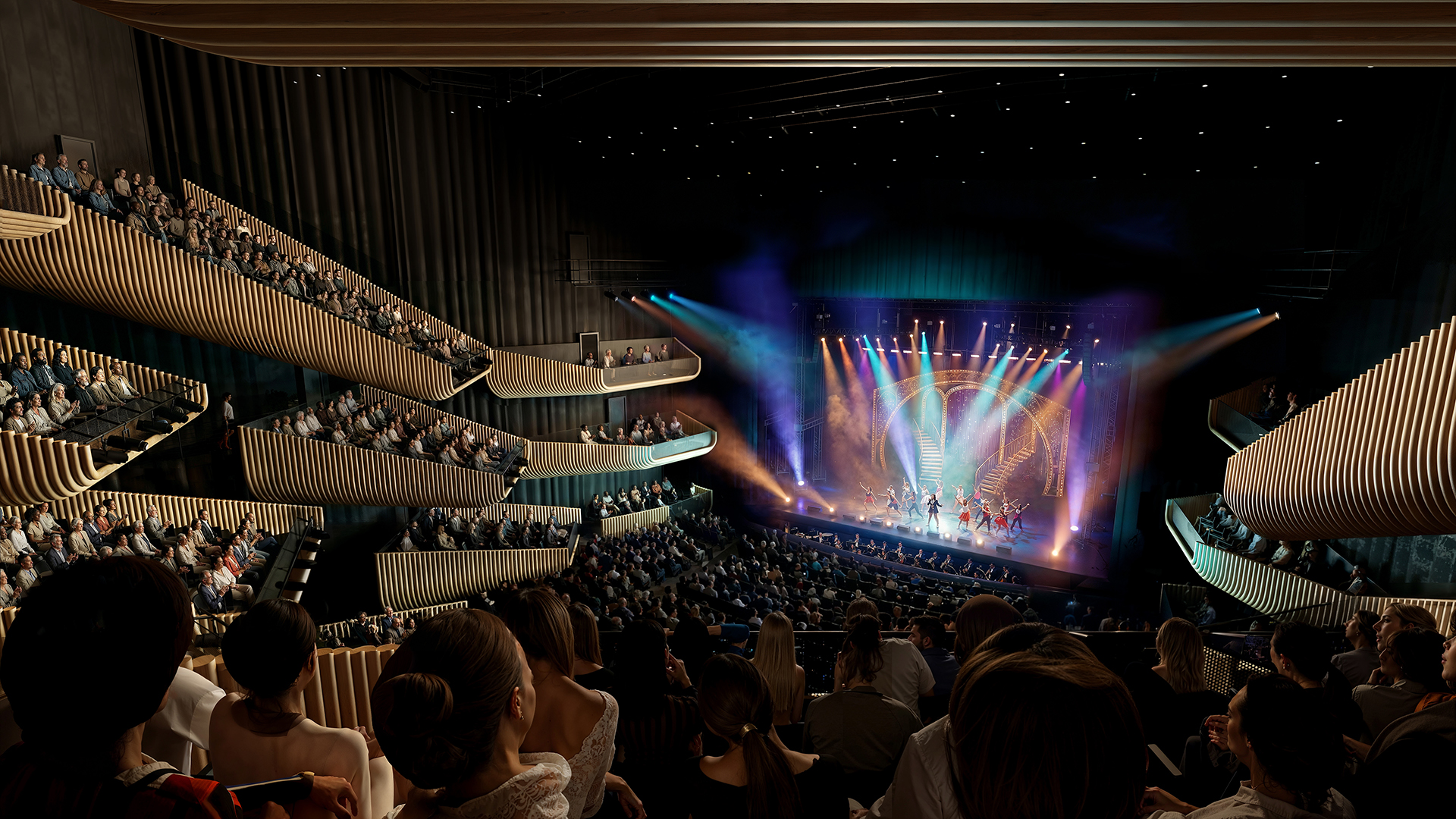
Inside, the new 307,000-square-foot facility will feature new theaters and rehearsal and community spaces. The performance venues will include:
 Bloomimages Courtesy of TPAC
The “Grand Broadway Hall” will seat roughly 2,600 people.
- 2,600-seat “Grand Broadway Hall”
- 650-seat “Dance and Opera Hall”
- 400-seat black box theater and
- 150-seat cabaret space for “intimate performances”
Megan Murphy Chambers, a performer with Nashville Repertory Theater, says upgrades to dressing rooms and security access will make a big difference to performers.
“They’re little things, but when you are essentially living there for weeks at a time, getting things upgraded a little bit is gonna make a tremendous difference,” she said.
Parking in progress
One of her biggest hopes for the new space is for better parking.
“I think everybody’s principal drawback with the current location is the parking situation,” Murphy Chambers said. “I know plenty of folks who prefer not to go downtown period. And I totally get it. The difficulty and expense and distance of parking, I think, is already an impediment for a lot of people.”
But there’s not yet a perfect fix. The new TPAC will feature a small, 170-space parking garage that can’t accommodate performances with 2,000-plus audience members.
TPAC’s CEO says that long-term, the center is counting on the overall East Bank redevelopment to include enough parking.
Construction of the new facility is expected to start in early 2027.
 Bloomimages Courtesy of TPAC
The rooftop of the new TPAC will overlook downtown Nashville.

 On Air - 90.3 WPLN-FM