
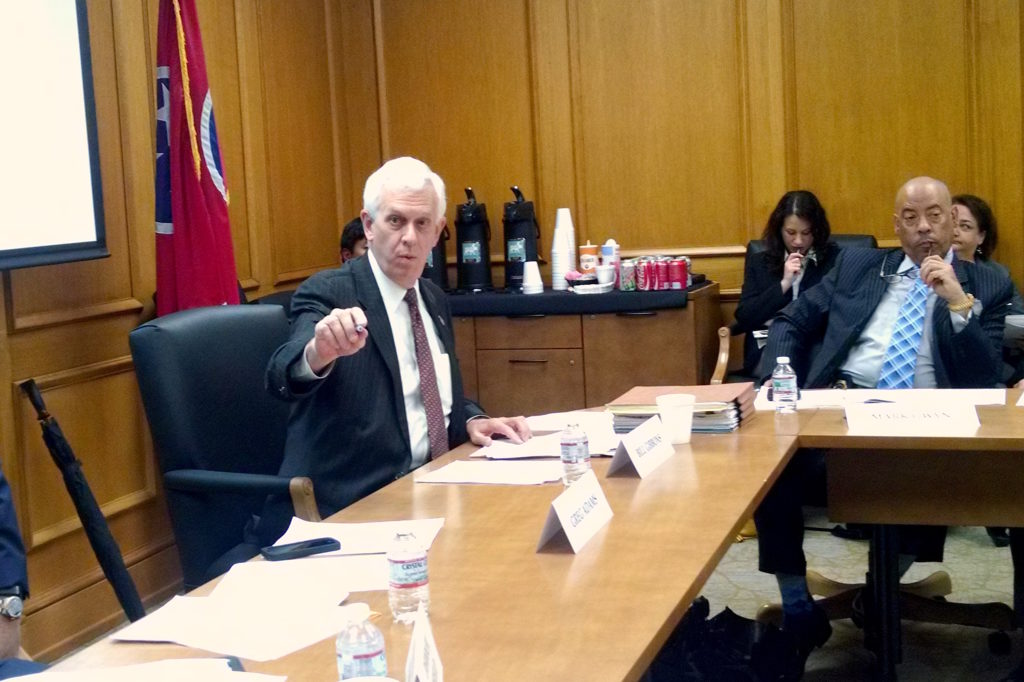
A task force that has been reviewing Tennessee’s sentencing laws is standing by recommendations for tougher penalties on some crimes.
The question now will be what, after 10 months in development, happens next with its plan to reduce Tennessee’s high rate of repeat offenders.
The Governor’s Task Force on Sentencing and Recidivism released its report Thursday. The group has been criticized for consisting of too many law enforcement officials and prosecutors and too few people who represent defendants.
But the group did not back down from its most controversial proposals: increasing prison time for repeat offenses of aggravated burglary, drug trafficking and some cases of domestic violence.
Tennessee Safety Commissioner Bill Gibbons endorsed the proposal.
“We heard, again and again from law enforcement, about individuals who commit one home burglary. They’re right back in the neighborhood within months, and we understood that concern.”
But Gibbons and other members say those tougher penalties should be weighed against other recommendations.
The report calls for setting firm release dates for all criminals. Right now, those decisions are left to the state’s parole board, which is sometimes criticized for being too tough.
The task force also calls for continuing to support drug, mental health and veterans courts. And it wants to increase supervision for everyone who’s released from prison, including those who have served out their time.
“We’ve got to make sure that we’re incarcerating the people that have proven to us that they can’t follow the laws,” Shelby County District Attorney Amy Weirich said, “and we need to make sure those offenders that we can get help and keep them from reoffending, that we’re providing them with everything in the community that we can.”
The recommendations are supposed to be reviewed by another panel of cabinet-level officials, but Gibbons, that group’s chairman, said members are already on board.
That means the proposals could reach Gov. Haslam’s desk within weeks. He’s expected to use the report to launch new legislation, which state lawmakers would vote on next year.


 On Air - 90.3 WPLN-FM