

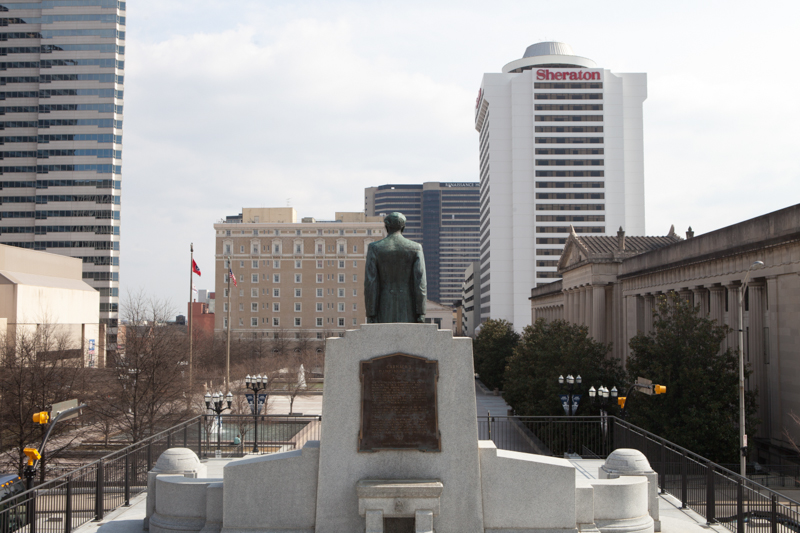
It may soon be harder to take down memorials to Confederate figures in Tennessee, as House lawmakers voted Thursday morning to ratchet up the requirements.
The move follows a debate this summer over what to do with a prominent bust of Nathan Bedford Forrest.
The House voted 71-23 to rewrite the Tennessee Heritage Preservation Act, the law that lays out how state and local governments are to change the names or remove historic memorials.
Tennessee leaders first tried to tighten up the process for taking down memorials three years ago. That didn’t stop people from calling for Forrest’s bust in the state Capitol to be removed after last summer’s shooting at a black church in Charleston.
State Rep. Johnny Shaw, D-Bolivar, says the sculpture of the Confederate commander and others like it are reminders of the state’s segregationist past. He says there’s no excuse for keeping them up.
“You know, a criminal act is a criminal act. A good act is a good act. Either way you cut it, if it’s old or new. And I think we are really endorsing some criminal acts.”
Tennessee lawmakers declared in 2013 that they did not want Confederate memorials — or those to any other historical figures — removed. That came amid a dispute over whether to rename parks in Memphis that honored Confederate figures, including Forrest. That fight is still going.
House Bill 2129‘s backers argue the state needs clearer guidelines. They want to require a two-thirds majority vote from the Tennessee Historical Commission to take down any monument, to rename a building or to change the names of streets honoring figures from the past. The proposal also lays out requirements to hold a public hearing and to wait at least 180 days before taking action.
Jeremy Faison, R-Cosby, says such safeguards will protect state history.
“We know what we did wrong, because we still have the history of what we did wrong.”
As for Forrest’s bust, it appears to be safe — whether the legislature acts or not.
After last year’s outcry, the state Capitol issued new rules for public memorials. But once the furor died down, no further action was taken.


 On Air - 90.3 WPLN-FM