

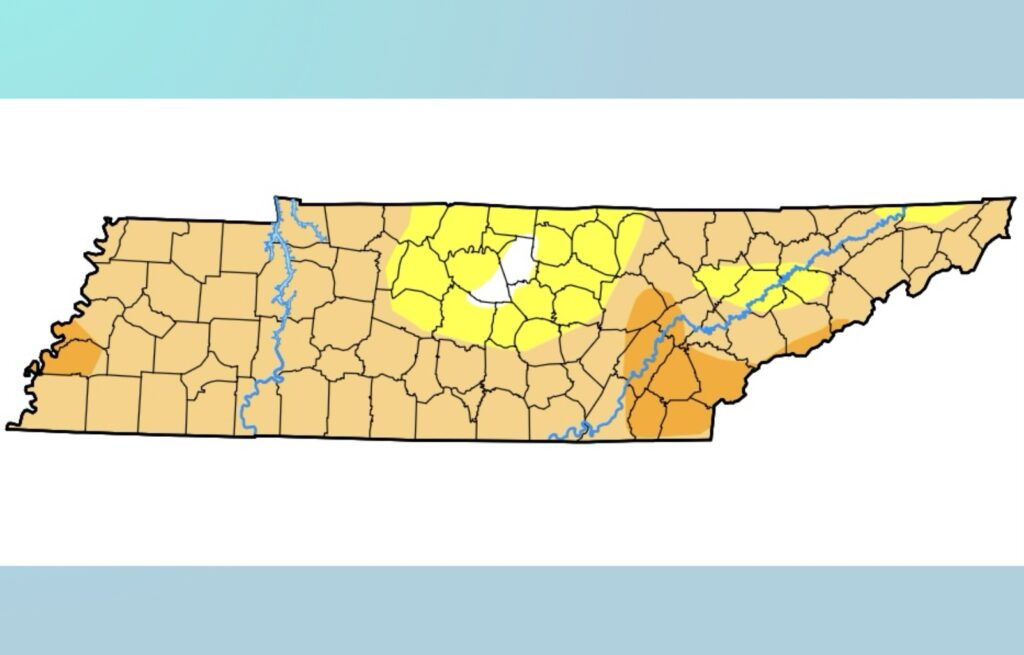
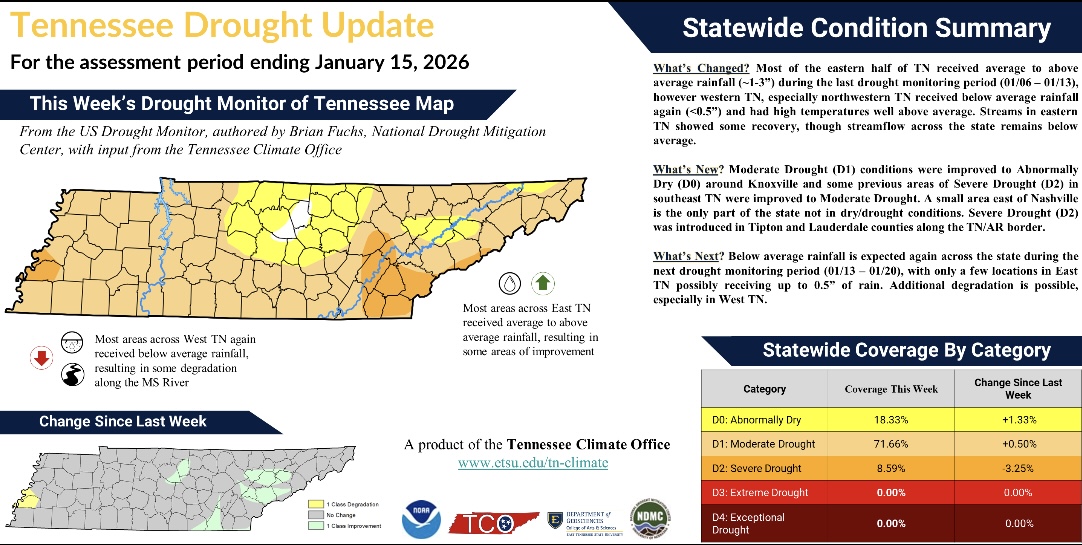
Tennessee is in widespread drought for the fifth year in a row.
Drought covered 98% of the state this week, with 80% of the land meeting the qualifications for “moderate drought.”
Fall is the most common season for drought in the Southeast, as the area relies on rainfall from tropical storms. Tennessee experienced fall droughts for the past four consecutive years. The state largely recovered from the latest fall drought by late October, but dry conditions expanded once again this past month.
The fall drought of 2023 was particularly notable. The Southeast had its third most active wildfire season, following the severe drought years of 2000 and 2016, according to a review backed by the National Oceanic and Atmospheric Administration. The highest concentration of wildfires occurred in Mississippi and Alabama.
The Southeast often oscillates between heavy downpours and stretches of dry periods, increasing vulnerability to “flash droughts.”
Limited data monitoring due the lack of mesonets, which are statewide networks of weather stations, make it difficult for forecasters to detect emerging droughts. Gov. Bill Lee approved funding for a mesonet in Tennessee last year, but no stations have been built yet.
Without a mesonet, many areas have limited forecasting capabilities. Even large cities like Nashville have a small number of gadgets, at least officially, to monitor the varied aspects of weather beyond temperature and precipitation.
Nashville has maintained an abnormally dry level in recent weeks but has not reached “moderate” drought, which is often accompanied by agricultural ponds drying up, dusty conditions, increased fire risks, more insects and voles, and high water demand, according to the U.S. Drought Monitor.
Nashville received just under two inches of rain in November and about 2.7 inches in December, both roughly two inches below the 30-year average, according to the National Weather Service.

 On Air - 90.3 WPLN-FM