

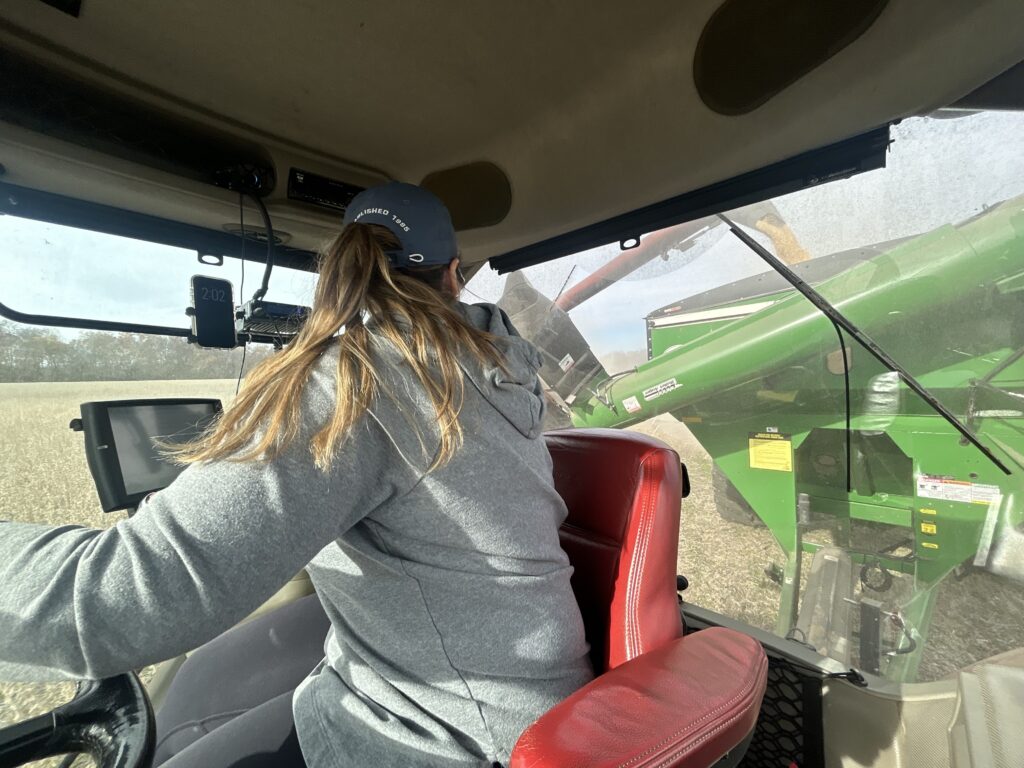
The trade war between the United States and China has made for a rocky soybean harvest season. The Trump administration announced a $12 billion aid package for farmers to try and make up for the ensuing shortfalls, but farmers still expect to lose money on this year’s crop.
Will Hutchinson is a fourth-generation farmer. He grew up working on his family’s farm in Middle Tennessee with his father, which he now runs with his sister.
“Whether my kids want to come back and farm, that’ll be totally up to them. It’s certainly a labor of love and it would become a prison of misery if you didn’t make that decision yourself,” he said.
Farming always involves a certain amount of risk: you can’t always know when a storm or a bad drought will wreck your crop. Hutchinson said that since the coronavirus pandemic, inflation has continued to drive up his costs. Now, tariffs are adding new uncertainties.
Soybeans are Tennessee’s number one crop, and China has been, by far, their number one buyer. But that changed when Trump announced heavy tariffs against them earlier this year — right in the middle of harvest season.
“It just hit us at a very, very delicate time in our season. Time of year is just extremely important to our business, so that part really stung,” he said.
 Rose Gilbert WPLN News
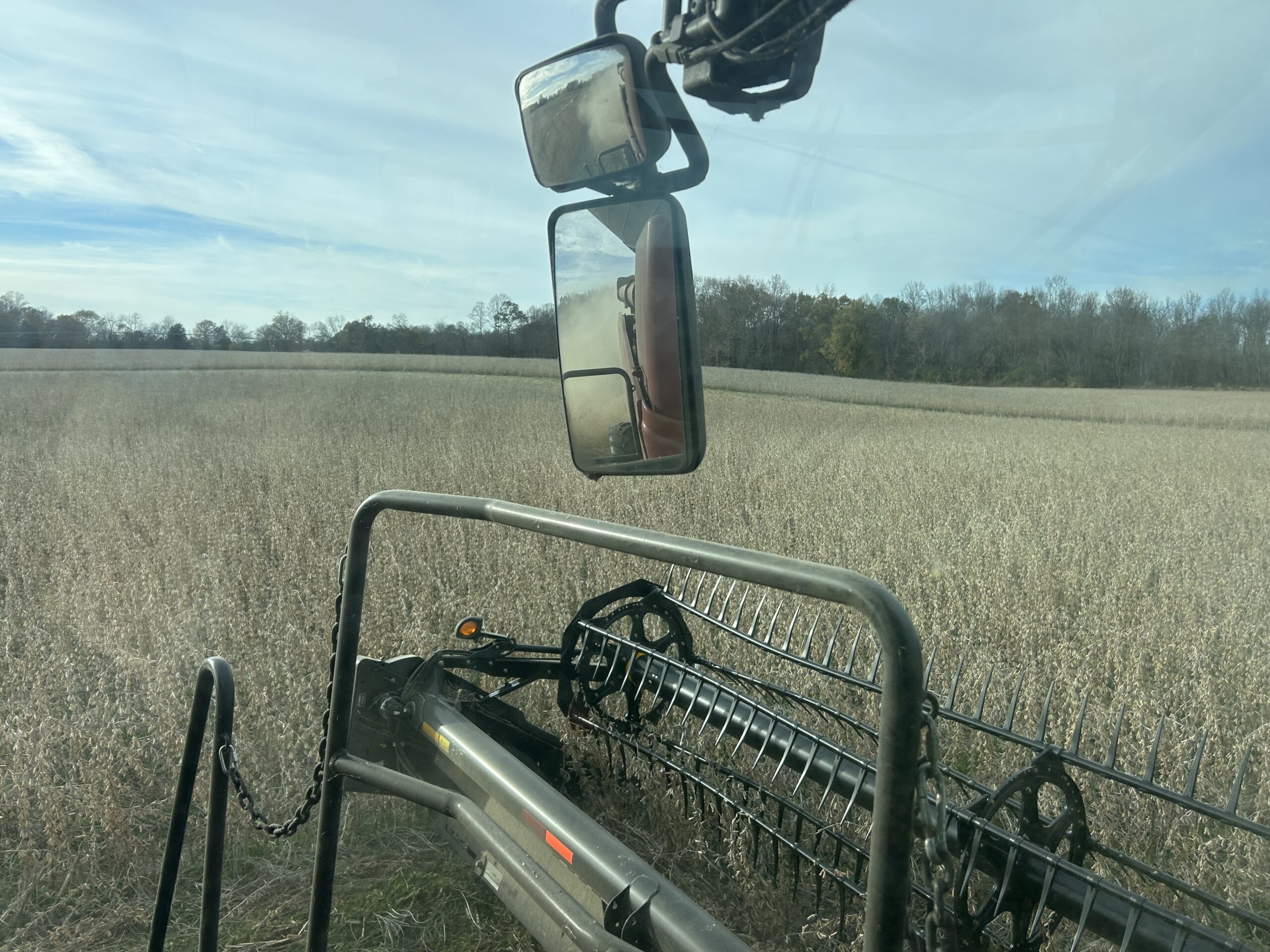
 Soybean plants being harvested by a combine at Hutchinson Farms.
In October, Trump reached a deal with Chinese President Xi Jinping to lower tariffs and resume purchases of American soybeans, but those sales haven’t materialized yet.
We’ve been through this before. During the first Trump administration, the president levied tariffs against China, causing China to retaliate with tariffs against American soybeans.
“It set a precedent,” said Andrew Muhammad, a professor of agricultural policy at the University of Tennessee. He explained that Trump’s first trade war in 2018 caught everyone off guard, including China. But since then, China has been decreasing its reliance on American exports.
“It appears that the Chinese for quite some time have developed supply chains with South America, and so therefore they’re much more reliant on Brazilian soybeans than American soybeans, unlike say four or five years ago,” he said.
In other words, they don’t need our soybeans as much. And Muhammad said those new supply chains could be a lot harder to undo than the tariffs themselves, which is why the Tennessee Soybean Promotion Council is working to find new buyers.
 Rose Gilbert WPLN News
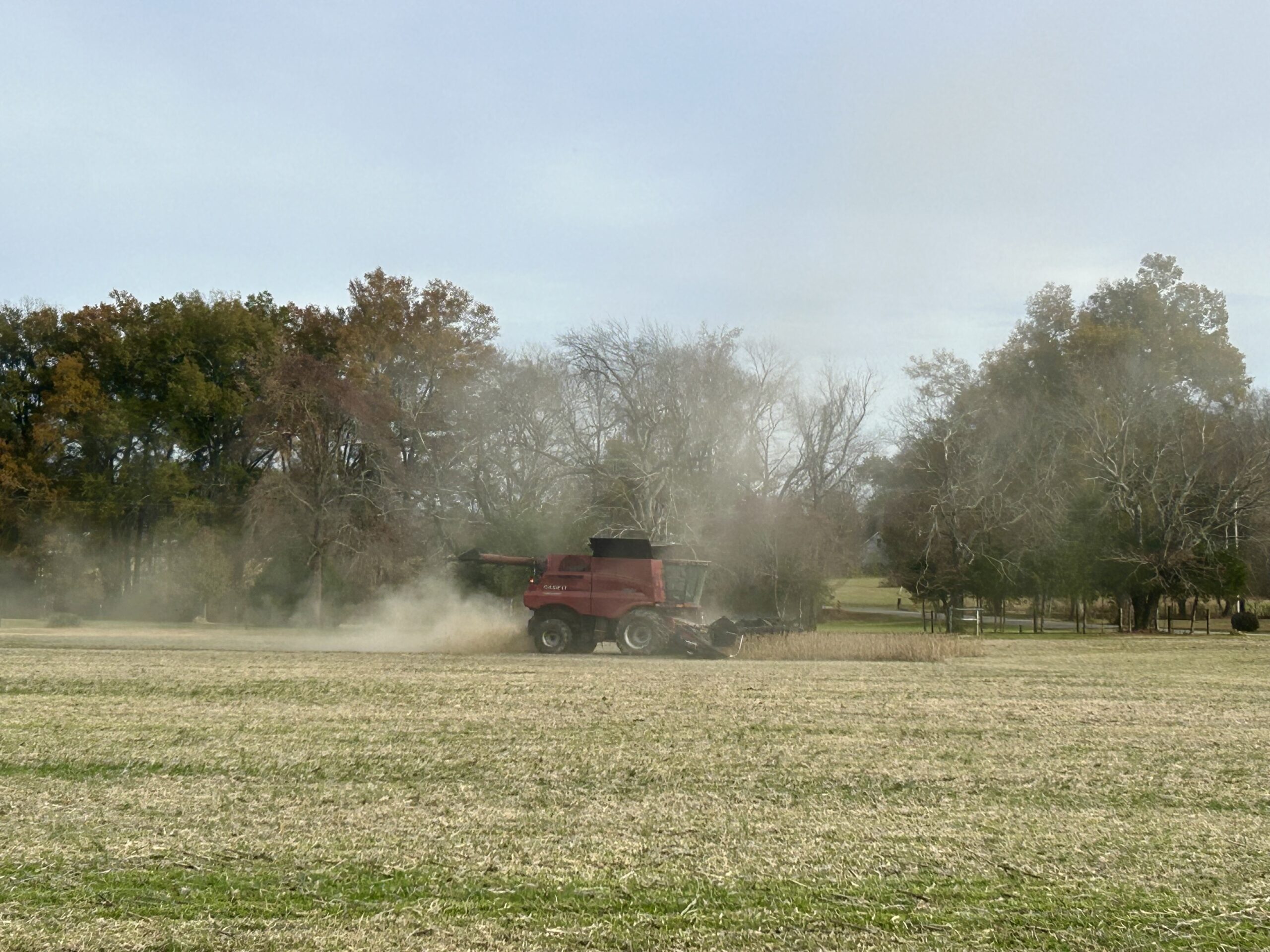
 A combine harvests the last few rows of soybeans left in a field at Hutchinson Farms.
Replacing China as a buyer could be tough, given that they usually buy more than half of all American soybeans. But Stefan Maupin, executive director of the Tennessee Soybean Promotion Council, pointed out that every bushel of soybeans Brazil sold to China was a bushel they couldn’t sell to Egypt or the European Union, creating the potential for new trade partners.
“At the end of the day, the world has to have protein. And that is what we’re producing,” he said.
Maupin added that groups like the Tennessee Soybean Promotion Council and the American Soybean Association are also exploring other uses for soybeans, including biofuel. But all of that takes time. Maupin worries that farmers may not be able to afford to plant as many acres in the coming year, or that some might not be able to afford to continue farming at all.
And, ideally, planning for next year’s crop rotation needs to be in place by Christmas Day.
“Going into this holiday season, I can assure you there is no extra money. They have lost money again this year. So it would be as if you only got paid one time a year and you came to this time of year and your employer said, ‘I’m sorry, there’s not gonna be paychecks. Let’s hope it gets better next year.’”
Hutchinson said that these losses have taken a serious toll on many farmers’ mental health, citing a recent 60 Minutes segment that covered alarmingly high suicide rates in agricultural communities. However, he is determined to stay hopeful.
“A farmer has no choice but to be an eternal optimist. Time will tell if that’s confidence or ignorance. But the way I see it, we have no choice but to just keep swinging,” Hutchinson said.
 On Air - 90.3 WPLN-FM