
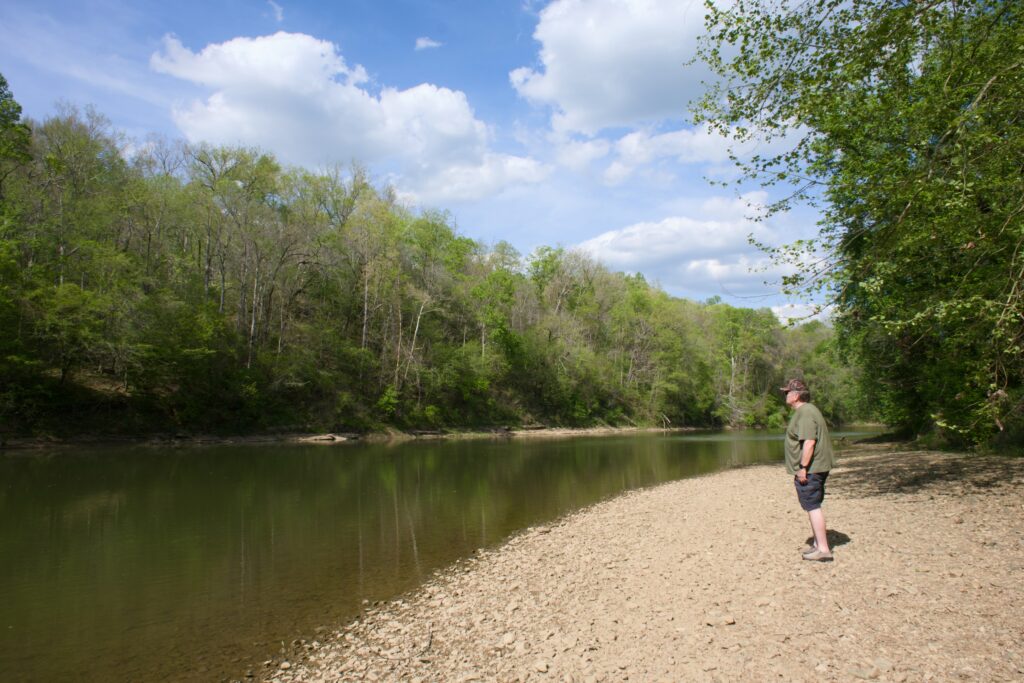
Doug Jones watches wood ducks fly across the clear, greenish waters of the Duck River.
“A lot of the time the mamas will fly real low to drag you away from the little ones,” Jones explains.
The river is part of his backyard. Jones lives on a 150-acre farm in Hickman County, where his property borders about a mile of the Duck River. The land traverses rolling forests, meadows of wildflowers and springs.
Watching critters is a favorite pastime of Jones, and he is in one of the best spots in the world to do it: the Duck River is considered the most biodiverse river in North America.
“This is sort of wild country, what’s left of Middle Tennessee’s wild country,” Jones says. “We have mountain lions come through occasionally. We have big rattlesnakes.”
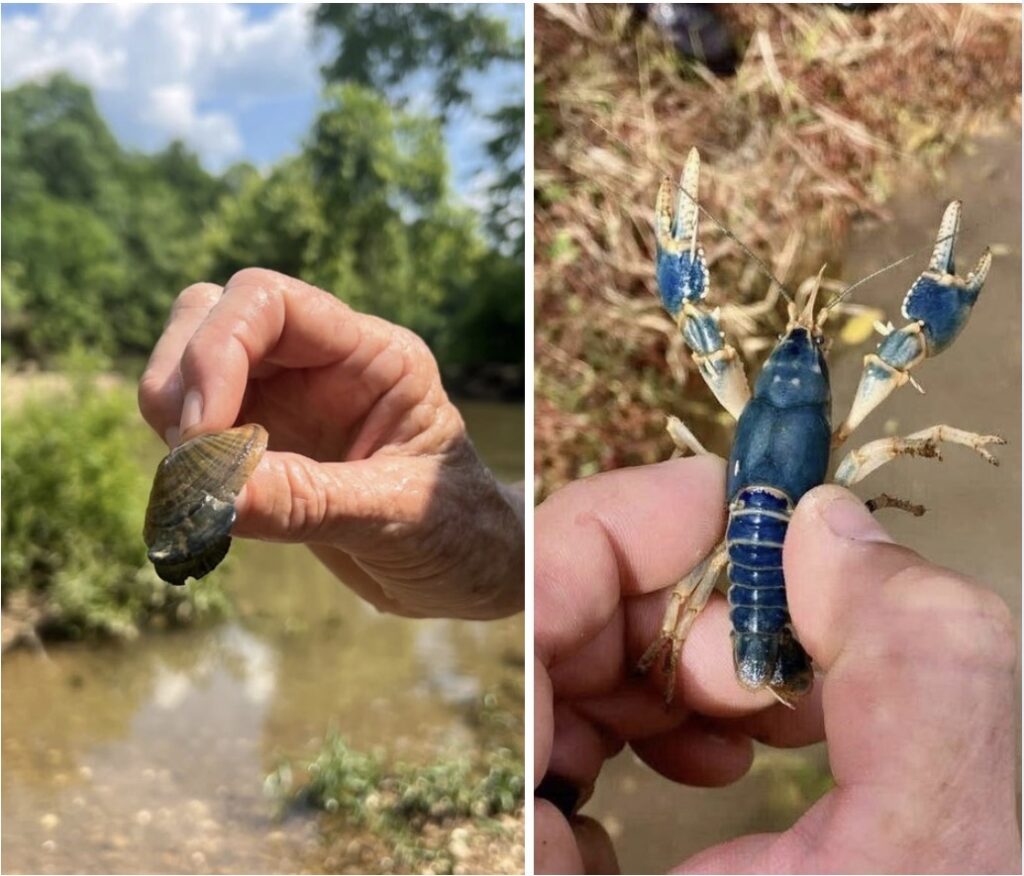 Courtesy Sarah B. Gilliam/Friends of the Duck River and Paul DeWitte/Duck River Conservancy
 The Duck River supports about 650 aquatic species, including 56 types of mussels and resplendent critters like the “Linear Cobalt Crayfish.”
Jones has been advocating for the river’s protection for decades. Two years ago, he founded a group called the Duck River Conservancy.
Jones identifies as a conservative, like many of the folks in his group.
“We’re not tree huggers. We’re farmers, we’re hunters, we’re landowners. Everybody just wants what’s best for the river,” he said.
The group is now celebrating its biggest legislative win to date.
Tennessee protects Duck River watershed from landfills
The Tennessee General Assembly passed HB1510 / SB1590 to protect the entire Duck River and its tributaries from landfill construction.
The legislation creates a two-mile buffer around the river and the creeks and rivers that flow into it across nine counties in Middle Tennessee. The only segment of the river not protected under the legislation is under federal management as part of the Tennessee Valley Authority’s 17-mile Normandy Reservoir.
“So much of the Duck River is the Duck River watershed, and there are so many other communities who have fought hard to protect the Piney; to protect Lick Creek,” said Grace Stranch, director of the Harpeth Conservancy.
Landfills have been proposed across the state, including in the Duck River watershed, in recent years.
In 2022, a company proposed a landfill near the Duck River in Maury County on land once owned by Monsanto, which created chemical weapons and buried waste there for decades. That proposal, now effectively defunct, sparked a lot of pushback.
Landfills pose danger to rivers. Digging pits destroys habitat, leaks pollution and harms animals.
The new legislation aims to curb impacts by siting landfills away from water, according to Rep. Pat Marsh, R-Shelbyville, who sponsored the bill with another Republican.
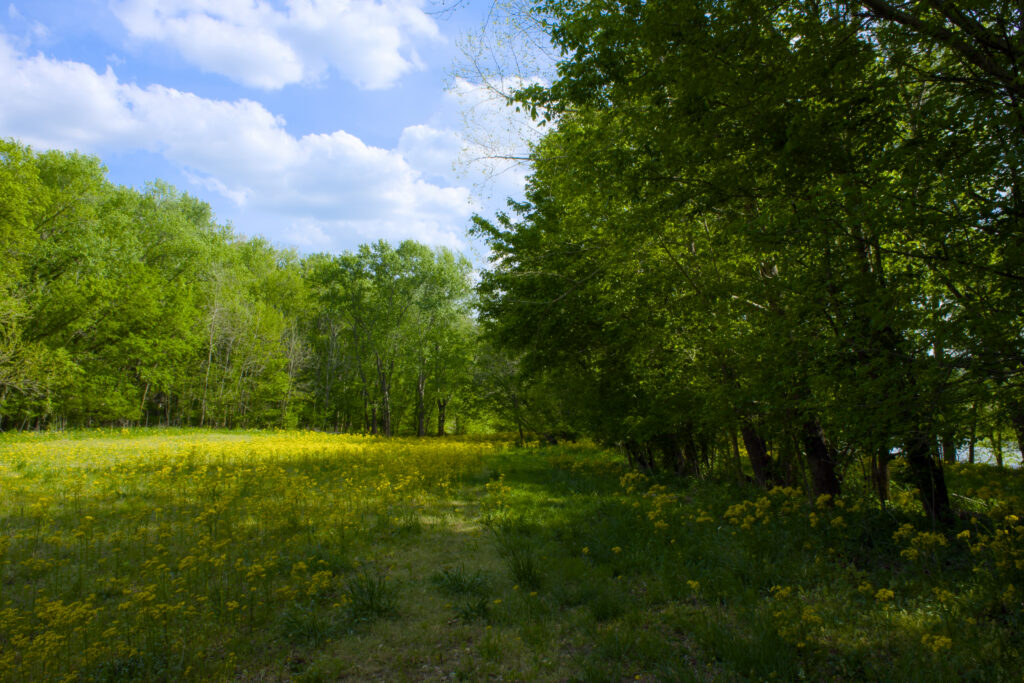 Caroline Eggers WPLN News
The Duck River watershed supports life beyond its immediate borders in prairies, caves, wetlands, oak forests and limestone glades.
Marsh represents Bedford County, where the Duck River winds through 90 miles of land. With the strip of land now protected under the legislation, the majority of land remains open to development.
“That basically leaves 75% of the rest of the acres that we can do whatever we want to,” Marsh told a committee last month. “Whatever the citizens of Bedford County and of the area want.”
The Duck River supports more than 600 aquatic species
The Duck River is considered the most biologically diverse river in North America and a global “hotspot.”
The Duck boasts about 650 aquatic species. The roughly 150 fish species found here reflects more diversity of fish than in all of the rivers of Europe combined. The Duck also provides habitat to 56 different mussels, 22 aquatic snails and resplendent critters like the “Linear Cobalt Crayfish.”
The water attracts animal life on dry land, too, throughout the floodplain and in its wetlands: ducks, eagles, bats, river otters, dragonflies and more.
Water runs through limestone, shale and sandstone, each sustaining terrestrial habitats of limestone glades, oak forests, prairie and barrens, karst features like caves and springs, and wetland ecosystems like scrub-shrubs and bottomland hardwood forests.
The river is largely considered “free flowing” as it remains unchannelized and contains only one non-hydroelectric dam. It is the longest river winding entirely within Tennessee.
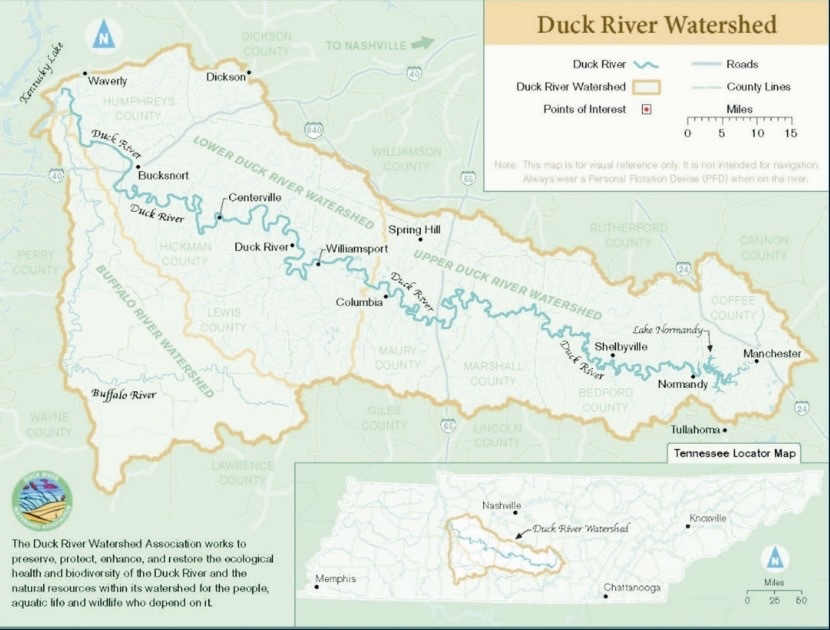 Courtesy Harpeth Conservancy
 The Duck River Watershed includes the Buffalo River, Beaver Dam Creek, Lick Creek, Piney River, and Swan Creek.
An estimated 150,000 anglers, paddlers, and boaters recreate on the Duck River each year. The watershed includes two state parks and the Yanahli Wildlife Management Area and provides drinking water to 250,000 Tennesseans.
All sorts of people rallied together to protect the Duck this year, according to Stranch, of the Harpeth Conservancy.
“It gives me a lot of hope that we can — even though we’re separated in so many ways — that we can come together to protect our drinking water source,” Stranch said.
Tennessee’s mixed history on environmental protection
Some folks like Jones consider the move a rare environmental win at the statehouse.
In the past five years, the state legislature has passed measures to preempt local governments from blocking fossil fuel projects, boycott banks that divest from fossil fuels, increase felony charges for people protesting pipelines, refineries or plants and preempt bans on gas stoves. The state also legally defined methane gas as “renewable energy” and, last week, Gov. Bill Lee signed a law to shield oil and gas companies from climate lawsuits.
But Tennessee also has a history of conservation, and many residents remain passionate about the forests, grasslands, swamps and riverine systems — especially the Duck.
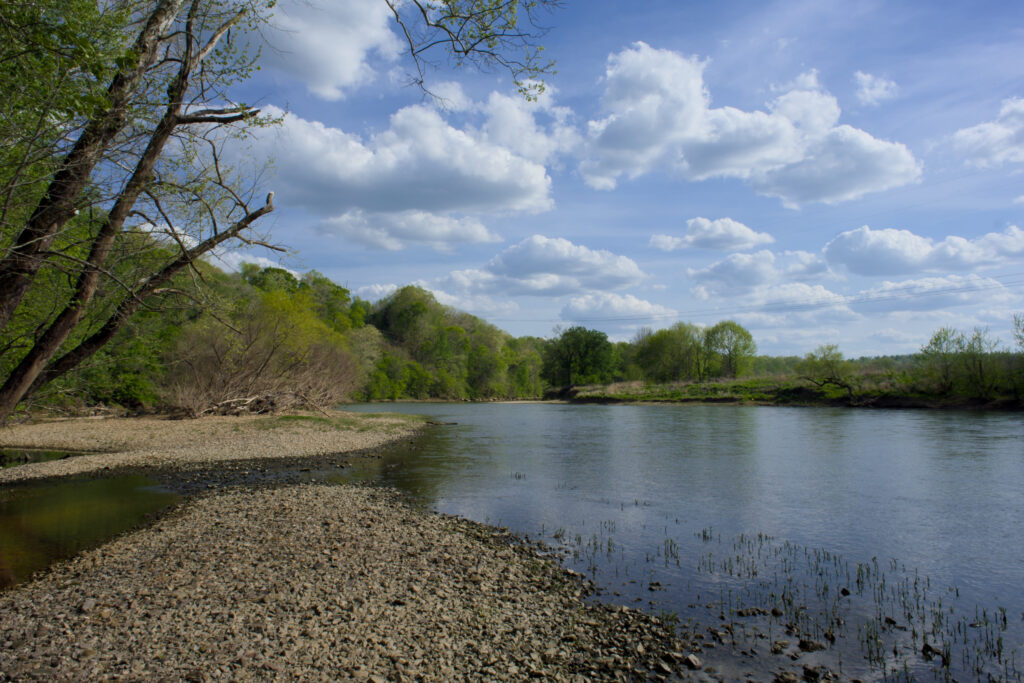 Caroline Eggers WPLN News
The Duck River is now protected from the nearby development of landfills.
Two years ago, the nonprofit American Rivers named the Duck as one of the nation’s endangered rivers due to development and heavy water withdrawals.
State officials have since been taking action. In late 2024, the governor signed an executive order to create the “Duck River Watershed Planning Partnership,” a group to coordinate state agencies and develop initiatives around water management and conservation.
Jones thinks the state has a long way to go in protecting waterways, and he hopes this latest effort will show that conservation can be nonpartisan.
“This isn’t about liberals and conservatives,” Jones said. “This is about protecting natural resources. From all the different sides, people are going to have to give up something maybe.”

 On Air - 90.3 WPLN-FM