
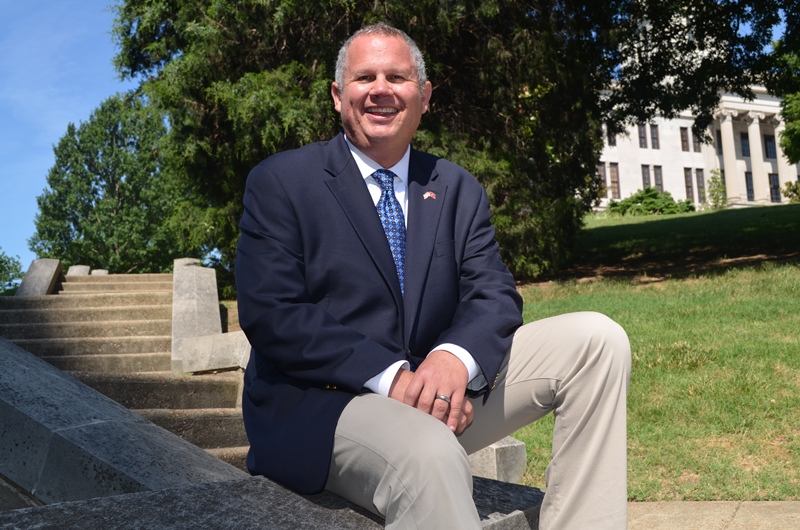
Tennessee’s substance abuse agency has just hired a new medical director who is — himself — an addict in recovery. And he sees a big part of his job as sharing his own story of abusing pain pills.
Stephen Loyd was a young doctor in Johnson City, his hometown. Feeling stressed out and driving home to his young kids, he realized he had some Lortab in his glovebox. Loyd says he popped a pill and felt like he had “found a cure” for his anxiety. But within a few months, he was taking 15 pills at a time.
“Every morning, when I woke up, I was in full-blown withdrawals,” he says. “I couldn’t leave the house until my wife left and I could get my hands on pills to start to feel like a human being again.”
After three years, Loyd’s father confronted him and drove him to detox at Vanderbilt Medical Center and enter a pricey treatment program. Loyd was able to keep his license to practice medicine through a program that requires him to take random drug tests to this day. And in recent years, he found himself giving talks on opioid addiction around Tennessee, which has some of the country’s
highest rates of pill abuse.
“One of the main challenges we face right now in our state is dealing with the stigma of addictive disease,” Loyd says. “We know how many people we have addicted. We know what our problem is. Right now [the issue is] how do we reach them with adequate treatment?”
In his new government role, Loyd’s primary job will be to change the way people think about addiction — from a personal failing to a disease where treatment is nothing to be ashamed of.
Loyd becomes the only official in the Tennessee Department of Mental Health and Substance Abuse Serves who is openly in recovery. Commissioner Doug Varney says Loyd has “walked the walk.”
“His ability to speak freely about addiction, from a first-hand perspective, truly has the potential to save lives,” Varney said in a statement. “He is going to help lead many Tennesseans into recovery from their addiction, helping them get better and ultimately, hopefully melt away the shame.”


 On Air - 90.3 WPLN-FM