
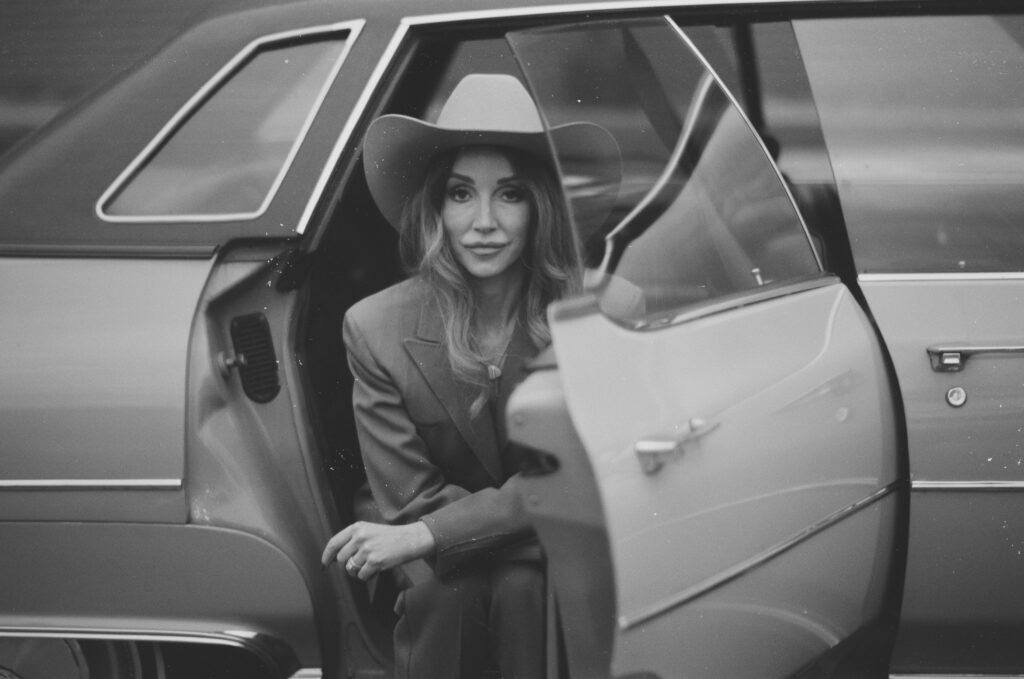
It may seem like Ashley Monroe is contradicting herself when she sings these emphatic sentiments nearly back to back: “Country music is the reason I’m alive. …But I hate Nashville.”
The outside world tends to conflate Nashville with country music, and country music with the country music business. The reality is more complicated.
Country singers and songwriters can maintain an abiding passion for the genre while knowing the pain of feeling devalued by the industry that presides over it. And that distinction is seldom spelled out.
It took Monroe 23 years of toiling in this town before she articulated it herself with a concept album, “Dear Nashville.” She released it, without giving the industry advance notice, at the end of March.
“I’ve never really let myself feel it until now,” she says in the writing room she rents in a West Nashville house inhabited by a few other fine musicians. “I think it just took a lot of time and observation [of] how things are and how things aren’t.”
What Monroe’s sure of is that her devotion to the music started early, and proved life-giving.
She received her first guitar at the age of 13. Soon after, her dad passed from cancer and her mom, as Monroe puts it, “ran off for a while.” During that bleak time, she recalls sitting on the edge of the waterbed in her Knoxville bedroom and clinging to her guitar. “The hope that Nashville and country music gave me, and a dream and [way of] escaping pain that was unimaginable especially for a 13-year-old girl, it was big.”
By 10th grade, she’d dropped out of school and headed west to Nashville. Right away, her grasp of styles and forms steeped in Appalachia impressed country elders, some of whom, including 1950s star Carl Smith, happened to be her distant kin. Recognizing a melancholy “old-soul” outlook and reverence for tradition in this new-generation hopeful reassured them that country music was in good hands.
After signing her first major label deal, a still-teenaged Monroe went around performing for radio programmers, trying to persuade them to play her songs. And one guy’s reaction to hearing her sing an original called “Used” about being seasoned by hardship taught her a lesson: stirring songs weren’t necessarily seen as hit material. “He was wiping his eyes,” Monroe remembers. “And he goes, ‘It just doesn’t fit our format.’ I’ll never forget it.”
That’s when I first interviewed her, in a tiny conference room on Music Row. Soon after, her label merged with another, and she lost her first deal before her debut album “Satisfied” had even come out. (It later saw a digital-only release.) “You’ve got all the buzz,” says Monroe, “you’ve got all the money, you have the machine, you’re ready, and then you’re dropped. That was probably the first time where I’m like, ‘Okay, this isn’t all the way reliable.'”
There’s another line in Monroe’s new song “I Hate Nashville” that captures much of what played out from there: “You give and break, and it just takes the best years of your life.”
She wrote on Music Row, sometimes landing cuts with other artists, and occasionally seeing those cuts go to number one. And she kept charming her elders. One of them, Vince Gill, produced two of the albums she made for her second label before it dropped her.
She also formed the playful and popular trio Pistol Annies with Miranda Lambert and Angaleena Presley.
At the same time, Monroe made her way from adolescence into adulthood and married. Both her pregnancy with her son Dalton and treatment she underwent for a rare blood cancer were so taxing that, for the first time in her life, she didn’t sing at all for a time. That showed her that “giving your life to music is a physical thing.” The voice is, after all, the instrument that lives inside the body. The feelings of rejection that she hadn’t yet acknowledged, like when industry contacts told her how gifted they thought she was, but overlooked her when there was actual opportunity on the table, no doubt registered in her body too. “I’ve realized it must have lived in a lot of nooks and crannies,” she says.
Monroe kept moving on to new collaborations, ideas that captured her interest, and independent projects.
“I know what’s going on,” she chuckles. “I’m not stupid. I’m bummed about things that are going on and have gone on, but I’m really good at, like I say in ‘Dreaming,’ ‘maybe it’s a lie, but I love delusion.'” She sings that line, letting the curlicue wilt.
“It is like being so hyper-focused on just keeping on making music, and knowing that’s what I’m born to do and staying inspired, that I just can’t let it get me down for long.”
Monroe hasn’t stopped putting herself, and the plaintive elegance of her singing and songwriting, out there. Clamoring to collaborate. Trying to generate buzz again.
Still, it caught her by surprise when watching others get recognized at an industry function left her brooding. She’s attended so many of those events over the years. The next morning she decided to put her thoughts into words: “I flipped open my laptop, and I was like, ‘This makes me so mad that I can’t get through like that; they don’t acknowledge me more.’ I started writing down, ‘I hate Nashville, because I’ve tried and tried and tried.'”
Monroe considered it merely a therapeutic exercise to get out of the way before the day’s writing session with hitmaker Luke Laird. “I wasn’t even gonna mention that song,” she says, “because I thought, ‘This is probably not a hit. Why would he want to write this?'”
But Laird got where she was coming from. That one song, “I Hate Nashville,” grew into a fully formed song cycle that addresses the music biz as a callous and fickle lover.
“It’s romantic to me, because the whole point of it is, ‘I wish you loved me like I love you,'” she says. “That is how I feel.”
Monroe found that unburdening herself has motivated her to give fellow music-makers their flowers: “The whole thing has made me look at myself and go, ‘Hey, tell people when you love their music. Let them know they’re important.'”
She started while she was making the album. Legendary steel guitarist Paul Franklin had never heard someone express appreciation for his playing in song before he joined her and Laird for the recording sessions.
Lots of people have let Monroe know that they’ve listened to “Dear Nashville” and projected their own experiences onto it. And on Monday night, Franklin and Laird will accompany Monroe as she performs these songs for a Nashville crowd for the first time.
“I just feel like it’s gonna feel healing,” she says.
 On Air - 90.3 WPLN-FM