


An aggressive $67 million plan for Franklin’s park system envisions new greenways, sports facilities, and a downtown riverwalk in the next decade. But leaders are also trying to maintain what makes Franklin’s existing parks unique: their historic character.
Few cities anywhere manage as much preserved battlefield land as Franklin. And at 245 acres, the land accounts for a third of all city-owned parkland.
But as the fast-growing city has learned, many residents want other options.
D
emand has grown for other types of parks, including improved sports fields, more pocket parks within neighborhoods, and a place to stroll along the
Harpeth
River. And there’s so much demand for
greenways
that officials may invest $3 million per year on paving for the next decade — more than any other line item.
Striking a balance throughout the system is one challenge for
Parks Director Lisa Clayton, who still wants the city to capitalize on its historic parks.
“We have a story to tell,
“
Clayton said.
“
And that’s one of the things that’s been brought out with this particular plan is: Your story is that a battle took place here. And from a tourism, from an educational standpoint, that’s very important, and you need to capitalize upon that.”
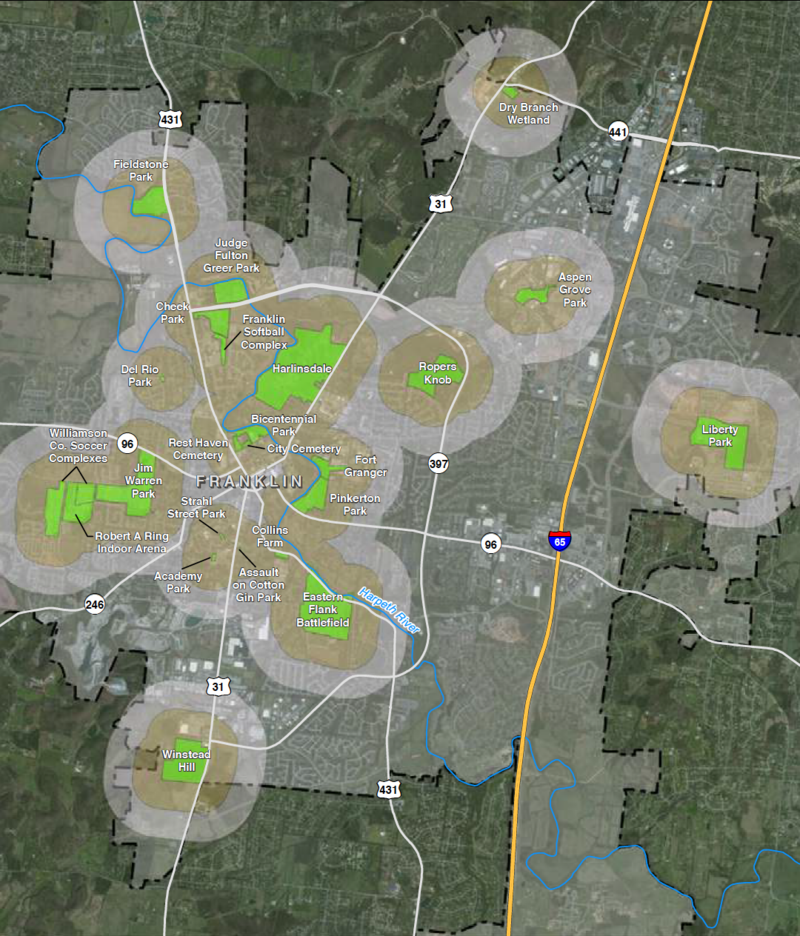
The historical parks, coupled together with another 275 “passive” city acres, leave Franklin somewhat behind peer cities for recreation.
“
When we say ‘recreation’ in our community, it means something different to anyone you might ask. It might be organized sports. It might be open space. It might be our river. But making this an attractive place for business, for home, for play — that’s what we want.”
Much of the
drafted master plan comes from resident feedback. Some 96 percent of those surveyed rated the current parks as excellent or good. But they still came up with a long wish list.
“What’s good enough today may not be good enough tomorrow,
” said City Administrator Eric Stuckey.
“
We want to ask the question: ‘What are great communities doing that provide great quality of life through their park system?’ “
The study found that Franklin spends a lot less on parks per resident than five peer cities. And Franklin doesn’t earn back very much through park rentals.
So far, officials have had mixed responses to the plan’s $67 million price tag. But they could approve the basic framework this fall without committing to all of the money up front.
“There’s a lot in there. And it’s more than what we have in any given budget right now,
“ Stuckey
said.
“
But if you don’t have a target and a goal, you don’t have something to work towards in terms of what those needs and priorities are.”
As it stands, Franklin uses hotel tax revenue, its capital improvements budget and a parkland dedication policy (fees or land donations) to support the parks system.
The
master parks plan can still change if residents speak out. A public hearing will take place at 6 p.m. Monday at Franklin City Hall, followed by a work session at 4 p.m. Tuesday with parks scholar John Crompton.
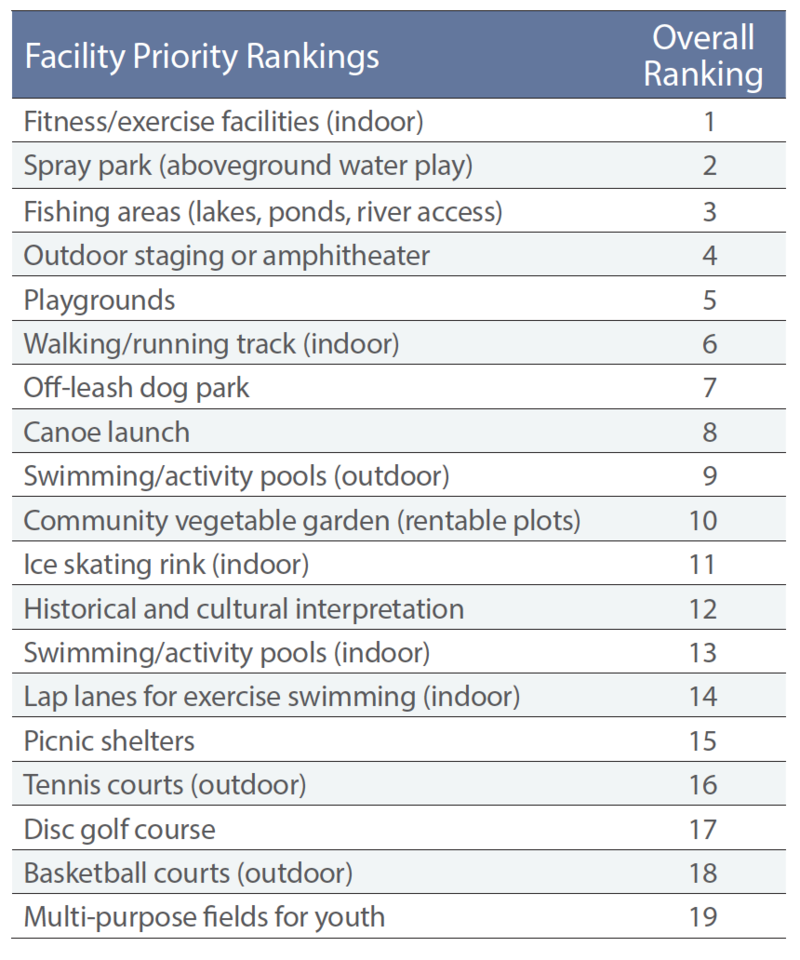
Parks wish list
Greenways ranked highest on the priority survey, including to connect existing parks and to reach downtown and the Harpeth River. The current plan calls for adding an additional mile each year.
“
We have not, as a community, always embraced the opportunity to see and experience our river. We’ve made strides in that in recent years,
“
Stuckey
said.
Franklin parks by the numbers
16 parks
706 acres
32 sports and multi-purpose fields
The study also found an
“alarming” lack of neighborhood parks, especially in southeast Franklin. The suggested fix is a $13 million city park, with a football field, for that area.

 On Air - 90.3 WPLN-FM