


Finding people to work at polling places on Election Day isn’t easy. But Davidson County has seen a huge surge in interest, in part, by changing how they talk about the job.
It wasn’t long ago that Nashville had an especially bad year trying to find people willing to work at polling places. In 2013, only 35 newcomers applied for the part-time gig, leaving some polling places feeling a bit bare bones,
and reliant on the same workers who have long been committed.
Election Commission Director Kent Wall
even told the mayor that he was “hard-pressed” to staff all the polling locations.
But one year made the difference. More than 1,100 applications came through in 2014 and the Davidson County Election Commission is on a similar pace so far this year.
So what’s the secret to the county suddenly wooing more people?
For one, says recruiter Lisa Pierce, there’s a big misconception to overcome: Working at the polls is
not a volunteer position. While it is typically a 12-hour work day, there is a bit of money to be made — at least $150, depending on the job, plus $30 for a mandatory training session.
“In fact, before I started with the Election Commission, I thought everybody was just giving of their time,
” Pierce said. “
When we talk about the pay, which has just been increased [by $30], that often will hook in some people to, ‘hmmm, maybe I can figure out a way.’ “
Because it’s an election season, Pierce gets to set up an information table a few times each week at the
abundant mayoral forums. She recently tried to pique the interest of David Wilson when he approached.
“You can serve as a poll official, if you have an interest in that paid position,
“
she said, with emphasis on the
“
paid.
“
After a pause, he didn’t see why not:
“I don’t think I’ll be doing anything that day.”
Pierce didn’t need more of a window than that.
“We’ll get you to fill out some paperwork,
“
she said,
“
or
you can go online.”
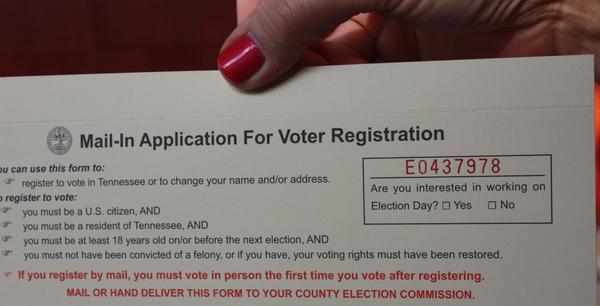
Election officials also speak to civic groups and slip info into the mail alongside Metro Water and electricity bills. Recruiters also take advantage of the inevitable questions that people have when they approach an Election Commission informational table. For example, someone who needs to register to vote or change an address is likely to also hear from them about being a poll official.
Community Engagement Assistant Meredith McKay said a sense of duty — more than money — convinces some people.
“It’s a 14-hour day,” McKay said. “You’re gonna
go home. You’re gonna
want to go to bed. But the next day you’re gonna
wake up and you’re going to feel really good about what you’ve done.”
It’s that feeling that keeps some pollworkers
involved for 40 years — and others signing up now in record numbers.
After Wilson filled out some paperwork, but before he walked away, he did have one question for Pierce and McKay.
“To be a poll official, it’s inside, right?
“
“Oh, yes! Yes,
“
they both replied.
While the work might be in tough in some ways, it wouldn’t require him to be outdoors.
“We wouldn’t do
that to you,
“
Pierce said.
Pollworker
pay increase
Pollworkers now earn $150 for a day’s work. Higher-ranking officers can earn as much as $240. All officials must take a class, but they are paid $30 for that requirement. To learn more or to apply, visit
www.nashville.gov/vote
or call 615-862-4372.

 On Air - 90.3 WPLN-FM