

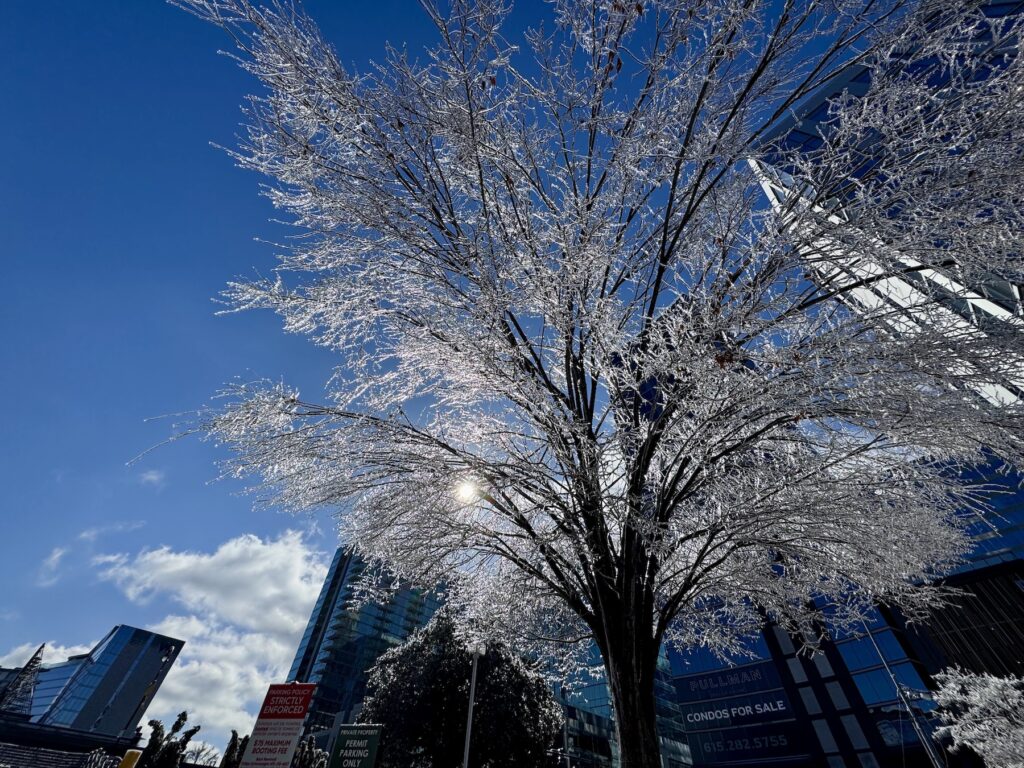
Nashville’s natural skyline changed last week.
Thousands of trees tipped, splintered and died after frozen water blanketed the town, worsened by prolonged cold and occasional strikes from wind.
“All that night that the ice was happening, I just kept hearing pop, pop, and then crashes and then hisses,” said local naturalist Jo Brichetto. “It was utterly terrifying.”
Brichetto lived in her current house in West Nashville in 1994 during the last major ice storm. She described last week’s storm as “much worse.”
Across town, parks have piles of debris and neighborhood canopies look tattered and thinned. The Nashville Department of Transportation and its contractors had responded to 5,200 requests for tree or vegetation clearings from right-of-ways as of Monday.
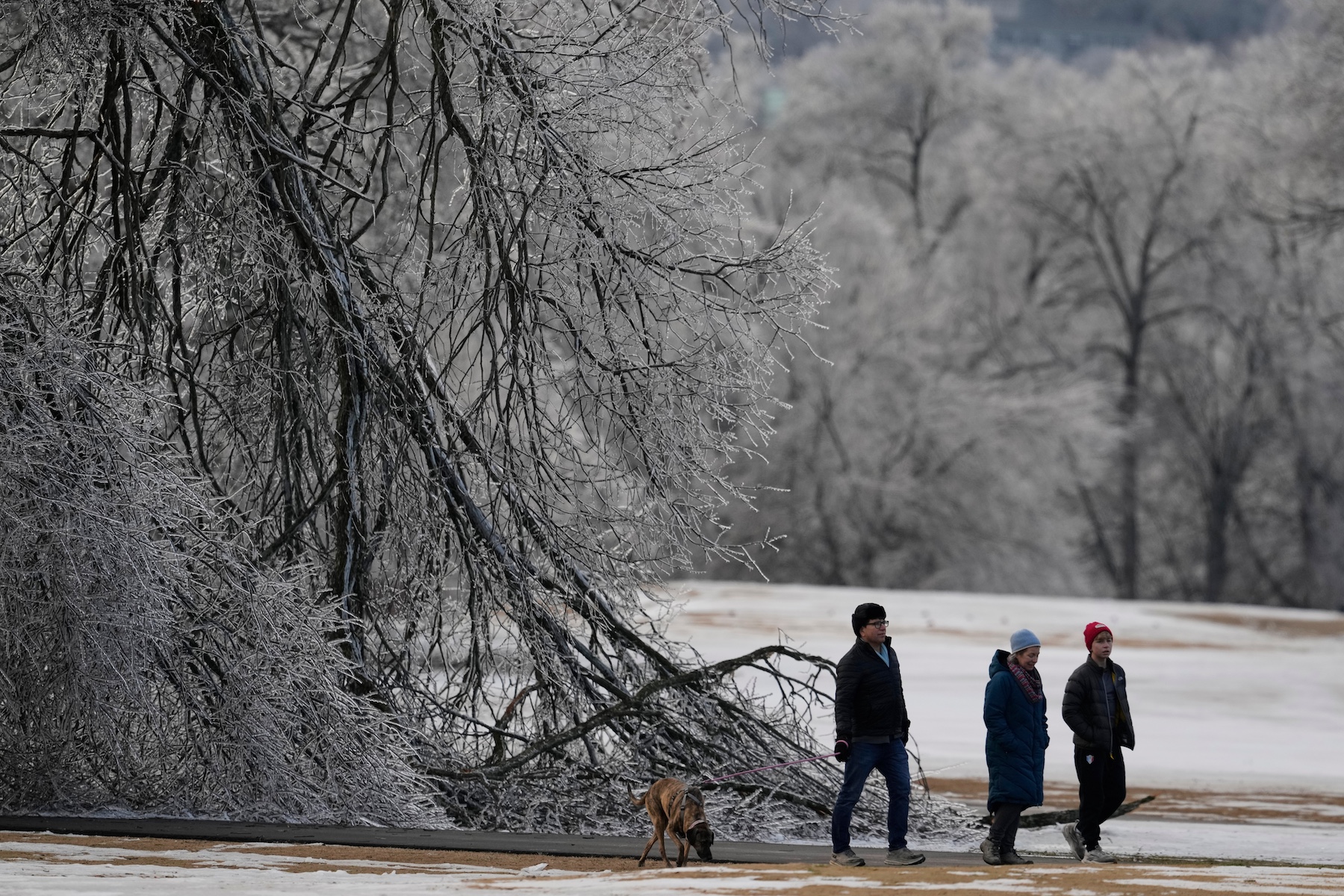 George Walker IV WPLN News
People walk past ice covered trees, Wednesday, Jan. 28, 2026, in Nashville, Tenn.
The pattern of which trees were hit the hardest differed among areas, but virtually every street in Nashville appears to have some damage.
“I’ve seen trees I thought would get damaged, not get damaged, and trees that I thought would be sturdy, on the road,” Brichetto said. “There are so many variables at play.”
Impacts will ripple throughout communities. But experts suggested the city also has a chance to build a smarter, healthier urban forest.
Public spaces lose significant foliage
Parks and community spaces across the city sustained heavy tree damage and loss.
Nashville’s largest park, the combined Warner Parks, likely lost more than a thousand or even upwards of 2,000 trees, according to local naturalist Terry Cook, who surveyed the park with a drone on Monday. He focused on roads and trails, as the cause of downed trees is harder to differentiate within the interior of the forest since the park leaves downed trees as habitat for wildlife.
Trees within a forest are also better able to handle ice weight between their height and interlocking crowns, he said, and are better shielded from wind.
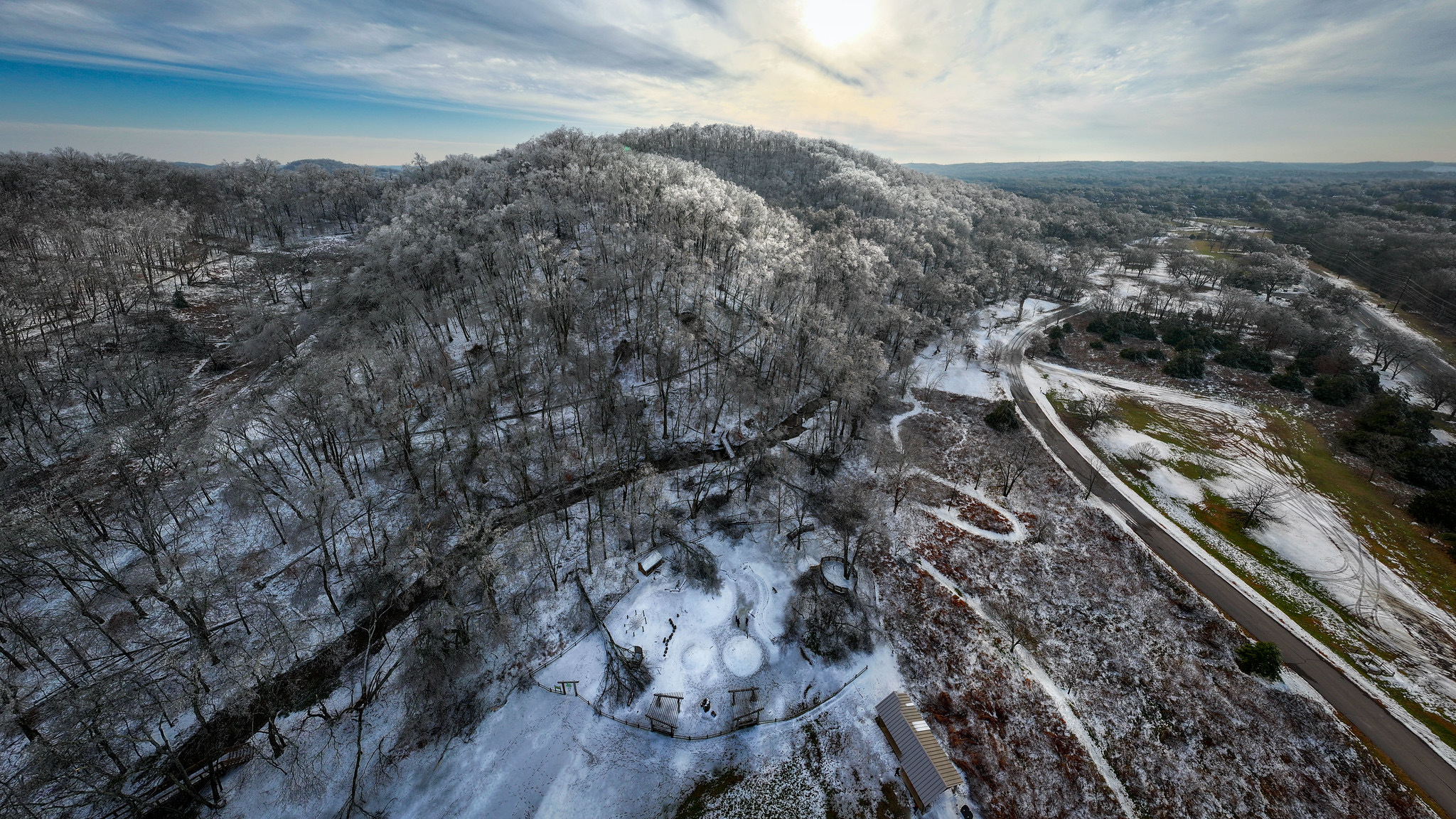 Courtesy Terry Cook
 Warner Park lost upwards of a thousand trees during the January 2026 ice storm.
At the Nashville Zoo, a hackberry estimated at 150 years old was cut down after an arborist determined it had too much damage to safely be left standing.
“The hackberry had been a familiar gathering place since our opening, offering shade and a place to connect during events and special moments throughout the Zoo’s nearly 29-year history,” the zoo wrote in a social post.
 Courtesy Nashville Zoo
 A mature hackberry at the Nashville Zoo was cut down on January 30, 2026.
Cheekwood Estate and Gardens lost some mature trees and had “substantial” damage to its gardens and foliage. The botanical garden still lacked power on Friday and has not announced a reopening date.
Nashville’s parks department estimated that a minimum of 5,000 trees died across the park system, but the “tree count is still in the early stages,” spokesperson Jackie Jones said Wednesday.
How to manage tree debris removal
The first step in post-storm tree management is removing debris. Some minor yard work can be safely handled by residents, while other jobs should involve a “tree risk assessment-qualified” arborist, according to Chris Leonard, board chair for the Nashville Tree Conservation Corps.
“If you feel like it’s dangerous, guess what? It’s dangerous,” Leonard said.
More: Nashville is 53-56% forested. Here’s why it probably doesn’t seem that way. | WPLN News
He recommended seeking professional help for large broken or hanging limbs, especially near houses, roads or play areas, major cracks or splits in the trunk or at branch unions of a tree, a noticeable lean or root lifting, or any new signs of decay.
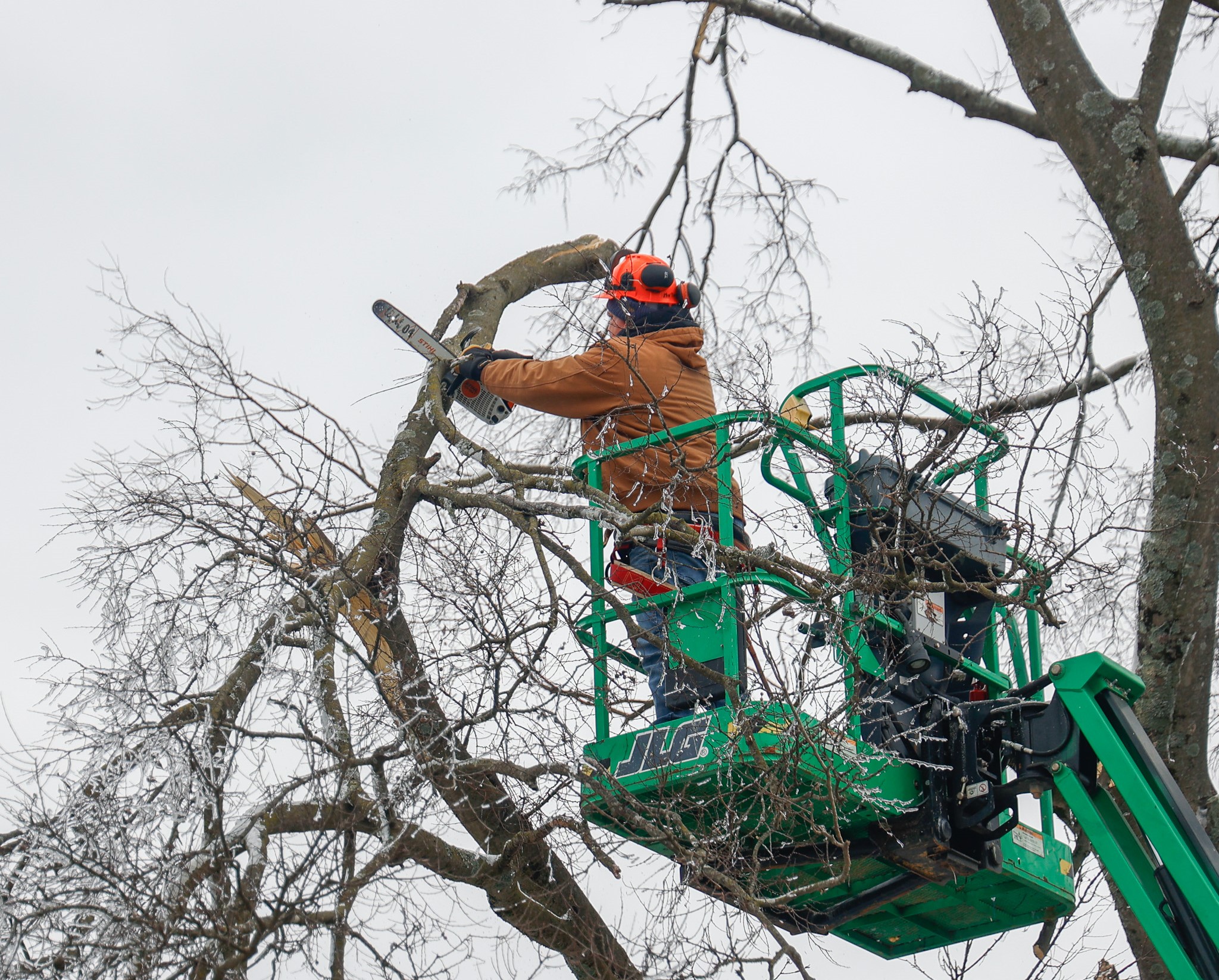
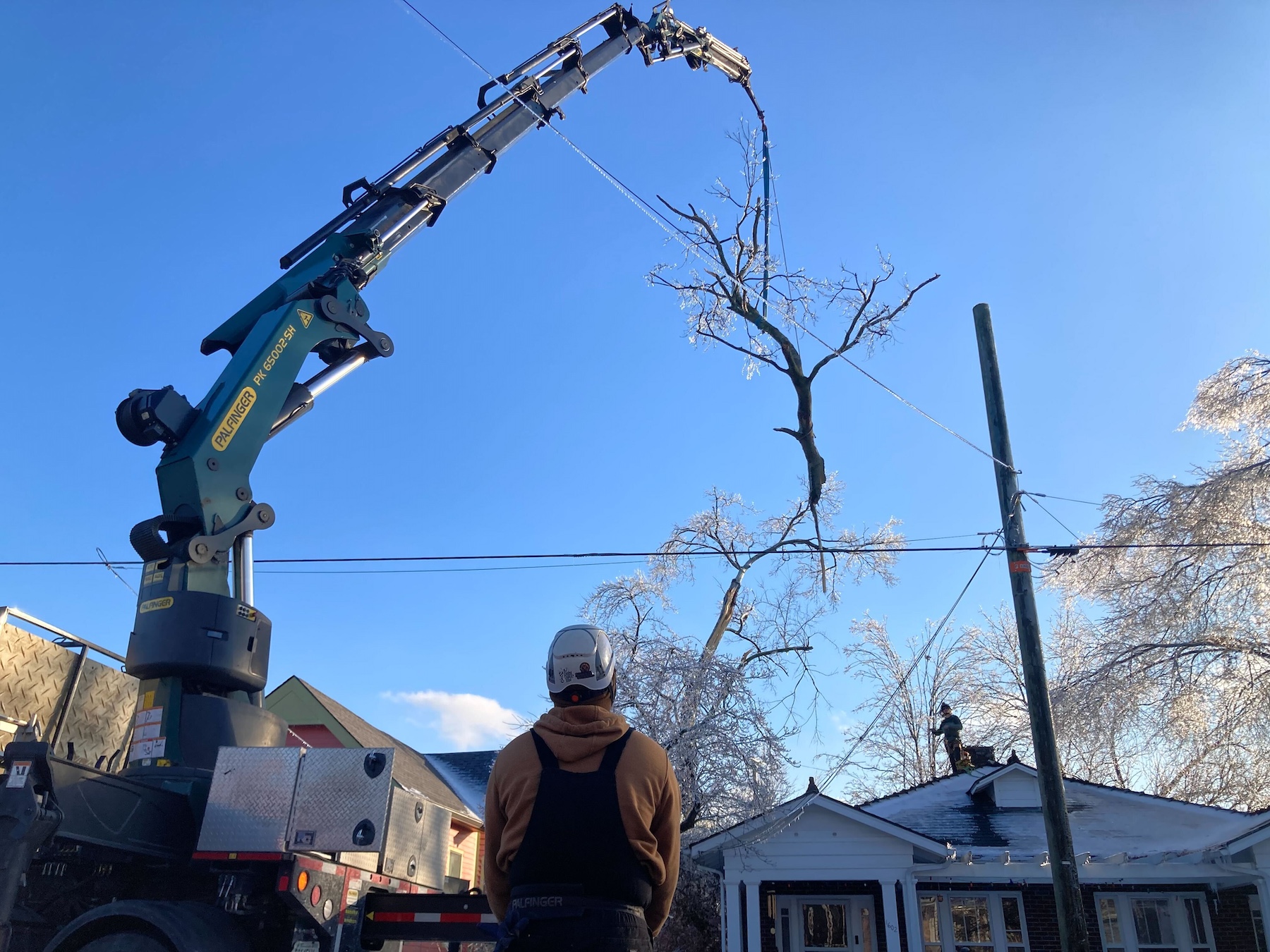 Tony Gonzalez WPLN News
Tree Worx, out of Chattanooga, helps with a precarious limb removal in East Nashville on Wednesday, Jan. 28, 2026.
Some standing, damaged trees will not be savable, but the damage on many trees can be mitigated.
“A surprising amount of the damage that you see is going to be the trees that are resilient enough to bounce back,” Leonard said.
Leonard also suggested filing claims about tree-related damage to insurance as soon as possible.
Tree death can provide habitat and support new life
Tree death can also support new and existing wildlife, as nearly every part of a tree can be used by animals.
People who have to cut down trees can — instead of chopping short stumps — leave a larger part of the trunk called a “snag.”
Hundreds of birds, mammals, reptiles and amphibians visit tree snags for food foraging, nesting and roosting.
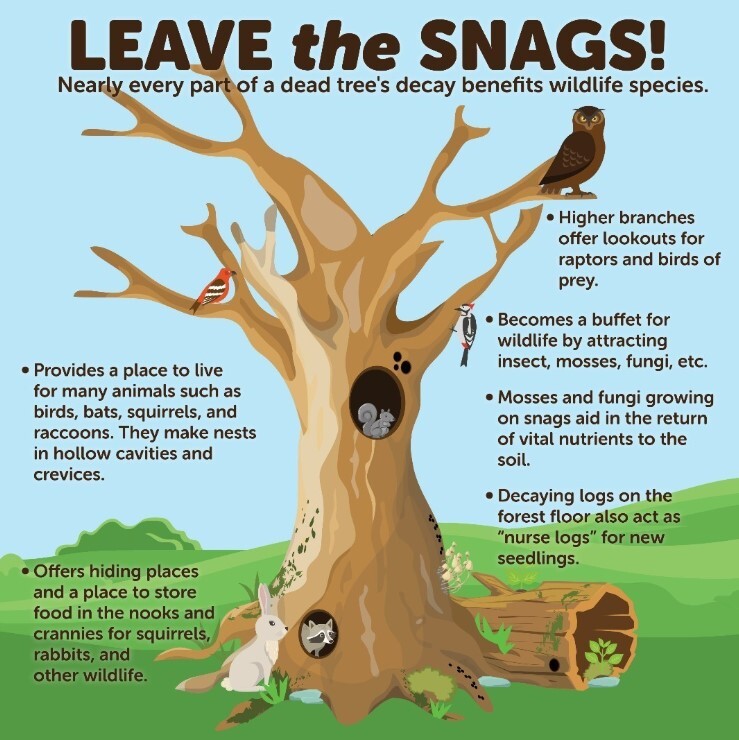
Red-bellied woodpeckers, nuthatches, barred owls, evening bats and the southern flying squirrel are all species that commonly use snags in the Southeast, according to the North Carolina State Extension. Snags that are at least six feet tall tend to be the most effective at supporting wildlife.
The emotional recovery
Many folks were struggling last week with the visual devastation of tree loss, as the silhouette of foliage, perhaps unconsciously memorized, is now different, according to Leonard.
“It’s like your fingerprints have changed. It’s like you look in the mirror and the color of your eyes has changed,” Leonard said.
The loss will shake ecosystems, affecting water drainage, heat and wildlife.
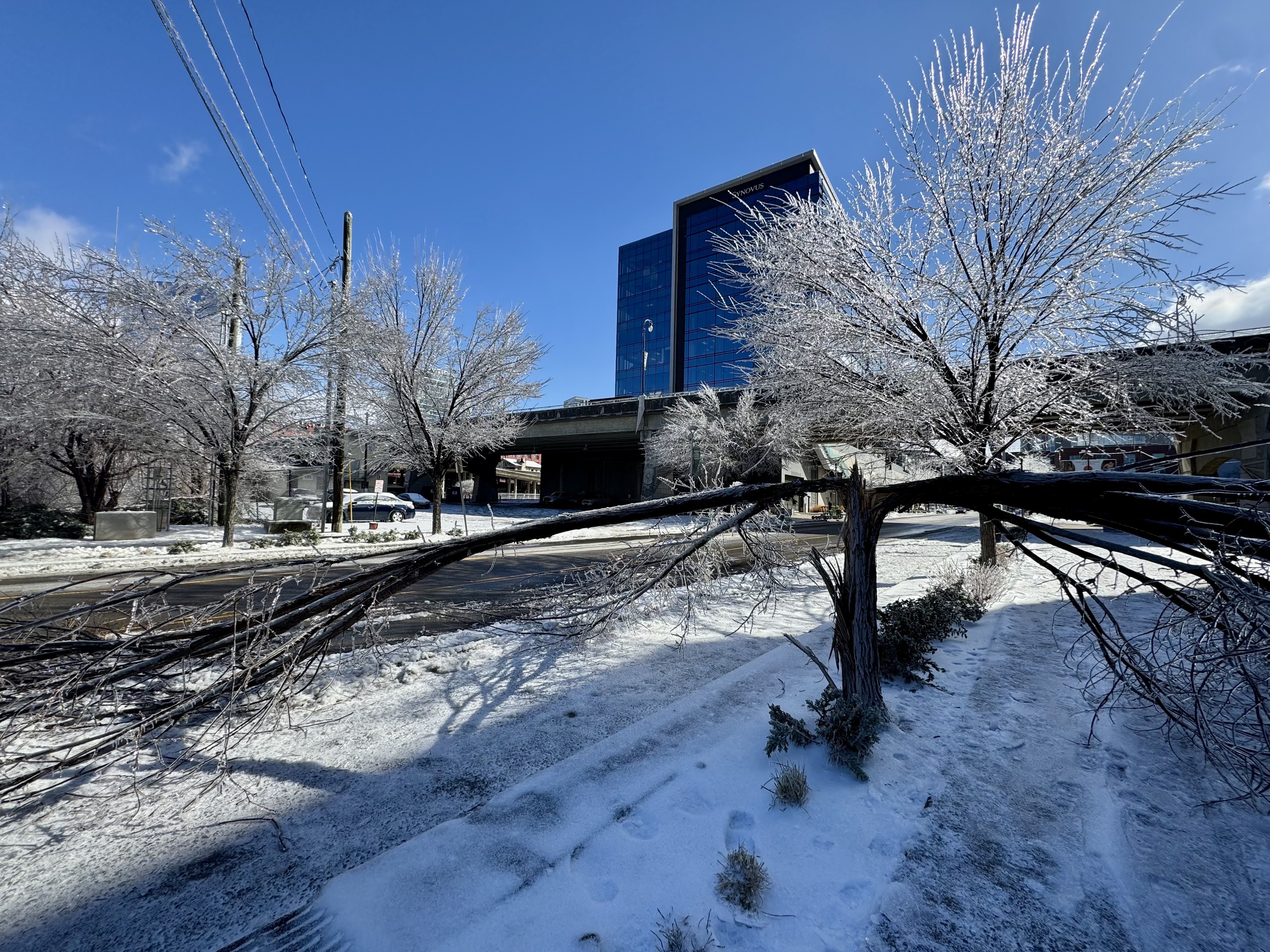 Caroline Eggers WPLN News
A tree spills onto a road in downtown Nashville on January 26, 2026.
But this storm could be a catalyst for change, Leonard said.
Citizens can demand better laws to protect trees against development, which kills more trees than storms, plant climate-resilient trees and volunteer with or donate to tree-planting efforts. So, when extreme weather hits, the canopy will be stronger.
More storms will happen. The warming of Earth has led to more extreme heat, drought and flooding in Nashville.
The risks for Arctic blasts is also a feature of our current climate: the Arctic region is warming four times faster than the rest of the planet. One consequence of this warming, caused primarily by fossil fuel burning, is that the lasso of cold air circling the North Pole can veer off and dip south, bringing bouts of frigid cold. Complicating matters for southern areas, near-freezing temperatures can lead to freezing rain instead of snow.
So, how does the city prepare its canopy for heat, ice and floods?
How to plant trees to ensure a more resilient canopy future
Local tree groups provide resources for picking the right species, as well as selecting the right locations in respect to power lines, and offer free or inexpensive trees.
The Cumberland River Compact, partnered with the city of Nashville, plants thousands of trees each year through the “Root Nashville” campaign. Residents are able to apply for free trees, and orders for the next fall planting season will happen between June 1 and Aug. 31.
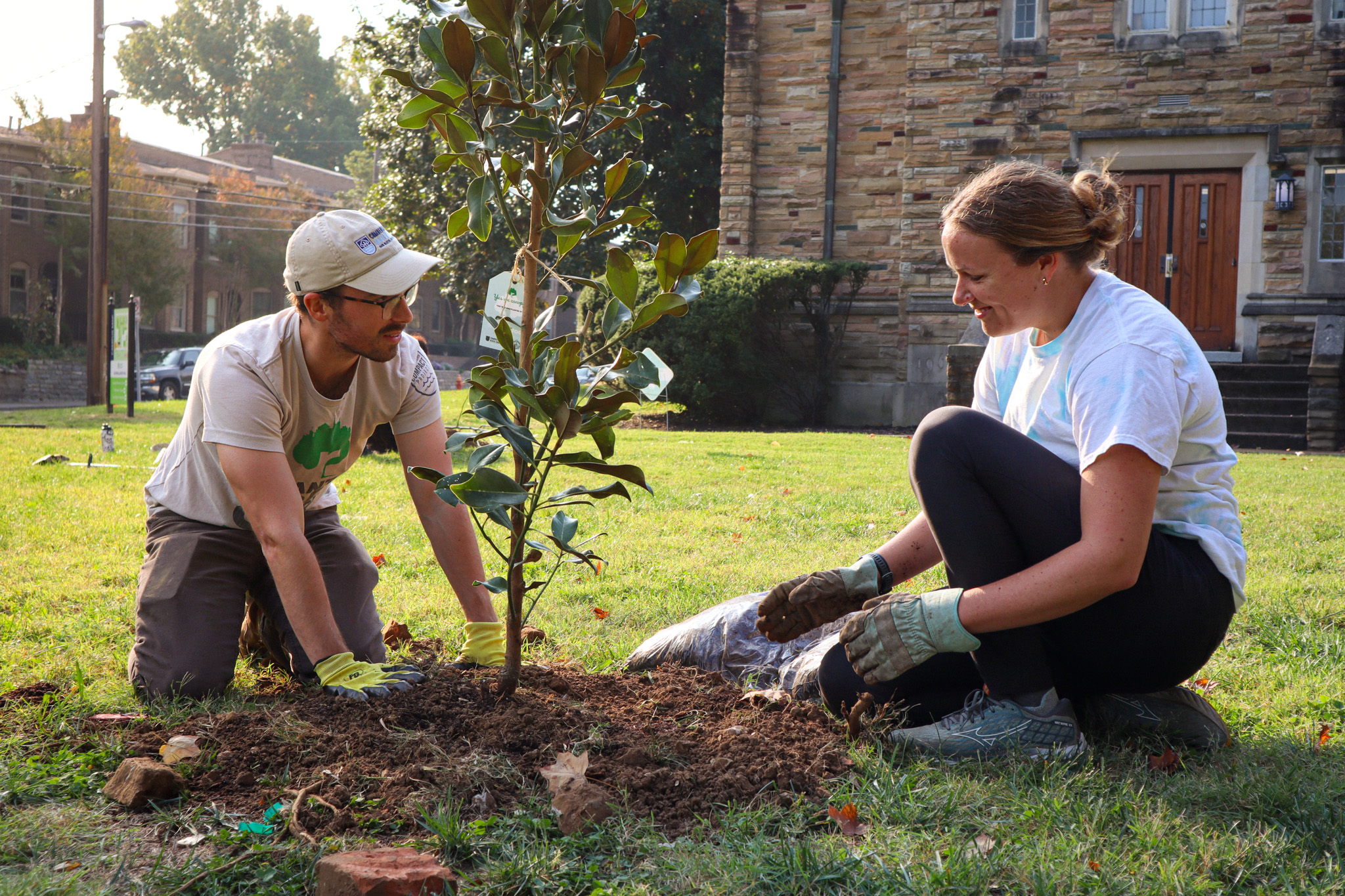 Courtesy Cumberland River Compact
 The Root Nashville campaign plants thousands of trees across Nashville each year.
The Tennessee Environmental Council is holding an event on March 1 to supply inexpensive native saplings to Tennessee residents. Tree pickup locations are scattered across the state, including about a handful in Nashville.
The Nashville Tree Conservation Corps provides resources on how to pick storm-resilient trees and has an online shop to deliver trees in Nashville and surrounding areas.
“The climate of Tennessee 100 years ago, when a lot of our legacy trees were just sprouting, is not the climate that we have now because climate famously has changed and is changing,” Leonard said. “We’re helping people find what is right for today in their yards.”
Why tree benefits should outweigh storm fears
Canopy recovery will take a considerable amount of time.
It can take years for trees to reach a height tall enough to provide the shade benefits of mature trees, though many young trees will provide the immediate benefits of reduced soil erosion, habitat and air quality improvement.
For some folks, planting trees may just take courage.
“I spend so much of my time trying to soothe the fears of people about anything to do with nature, about bees and birds and critters and trees,” said Brichetto, the naturalist. “This is going to be hard to get people to want to plant trees again. But we have to do it.”

 On Air - 90.3 WPLN-FM