

ELECTIONS 2026
Tennessee voters will choose a governor, a senator, U.S. House representatives and state lawmakers — and decide on three constitutional amendments this November.
Confused? We’ve got you covered.
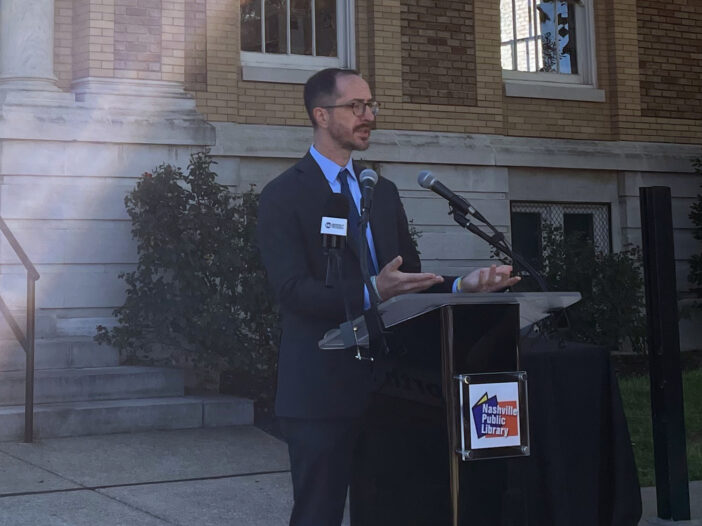

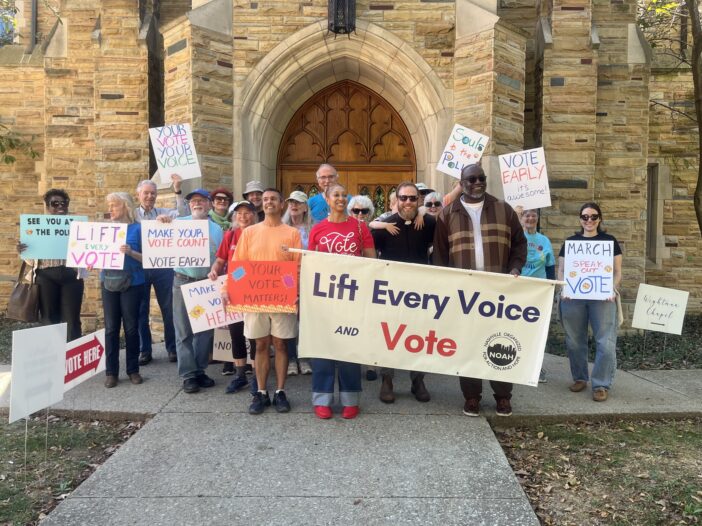

Democratic voters have reported problems with Nashville’s voting machines. When they select the Democratic candidate for governor, Jerri Green, the machine will sometimes select Republican U.S. Sen. Marsha Blackburn instead.
Marianna Bacallao (@ba.marianna) reports the problem stems from the voting machine’s sensitivity. Since the Republican option is first, selecting the Democratic option too close to the boundary on the screen can make the machine choose the wrong candidate.
To help ensure the machine picks the right option, Davidson County Election Commissioner John Richardson said polling sites are bringing back plastic straws.
Any ballot error can be corrected before it goes through the scanner. After it enters the scanner, it has been tallied and cannot be changed.
Early voting runs through Oct. 29. Election Day is Nov. 3
Tap link in bio for the full story and follow our election coverage for a voters guide and more.
Photo: George Walker IV / AP, Marianna Bacallao
Producer/Editor: Megan Jones

Notable quotables for the week focus on elections, elections, elections! And how candidates are dealing with issues from AI-generated ads to their stance on the environment.
Tap link in bio to get access to our free full stories and our election coverage.
Producer: Catherine Sweeney
Editor: Megan Jones

Tennessee State University (@tennstateu) plays most of its home games at Nissan Stadium, and the move has generated some confusion – and pushback – about how much this costs the school.
It’s been nearly thirty years since TSU held regular football games on campus at Hale Stadium, also known as “the Hole.” Many alumni want games returned to campus, but TSU’s athletic director says the current arrangement is the most financially beneficial. The TSU and Titans agreement changed in 2023 and TSU pays no rent to use Nissan Stadium.
Aside from monetary concerns, WPLN’s Camellia Burris (@camellia.elaine) reports that some alumni, like Henderson Majors, cite nostalgia and the sense of community offered on the North Nashville campus as the main reasons to bring games back to Hale.
“You got music playing in the background from Jefferson Street. It`s just an atmosphere that can`t be duplicated. That is a treasure within itself.”
Tap link in bio for the full story.
Video Producer: LaTonya Turner
Editor: Megan Jones

As our environmental reporter Caroline Eggers reports, one thing that sets District 9 candidates apart is their track records on sensitive environmental issues.
GOP Sen. Brent Taylor, who has the backing of President Trump, sponsored successful legislation to remove protections for wetlands in the path of construction. He also worked to deregulate “behind-the-meter” power, making it easier for large data centers to essentially build their own gas power plants rather than rely on the grid.
His Democratic opponent, Rep. Justin J. Pearson, first caught the public eye while leading protests against a proposed oil pipeline in Memphis. One of the “Tennessee Three,” Pearson supports a federal moratorium on large data centers. He voted against Taylor’s wetland and data center bills.
Which candidate will represent the district in Washington is now up to voters.
Early voting continues through Thursday, Oct. 29. Election Day is Tuesday, Nov. 3.
Tap link in bio for more election coverage and more from Caroline Eggers on environmental issues.
Producer: Daniel Potter
Editor: Megan Jones
Photos: George Walker IV / AP and Marianna Bacallao / WPLN

Have you ever looked your doctor in the eye and said, “I want a second opinion?"
When patients get a major diagnosis and treatment plan, they might consider getting another doctor’s take before deciding what to do next. But it can feel awkward to seek a second opinion. A St. Louis-area woman who was diagnosed with thyroid cancer says she felt like she was “cheating” on her surgeon.
But a family medicine physician in New Jersey, Jen Caudle, encourages patients in her practice to have open conversations across their care team, including the primary care provider and specialists.
“We doctors should not be mad at you,” she tells HealthQ hosts Blake Farmer (@flakebarmer) and Cara Anthony (@caraanthony). “We shouldn`t be offended. We shouldn`t impede this. In fact, we should support you.”
The QTip: Your primary care provider can help you navigate first and second opinions from specialists.
Head to our website for the full story.
Producers: Katherine Ruppelt and Emily Siner
Editor: Megan Jones

Tennessee could elect its first female governor next month as U.S. Sen. Marsha Blackburn, the Republican nominee, squares off against Democrat Jerri Green, a member of the Memphis City Council who is also Shelby County’s interim Chief Public Defender.
When it comes to their priorities around energy and the environment, the two are a study in contrasts, reports environmental reporter Caroline Eggers.
Blackburn has said she’ll work to expand nuclear power in Tennessee — and that doing so can support AI data centers. In Congress, she’s voted to undercut things like pollution control and clean energy, and has a lifetime voting score of just 3% on environmental issues with the advocacy group League of Conservation Voters.
“I fully support the use of fossil fuels,” Blackburn told WPLN in a written statement.
Her Democratic opponent, Jerri Green, says she’d push for a statewide moratorium on data centers, and also plans to invest in renewable energy and enforce clean air and water regulations in the communities that face the most industrial pollution.
“Tennesseans deserve a governor who values clean air, safe water, and protecting our land for the next generation, rather than rubber-stamping corporate pollution for short-term profit,” Green told WPLN.
Early voting is open until Thursday, October 29. Election Day is Tuesday, November 3.
Tap link in bio for the full story.
Photos Marianna Bacallao
Producer: Daniel Potter
Editor: Megan Jones

Early voting notable quotables!
Election coverage is top of mind this week as we focus on this peak midterm election season. From President Donald Trump’s comments stumping in Clarksville, to takes from your neighbors about how their candidate or party has changed.
Tap link in bio to dive our election coverage including a voting guide and subscribe to the NashVillager newsletter (5 days a week) for local stories, reporting, ticket giveaways and more.
Producer: Catherine Sweeney
Editor: Megan Jones

I wanna call you on your bird phone. Ring ring — it`s our new podcast Calls from the Wild — now available on the NPR app and NPR One, Spotify and Apple Podcasts.
On the “Calls from the Wild” podcast, you`ll hear what kudzu, bears, mussels and bats have to tell us about our changing environment. Guests include former NYT columnist Margaret Renkl and pubic radio reporters from throughout our region. Your narrator is John Boyle.
It`s easy listening. And after you listen you are invited to join our project on iNaturalist (inaturalistorg). It covers Tennessee, Kentucky, and West Virginia and roaming in the region is encouraged. It`s easy, it`s free, and it`s a great way to get into the habit of noticing and recording the birds, plants, insects and animals around you. And when you contribute — congratulations — you made some science!
Tap link in bio to get to the podcast.
Calls from the Wild is a collaboration of Nashville Public Radio and the Appalachia + Mid-South Newsroom. (@porchlightnews)
Video producer: Megan Jones
Editor: Andrew Henderson

-
4 tales from Tennessee election history to read during early voting that may surprise you
The NashVillager podcast rounds up four of the most influential and insightful election stories from Tennessee’s history.





Curious Nashville Returns!
Back by popular demand, the WPLN fan favorite series Curious Nashville is here to investigate oddities, share local history, tell stories of interesting people, and explain how local institutions operate.
You ask the questions, and we answer.
More Headlines
Dollar General is sued by the FTC and 20 states over ‘deceptive’ pricing
NashVillager Podcast: 100 Oaks anniversary, local headlines and HealthQ
NDOT will ban right turns on red lights at these Nashville intersections
Tennessee joins ‘Bird City’ network to conserve species, habitat
Fears over ballot switches spread every election. Here’s what Nashville is doing about it
Trump merchandise stores are closing: ‘He has peaked’
WPLN Originals











Topics































 On Air - 90.3 WPLN-FM


