
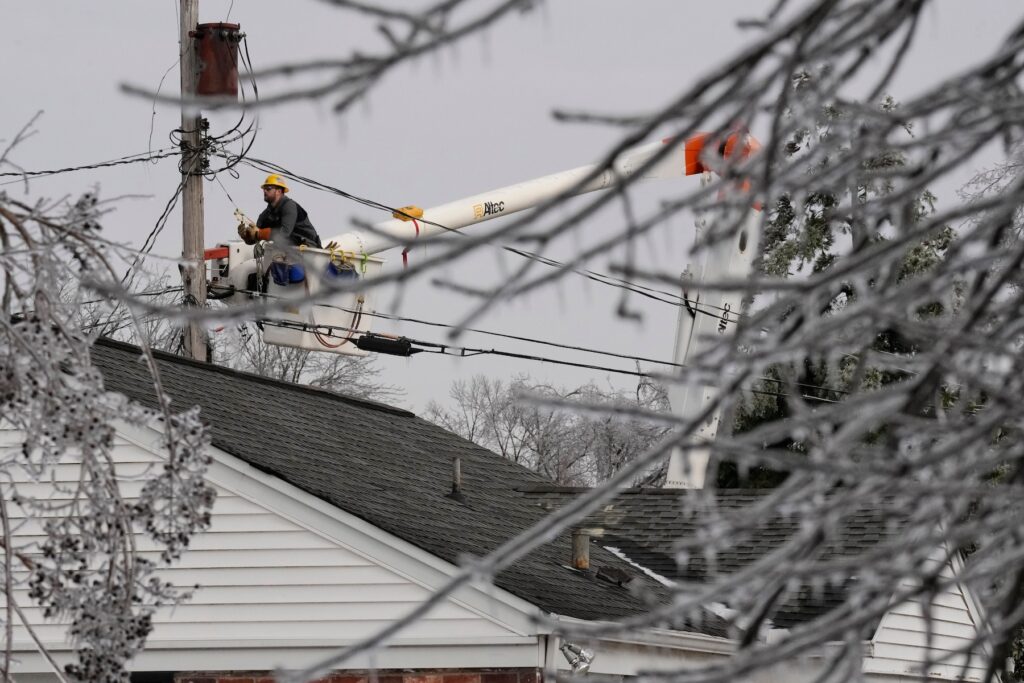
The Nashville Electric Service had a chance to alter the course of the ice storm.
On Jan. 24 and 25, the storm coated Nashville with upwards of 0.75 inches of ice, snapping tree limbs and pulling down a record number of power lines. About half of the city lost power — and for as long as two weeks for some households.
The Nashville Electric Service began tracking conditions three days before the storm, and the National Weather Service issued a nearly 70% probability of freezing rain two days beforehand.
“The forecasted freezing rain and potential resultant ice should have been an initial sign of potential for significant damage to the electrical grid, and potential need for additional crews,” reads a new report released by the NES Board.
More: FEMA and Metro open up more storm relief funds
The board hired attorneys from two local law firms to facilitate a report on the utility’s preparedness, response, and restoration efforts for the storm. The attorneys selected the multinational firm PA Consulting Group to write the report.
The report found that the utility had serious deficiencies:
- The utility’s emergency response plan lacked enough detail to handle a large-scale event.
- An unclear chain of command caused inconsistent messaging.
- NES did not have a model to predict damage or “a reliable method for estimating resource needs ahead of the storm.” The utility did not hire enough extra workers ahead of the storm.
- The utility initially did not provide an “Estimated Time of Restoration” for customers despite its ability to do so.
- NES failed to effectively coordinate communications with its operations, resulting in a reactive approach to communications and “delayed, inconsistent, and at times inaccurate messaging.”
The findings should be considered “preliminary, tentative and non-final,” the report authors wrote. They recommend addressing the problems and creating a system to give customers better estimates for when their power will be restored.
NES CEO Teresa Broyles-Aplin told the company’s board on Wednesday that NES has already been working towards many of the recommended actions ahead of the stormy spring season.
“We’ve committed the last 80 days to making significant progress in the areas that impact our customers the most,” Broyles-Aplin said.
Impacts and failings
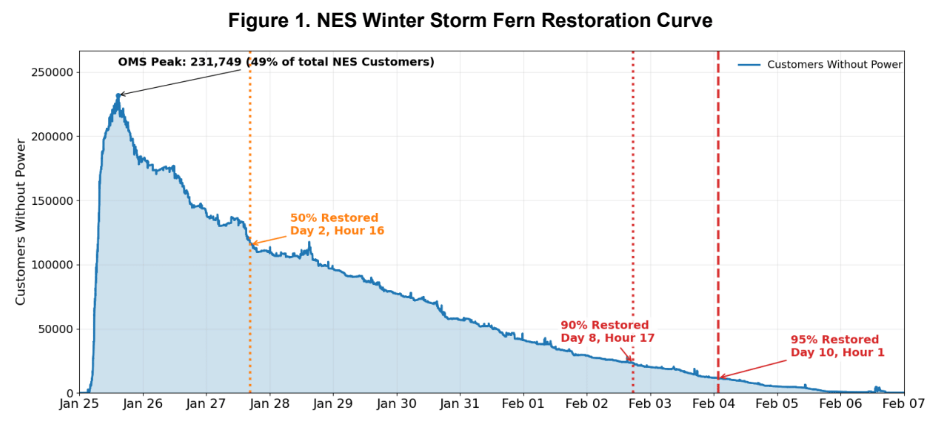
During the storm, more than 230,000 customers of the Nashville Electric Service — or perhaps as many as half a million people — lost power at the peak. Tennessee reported 29 weather-related fatalities.
Some people were without power for two weeks. NES completed restoration 16 days after the initial storm-related outages.
Next steps
The report authors suggested the utility deserves recognition for completing restoration work safely, with no serious injuries reported. NES also had clear logistics to support field operations and adapted during the response by using outside expertise and expanding worker support.
NES is taking “aggressive action” to address vegetation management concerns. The power company is creating wider clearances between trees and power lines while removing any overhanging limbs, the authors wrote.
Restoration efforts were challenged by fallen trees and debris, impassable roadways and continued freezing temperatures.
“The scale of Winter Storm Fern tested every aspect of NES operations,” Anne Davis, chair of the Electric Power Board, said in a statement. “This independent, interim report provides a third-party assessment of where improvements are needed, and we are committed to ensuring the appropriate actions are taken to improve our infrastructure and customer service.”
A final report is expected in June.
Updated: This story was updated on April 22, 2026 to include information from the latest NES board meeting.

 On Air - 90.3 WPLN-FM