

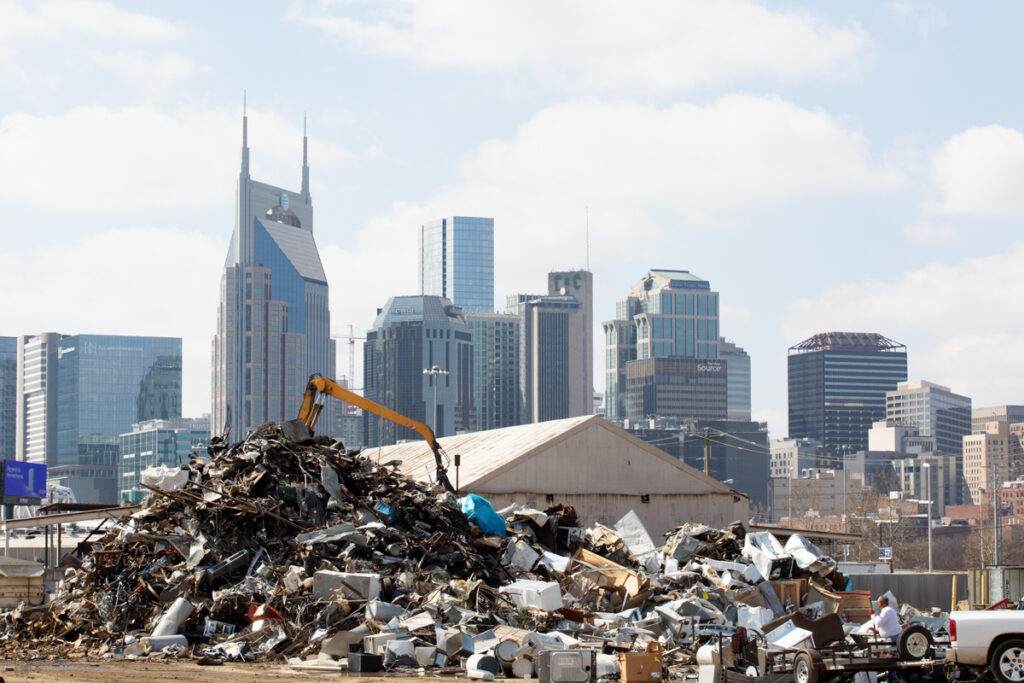
The former PSC Metals scrapyard recycling site — which has featured mountains of metal, crushed cars and billowing smoke on Nashville’s East Bank area for decades — has been cleared for redevelopment.
Nashville’s Metro Council gave their final go-ahead Tuesday night. That’s after the scrapyard property was sold last summer to local investors for $245 million. The Metro Council’s vote marks another step forward in the city’s massive redevelopment of the neighborhood across the river from downtown.
“As a Nashvillian, as someone who loves this city, to see months and months and years and generations of work coming together, to see councilmembers with different viewpoints and different amendments, kinda landing on similar pages and working together to make this a project that’s not just for one district but for the whole city,” said Councilmember Jacob Kupin, who represents the area.
David Byerley, one of the investors in the property, advocated for the redevelopment ahead of the vote.
“So many investors, primarily from Nashville and Middle Tennessee, have come together to create something truly special, a place built and designed from scratch for families, a place for people to live and visit, where children will learn and be entertained,” Byerley said. “It’s time to work now.”
However, others pleaded for thoughtful development.
“The amendments to plan seemed well-meaning and well-thought out, but please make this a neighborhood, not a new downtown,” said Jim Hoobler, a historian who lives in East Nashville. “Be careful with what you impose on the future.”
The rezoning passed with substantial debate and multiple amendments. In total, 17 amendments were approved, setting restrictions for how the area could be developed — like banning any further stadiums, limiting hotels, establishing parking requirements and calling for a transportation analysis, among other conditions.
On Tuesday, the council also approved zoning bills related to Oracle’s planned campus, also located along the East Bank. And, last week, TPAC revealed designs of its new facility, which is expected to open in the neighborhood in 2030.

 On Air - 90.3 WPLN-FM