
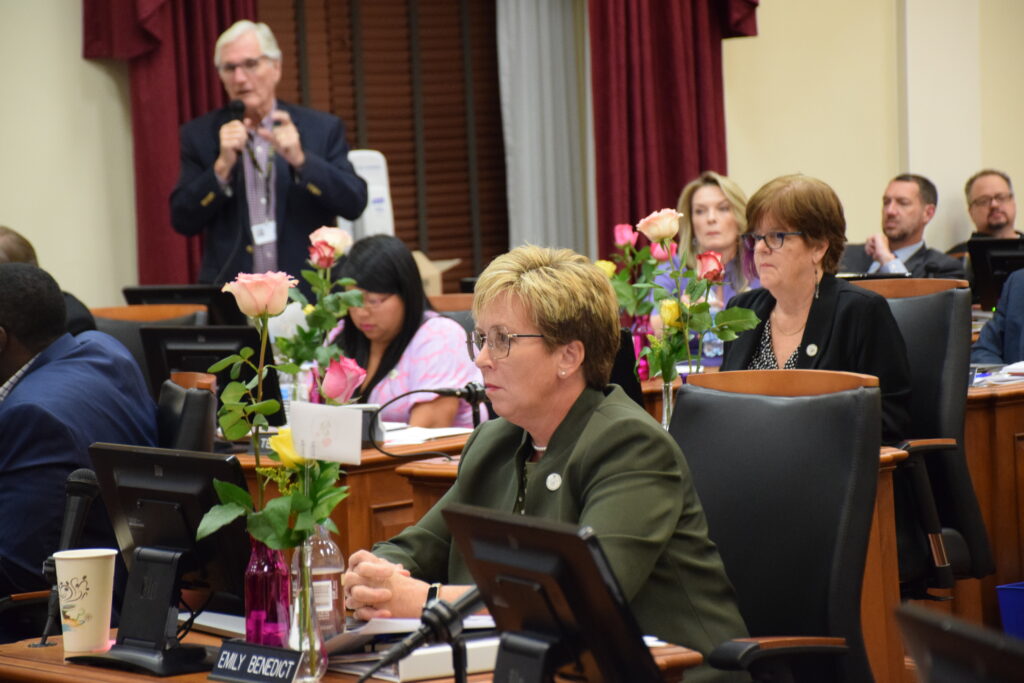
A new court ruling will lead to Nashville’s Metro Council membership being slashed in half.
Tennessee lawmakers have been trying to shrink the Metro Council and put a 20-person cap on local governing bodies across the state. After a lengthy legal battle, the Tennessee Supreme Court ruled in favor of the state law (ruling PDF) on Monday.
The ruling will set in motion sweeping changes for Nashville, which is the only body in the state with more than 20 members. New districts will need to be drawn. In a statement, Nashville Mayor Freddie O’Connell stood by the city’s legal argument.
“Nashville’s Council size was set by our community, and our charter should only be changed by our voters — not by the state legislature,” he wrote. “We’ll review our options and keep fighting for Nashville’s right to govern itself.”
The Metro Council was established with 40 members in 1963 when the city and county government consolidated. The large size played a role in getting voters on board, reassuring residents who had been concerned about the representation of Black residents.
“This is a somber day for democracy in Tennessee,” Vice Mayor Angie Henderson wrote after the ruling. “The hyperpartisan hubris of a relatively small clatch of state legislators and lobbyists who initiated this legislation remains staggering.”
The council will soon hold a special committee meeting to discuss what happens next.
The council’s efficiency has been discussed at length, including by the council itself. In recent years, the council has made changes to try to pass more simple and procedural items without as much discussion.
The state law that capped council sizes first passed in 2023, prompting Metro to sue. The city argued the law was in violation of the Tennessee Constitution by unfairly singling out Nashville, and because of the powers given to local voters to make changes. Metro initially won in a lower court. The rule was reversed on appeal, and the 5-member supreme court heard arguments in February.
The state’s highest court found that amendments by lawmakers eliminated some of the legal concerns and that the state legislature does maintain authority over local councils.
 On Air - 90.3 WPLN-FM