

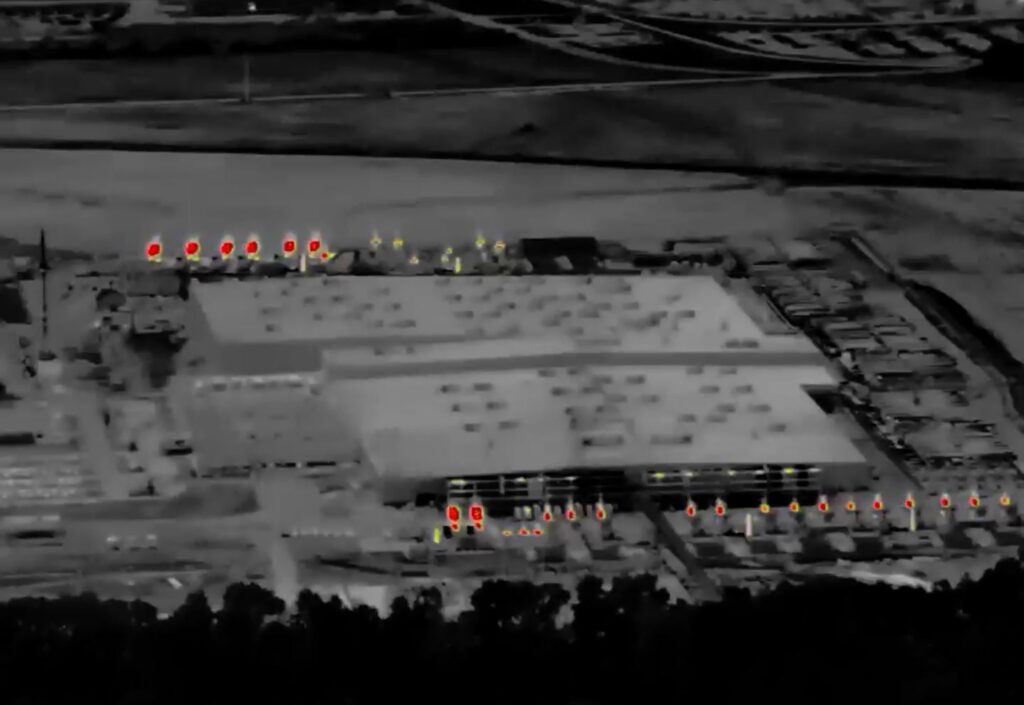
Data centers are popping up across the region at a rapid pace.
At the same time, electricity use is surging, along with concerns for rising electricity costs.
Tennessee lawmakers are acknowledging the tension.
“We don’t want what’s happened in some other states where data centers have come in and rates have gone up $20 to $30 a month,” said state Rep. Ed Butler, R-Rickman.
Butler sponsored a bill, HB1847/SB2128, that he says will help protect people from subsidizing data centers through their monthly electricity bills. The legislation allows data center owners to source their own power, instead of buying power from a utility.
More: Tennessee has 60 data centers. Nashville probably has more than you think.
If recent data center developments in the state are any indicator — such as Elon Musk’s xAI facility in Memphis — the legislation might lead to more pollution near data centers.
“This bill would open the door to a massive influx of unregulated methane gas plants across the state,” said Trey Bussey, an attorney with the Southern Environmental Law Center.
The bill is scheduled to be heard Tuesday before the Tennessee Senate Commerce and Labor Committee.
How the bill works
The proposed legislation defines a data center as a building that requires at least 50 megawatts of power and primarily houses equipment to process, store or transmit digital information. Currently, most data centers in the region get electricity from a utility.
If the bill passes, data center companies could also produce their own “behind-the-meter” power or buy electricity from an “independent power producer” without needing approval from a state regulator.
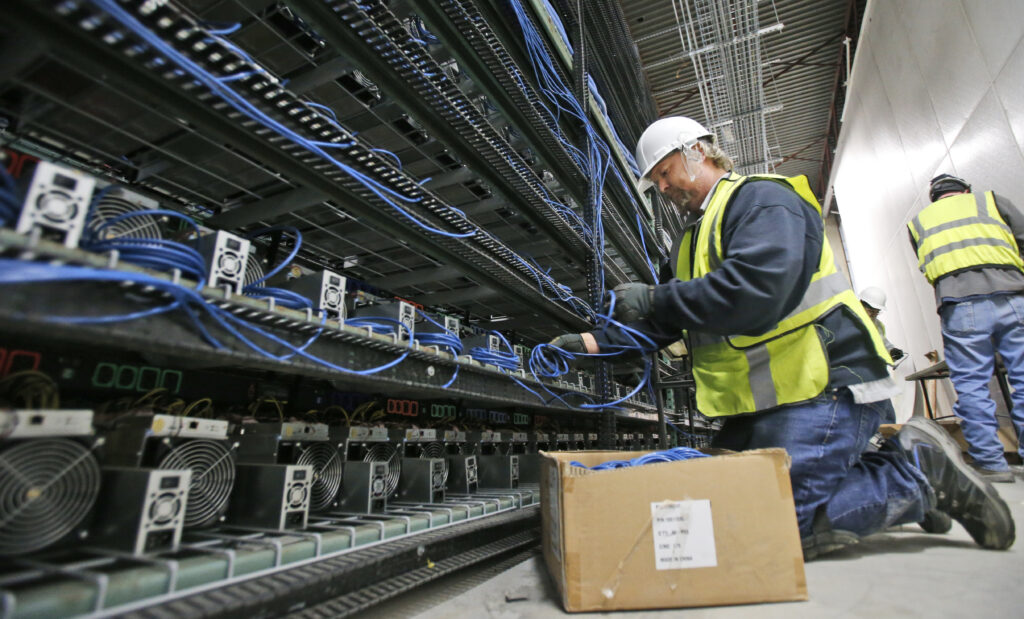 Courtesy Steve Helber/Associated Press
 Workers install cables during construction of a Bitcoin data center in Virginia Beach, Va., Friday, Feb. 9, 2018.
Independent power producers are sometimes referred to as “merchant power plants.” These companies would not face regulatory oversight from the Tennessee Public Utility Commission, which has previously handled cases for such plants.
“The bill’s intent is to deregulate,” Bussey said.
While data centers have options, Bussey suggested that many companies may opt to generate electricity from gas turbines, a form of fossil fuel infrastructure that burns methane.
xAI uses ‘behind-the-meter’ generation
In Memphis, Elon Musk’s data center xAI runs Grok, the artificial intelligence for X.
The company has largely been running on behind-the-meter generation. Its first facility, known as Colossus 1, initially did not have permits when it plugged in about 30 mini gas turbines, which collectively could power more than 200,000 homes. xAI is now using about 15 turbines at that site. In February, the company got approval to source about 300 megawatts of power from the Tennessee Valley Authority, the federal utility that serves 10 million people in the region.
Last month, xAI was approved to add more behind-the-meter power, with another 40 gas turbines across the state line in Mississippi for its second Memphis facility. Research published in February shows that the facility could significantly increase air pollution in North Mississippi and West Tennessee.
Burning methane for energy releases toxic air pollutants, including nitrogen oxides and volatile organic compounds like benzene and formaldehyde.
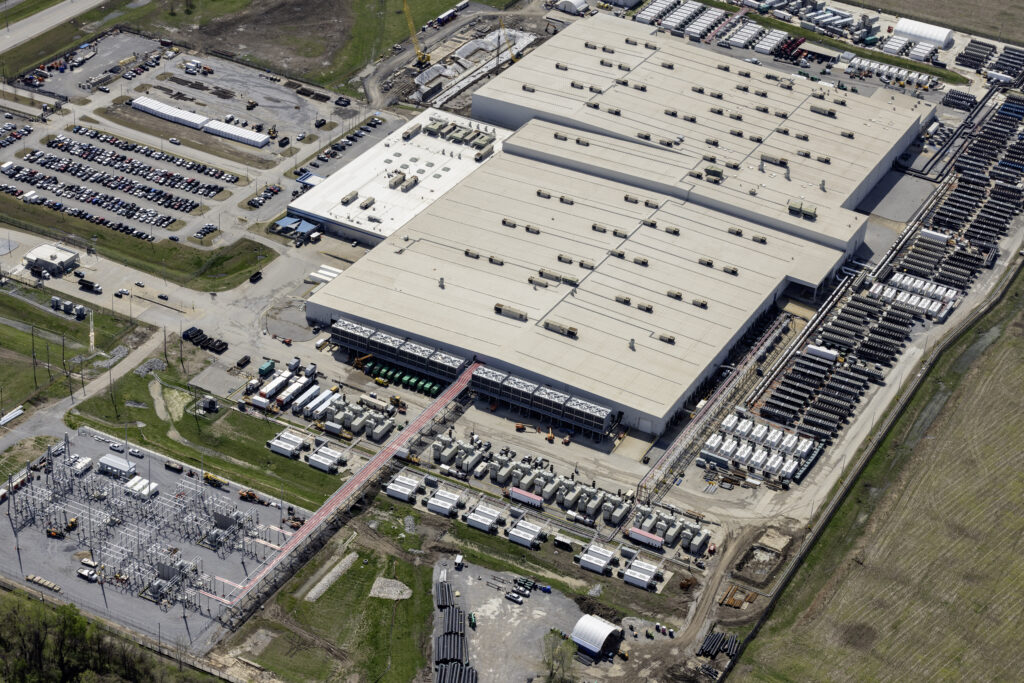 Courtesy Steve Jones, Flight by Southwings for SELC
 The xAI data center that powers Grok, the artificial intelligence for X, has multiple faciliites in South Memphis.
Musk is planning on building a third facility. Once operational, the data centers could collectively require 2 gigawatts of electricity — enough to power 1 million homes, based on calculations used by TVA.
The legislation gives xAI more options to power its facilities from offsite generation.
It also points to an emerging niche market of small, mobile gas turbines, as a push for new gas generation in the U.S. has contributed to a global shortage of gas-fired equipment.
Solaris, for example, is a Houston-based company that builds mini gas-powered turbines “for the world’s most demanding data center environments,” according to the company. Solaris builds behind-the-meter generators with a range of about 6MW to 35MW of power.
Data centers increase overall energy demand
Tennessee has 60 data centers, and more than a third of them are located in the greater Nashville area.
Companies are also constructing data centers around the borders of the state, which is relevant to local electricity rates: TVA provides nearly all power for Tennessee and parts of six other states. Local power companies, to which people pay their monthly bills, purchase electricity from TVA.
“Currently, almost all data centers in Tennessee are served by local power companies,” TVA spokesperson Scott Brooks said in an email.
TVA’s total power load is roughly 60% industrial and 40% residential. Data centers alone comprised about 10% of TVA’s total power load in 2025, according to the utility’s February financial report. Power demand from data centers could double by 2030, according to CEO Don Moul.
TVA controls electricity rates
The TVA Board, the utility’s main regulator, has previously worked on special rates for data centers to ensure rate fairness, but that effort stalled after President Donald Trump fired several board members last year.
TVA is now talking with local power companies about options to protect customers against the subsidization of “unique, large loads” like data centers, according to TVA, but has not taken any action to date.
“Our goal is to support economic development projects, including AI and other industry growth, while balancing impacts to all customers,” Brooks said.
TVA increased rates by nearly 10% between 2023 and 2024 to help fund the utility’s massive buildout of new gas plants.
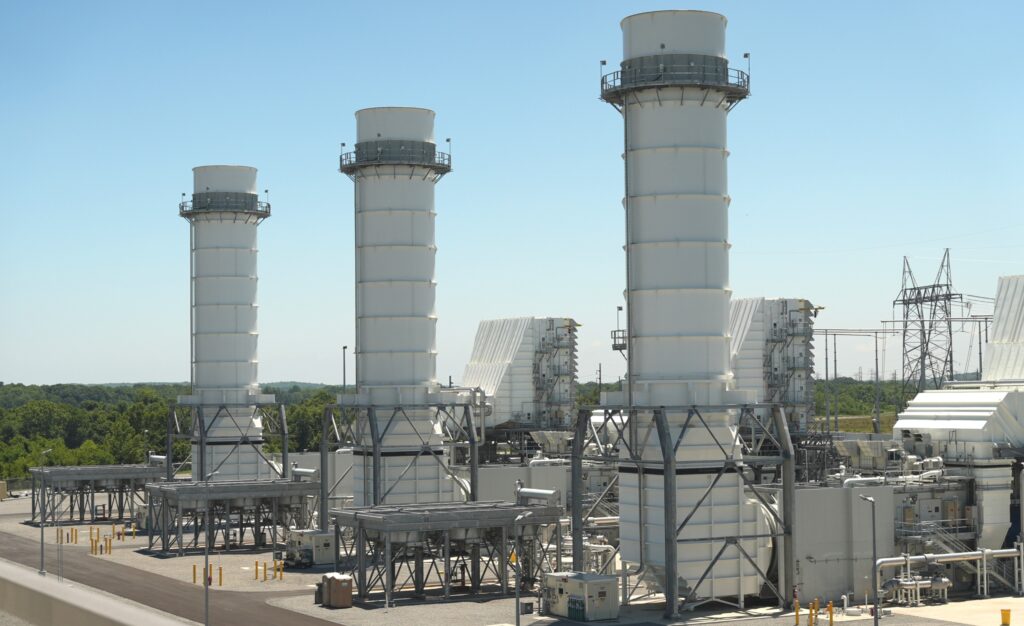 Courtesy Tennessee Valley Authority
 The Tennessee Valley Authority operates a large methane gas plant in Paradise, Kentucky.
TVA also recently announced that it will keep its two largest coal plants online longer than promised to support load growth. For years, TVA argued that it needed to build new gas plants because its coal plants had “substantial performance and cost risk.”
TVA proposed a second gas plant in Memphis three years ago with a power capacity of 200 MW — less than the energy needs of a single xAI “Colossus” facility. TVA proposed another gas plant two years ago in Brownsville, an hour north of Memphis, that will produce 300 MW of power.
Correction: This story originally referred to independent power producers as “emergent power plants.” The correct term is “merchant power plants.”

 On Air - 90.3 WPLN-FM