
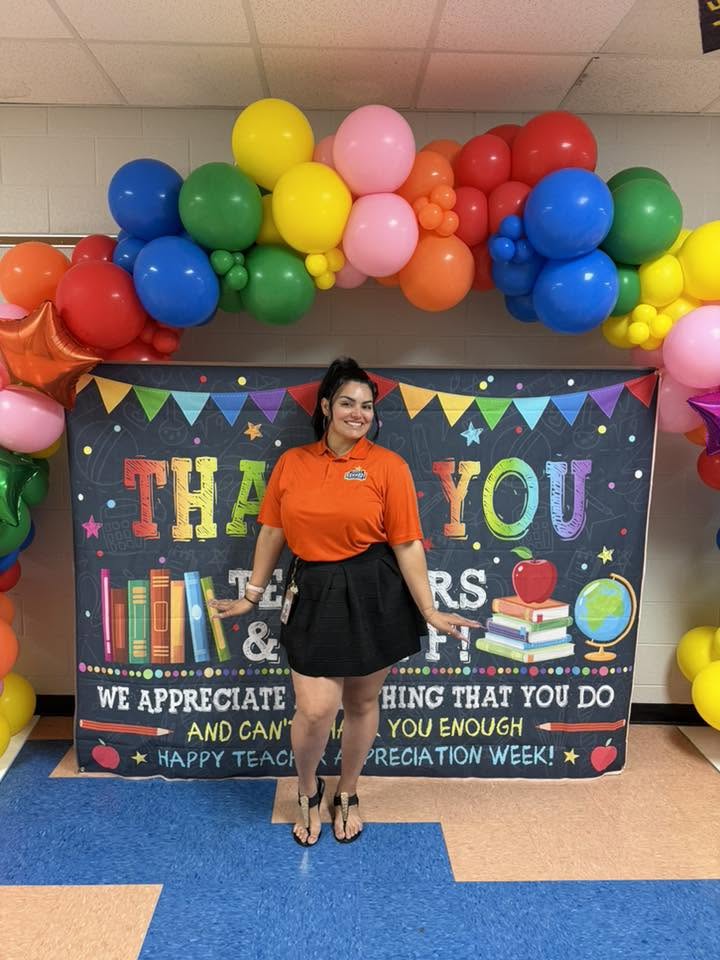
A former teacher in Nashville plans to take her concerns about grade-fixing to the next Metro School Board meeting. It’s a repeat appearance for Samira Hardcastle since she quit her job after she said district officials directed her to change a student’s grade – a directive she feels undermines her authority and incentives poor behavior among students.
Conflicting grading policies
Samira Hardcastle worked as an arts teacher at John F. Kennedy Middle School before she resigned last May – shortly after she was voted as the school’s “Teacher of the Year.” The decision was long-coming as she said she regularly experienced verbal abuse from parents and received little support from the Metro Nashville Public Schools district.
The breaking point, however, came last October when she claims district officials directed her to change a student’s grade who failed to complete an assignment on time.
“I argued and pushed back. I said, ‘This is not okay,’ ” she told WPLN News. “This is not indicative of the work that [the student] showed me, and they said nothing could be done.”
Hardcastle had a one retake policy in her class – and the student didn’t adhere to that, which resulted in a failing grade for a project. The student was not in danger of failing the class, however, only that assignment. The student’s mother called school district officials and the grade was later changed – but not by Hardcastle.
Sean Braisted, an MNPS spokesperson, told WPLN News that the school principal reviewed the student’s work and the grade was ultimately altered based on that assessment.
He also said the school had no policy to prevent the student from getting more chances to turn in the assignment and pointed to MNPS’ guidelines on grade changing, which allows principals to “modify a grade given by a teacher under his/her supervision only when it has been determined that the grade was based upon inaccurate data or when he/she feels that policy was not followed.”
Hardcastle said this undermined her authority – leaving students with the idea that teachers won’t actually enforce their rules.
“When kids find out, they don’t have to work hard to get an A, they’re not going to work,” she said. “They’re going to sit and talk to their friends. They are going to do what they want to do in class, and it disrupts learning because it develops a sense of entitlement.”
‘I don’t want my resignation to be in vain’
Everyone – not just students – will suffer the long-term repercussions of promoting students each year to the next grade level when they haven’t completed the necessary work, according to Hardcastle. She’s hopeful that by speaking out she can spur the district to make policy changes.
“I don’t want my resignation to be in vain. I want to be able to help the teachers who can’t speak up right now,” she said. “I’m listening to their concerns and and I want to speak up because they’re afraid of retaliation.”
Hardcastle plans to speak at the Sept. 22 school board meeting about how not enforcing school policies leads to increased behavioral problems. One example she wants to highlight is that of 17-year-old Solomon Henderson, who killed one of his classmates and injured another at Antioch High School before killing himself in January 2025.
She said he was a problematic student in middle school but concerns about his violent behavior went unheard. WPLN News previously reported that Tennessee law enforcement and MNPS were aware of Henderson’s long history of threatening and violent behavior.
Hardcastle expects that other teachers will also be voicing their concerns at the board meeting on Tuesday.

 On Air - 90.3 WPLN-FM