

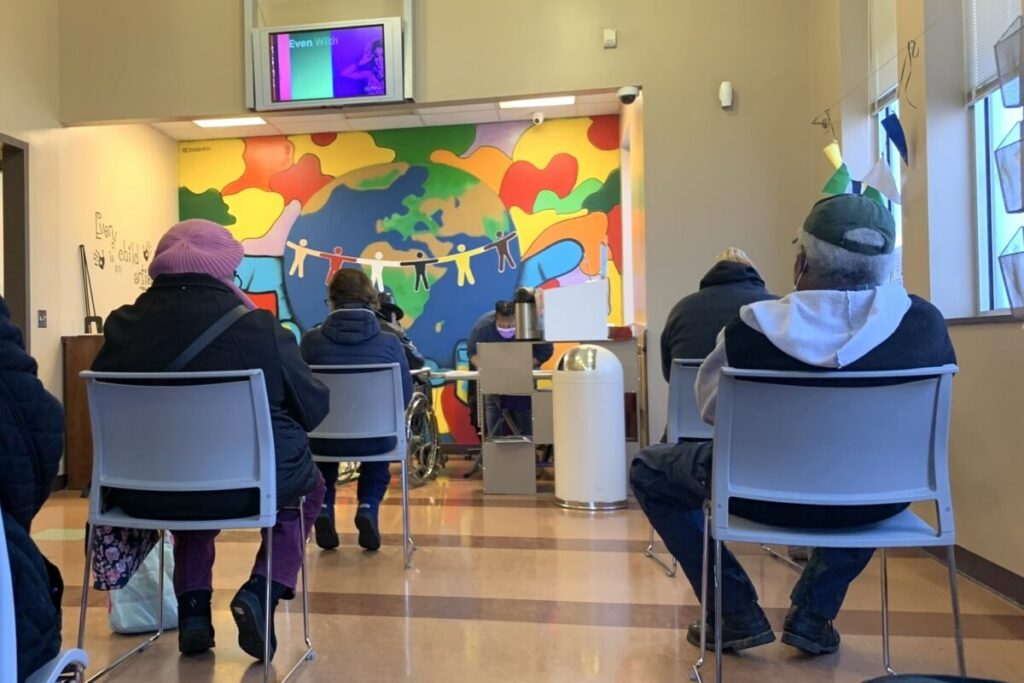
Many Americans are facing the new year newly uninsured.
An estimated 4.8 million people are projected to lose health coverage following the end of COVID-era subsidies that reduced the monthly cost for Affordable Care Act marketplace plans, according to the Urban Institute.
The good news is there are hundreds of community health centers around the country that specialize in offering affordable care, regardless of a patient’s ability to pay.
They’re called FQHCs — federally qualified health centers — and offer multiple kinds of care, including primary care, pediatrics, prenatal, and pharmacies. Some have imaging, labs, dental care and mental health services as well.
People and policy
FQHCs receive funding from a division of the Department of Health and Human Services that saw sweeping staff cuts this summer. A huge part of their budget comes from patients who pay with Medicaid — and the Republican-led “One Big Beautiful Bill Act” is expected to significantly reduce Medicaid enrollment. Paired with the millions of people losing private coverage through the ACA Marketplace, FQHCs are bracing for a surge in patients without insurance.
Here are three things to know about FQHCs:
- These centers have fully accredited staff.
Katina Beard, the CEO of Matthew Walker Comprehensive Health Center in Nashville, says she knows some people are skeptical of getting care at a low-cost clinic and believe “that the services are substandard in some way.” But the staff is all board-certified, she says. “I have to tell them that we are accredited just as your private physician office is.”
- You’re charged on a sliding scale based on your ability to pay.
When you establish care at an FQHC, the office staff will usually ask for a pay stub to verify your income and then ask how many people are in your household. Then they’ll use a sliding scale to determine what you owe.
Eduardo Mendoza told HealthQ that his girlfriend goes to an FQHC in Nashville called Connectus Health for monthly blood draws that cost $30. Without insurance, he said, it would normally cost up to $700, an amount that she would not be able to afford.
- To find a center, look up “federal health center.”
These centers rarely advertise, due to low marketing budgets, and the alphabet soup of “FQHC” is rarely in their names.
But there are roughly 1,400 FQHCs in the U.S., with more than 16,000 individual sites. Find centers near you — or just use “federal health center” in a Google or other website search. These centers operate sites in all U.S. states and territories in both rural and urban areas.
HealthQ is a collaboration between Nashville Public Radio and KFF Health News. Katherine Ruppelt and Emily Siner contributed to this reporting.

 On Air - 90.3 WPLN-FM