

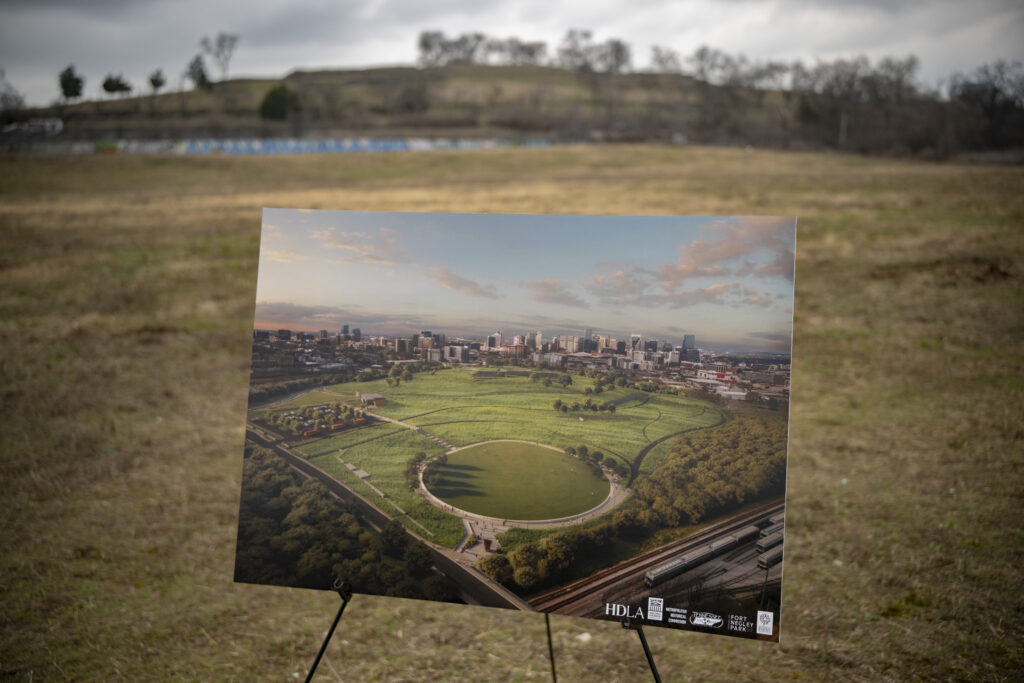
One of Nashville’s most significant Civil War-era sites is getting a long overdue facelift, as construction begins this month on Fort Negley’s $11 million expansion.
The renovations, which were born out of the city-directed Fort Negley Master Plan, mark the first phase of the project. It will feature a range of upgrades and additions, including:
- removal of the old Greer Stadium parking lots, which will be restored with native grasses;
- construction of a memorial lawn and “contemplative plaza”;
- addition of accessible walking paths and a new overlook structure at Fort Negley, and;
- new educational installations across the site.
The effort arrives after Fort Negley went without significant maintenance upgrades for decades. In recent years, the city has begun allocating millions toward capital improvements of the site and development of the Master Plan.
It also comes at a time when commemorating the history of the Black laborers is, according to Nashville Mayor Freddie O’Connell, particularly important.
“There are people trying to legally prevent histories like those of Fort Negley from being included in textbooks or even our discourse, and that is why the Fort Negley story is one worth knowing, especially right now,” O’Connell said at a celebration hosted by Metro Parks and Friends of Fort Negley. “I would say that whatever the price of freedom is, the people who built this fort, defended it and descended from it, have paid that. They’ve earned inclusion, belonging, and the dignity of our collective memory. That we may elevate their story and draw inspiration from it as we claim this moment and rebuild a fractured past as a better future.”
Fort Negley has a complicated history. It was built by Black men, women and even child laborers — some enslaved, some free — who were impressed into work by the Union Army. Compensation for the work was slow, and many workers never received any pay.
Dr. Learotha Williams, a Tennessee State University professor recently named Davidson County Historian, described the site as a “place of paradoxes” — a “great place” and a place “built by enslaved and conscripted Black labor.”
“History can be kind of messy,” Williams said. “Within this paradox, you have men who put on the blue uniforms of the Union Army and vowed to fight to the death for freedom. … They come here seeking their first taste of freedom. But that first taste for many of them might have been very bitter.”
The U.S. Colored Troops who defended Fort Negley during the war remained and settled Nashville’s first post-Emancipation Black neighborhood at the base of the hill. The Bass Street neighborhood was a thriving area until it was destroyed in the 1950s and ’60s to make way for Interstate 65.
The expansion of Fort Negley intends to include the story of the Bass Street Community, which descendants say is a way to honor and feel connected to the history.
“I feel my ancestors were crying tears of joy,” said Jeneene Blackman, a descendant of Bass Street residents and executive director of the Nashville African American Cultural Alliance. “They were celebrating this fact, this day had come.”
Phase one of the project is expected to take 12 to 14 months. Later stages of the plan will include interpretive elements and an expanded visitor center and additional event space.

 On Air - 90.3 WPLN-FM