
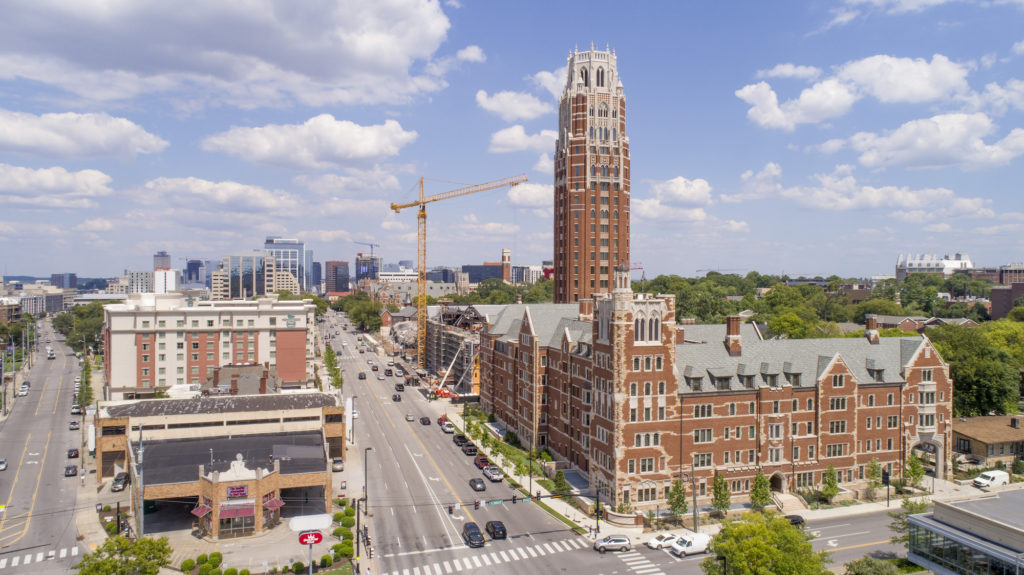
Retail, restaurants and research labs are coming to the parking lots around Vanderbilt University.
Nashville’s Metro Council approved the university’s proposed “Innovation Neighborhood” on Tuesday. The plan is to transform the western edge of campus into a mixed-used, “pedestrian-oriented” district. Over the course of 30 years, the area will be converted into commercial workspaces, housing, hotels, parks, shopping and dining.
“Vanderbilt intends to turn 40 acres of what is mostly surface parking lots west of our campus into a hub for innovation here in Nashville,” said Eben Cathey, Vanderbilt’s senior director for local government relations, at a council meeting last month. “We want to create a place where innovation can thrive, where entrepreneurs and startups can be in close proximity to our faculty and our researchers.”
But the proposal has drawn scrutiny from Vanderbilt’s neighbors, who fear the scale and congestion.
“What is now nice student recreational fields that helped the transition from the universities and neighborhoods is proposed to be replaced by tall buildings and a minimal winding green path,” resident Preston Quirk said at the same meeting. “It feels to me like the king is trampling the little people. Let’s bring down the scaleless development next to our neighborhood.”
Quirk was one of a number of residents to show up in shirts that read “Cap the Vulch,” a play on Vanderbilt and Nashville’s highly commercialized Gulch neighborhood.
That also included Joe Johnston, who pointed out that much of the redevelopment will take place on land that was seized by the university in the 1970s. That’s when residential homes were razed to make way for sports fields and parking. Johnston said he owned one of those homes and was involved in years-long litigation with the university.
“Trust is something you need to be aware of,” Johnston said. “There’s a lot of smoke and mirrors here and you need be very careful with fine print.”
Some residents did express excitement about the coming development, noting that the pedestrian improvements will make the area safer and more walkable. And others, like Miriam Mimms, a neighborhood group leader, expressed support because of the changes made in the final draft of the plan.
“Many hundreds of my neighbors have participated in dozens of meetings over two and a half years,” Mimms said at this week’s meeting. “In doing so, we’ve hammered out the long list of agreements represented in this legislation.”
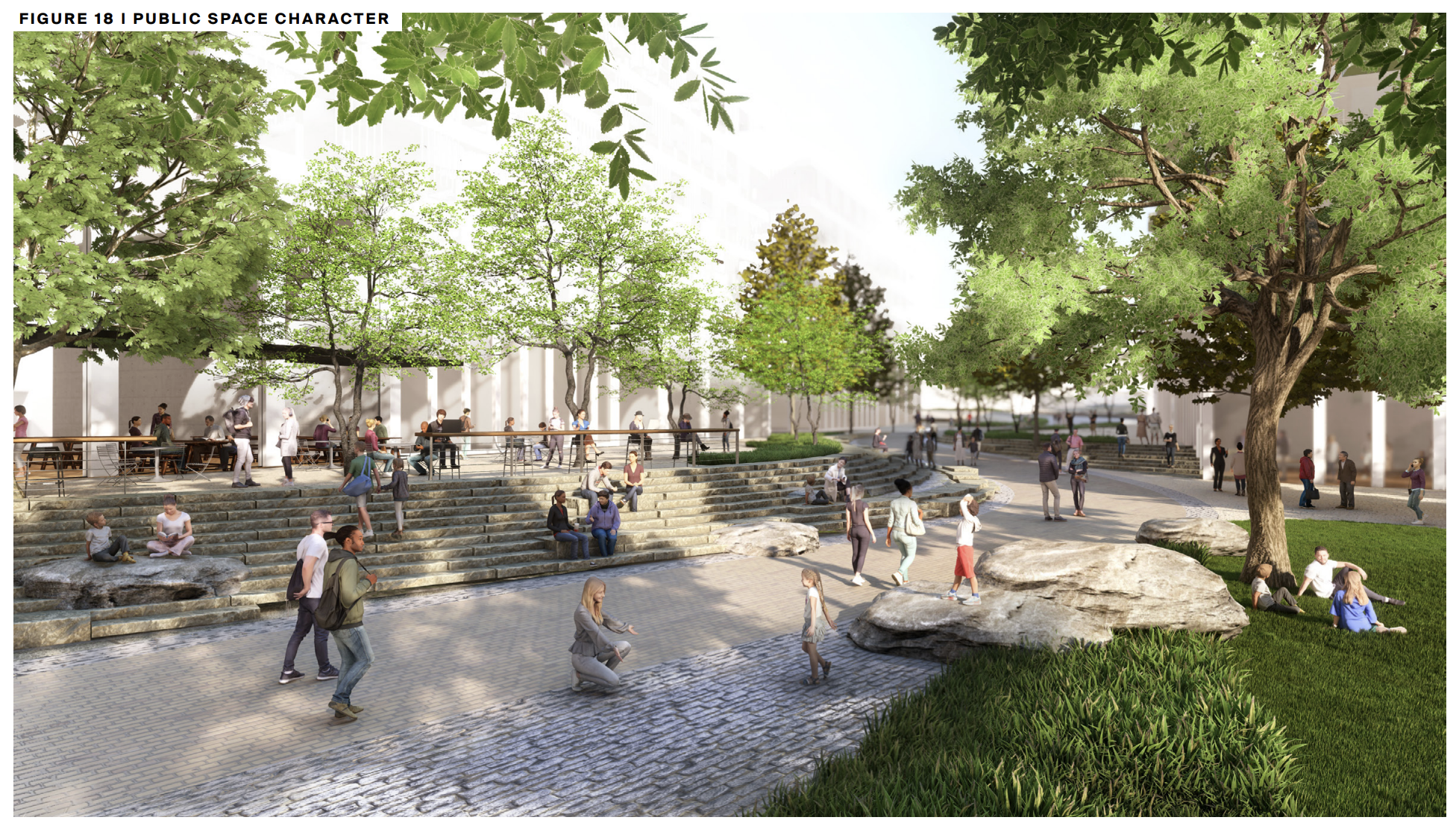 Screenshot Courtesy of James Corner Field Operations
A rendering of one section of Vanderbilt’s future “Innovation Neighborhood.”
Mimms pointed to concessions that included increased green space, pedestrian routes, plus reduced building heights.
Councilmember Tom Cash, who represents the area, said he’s tried to “thread the needle” between the neighborhood’s historic preservation tendencies and Vanderbilt’s desire to develop.
“There’s been a lot of tension about this, a lot of trepidation,” Cash said. “I believe that they are gonna build some good stuff for the city. I think we’ve put some protections in place to minimize the impact.”
As the Metro Council gave the plan it’s final go-ahead, the body did pass some final amendments. These included limiting building heights and requiring bird-friendly facades.
Construction on the decades-long project will not begin for another 18-24 months. The first phase will be focused on the area along Vanderbilt Place, across from the football stadium.

 On Air - 90.3 WPLN-FM