
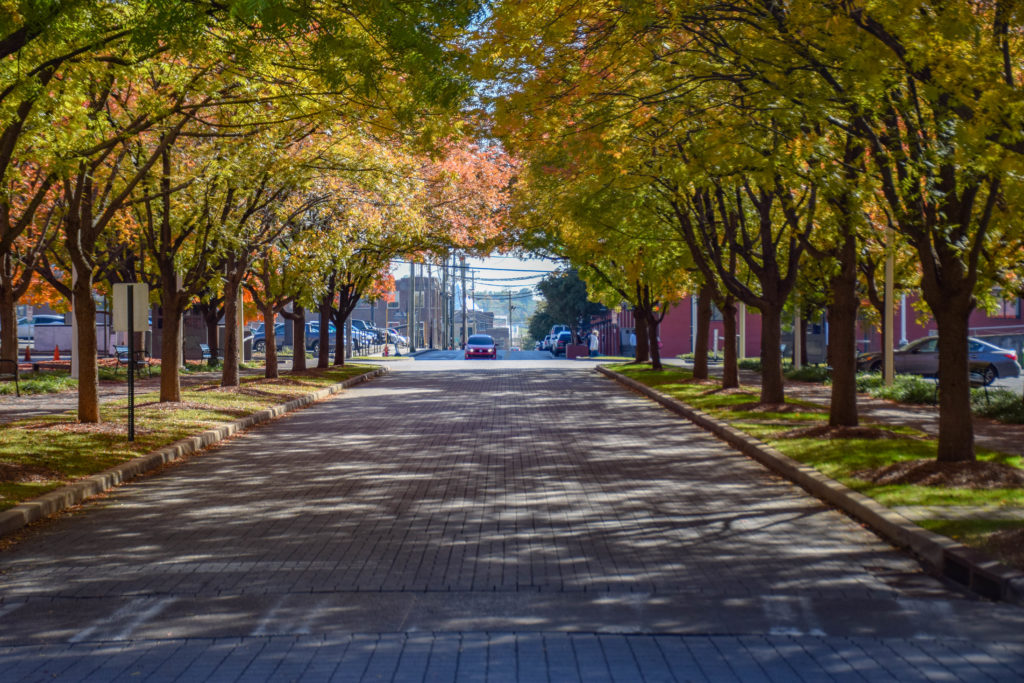
Nashville is creating a plan to protect trees, creeks and grasslands around town — and asking for community members to weigh in.
It’s the city’s first comprehensive plan to address patterns of development and conservation since 2011. In the years since, Nashville’s urban landscape has changed, along with the scientific understanding of its ecosystems and the effects of human activity and climate change.
The city plans to assess local environmental health to recommend conservation priorities, projects and policies over the next year and a half.
The deadline for citizens to provide feedback to Metro is Thursday.
Trees and forests
The city has been losing large numbers of trees each year due to development, invasive species and storms. For the latter, a prime case this year was the ice storm, which toppled tens of thousands of trees. In the aftermath, Nashville Electric Service’s new tree trimming policy has driven further tree loss.
Protecting street trees reduces heat and noise pollution, and safeguarding forests helps regulate water and prevents further habitat fragmentation, among other benefits.
The survey requests feedback on the natural areas “experiencing the most pressure or threats” and the best ways to protect the city’s unique natural systems. What policies are needed to protect trees and forests?
Creeks, rivers and wetlands
Over the past century, people have cleared trees and land around Nashville’s waterways.
Today, extending natural buffers around creeks and rivers and protecting wetlands could help reduce flooding, improve water quality and support a diversity of wildlife.
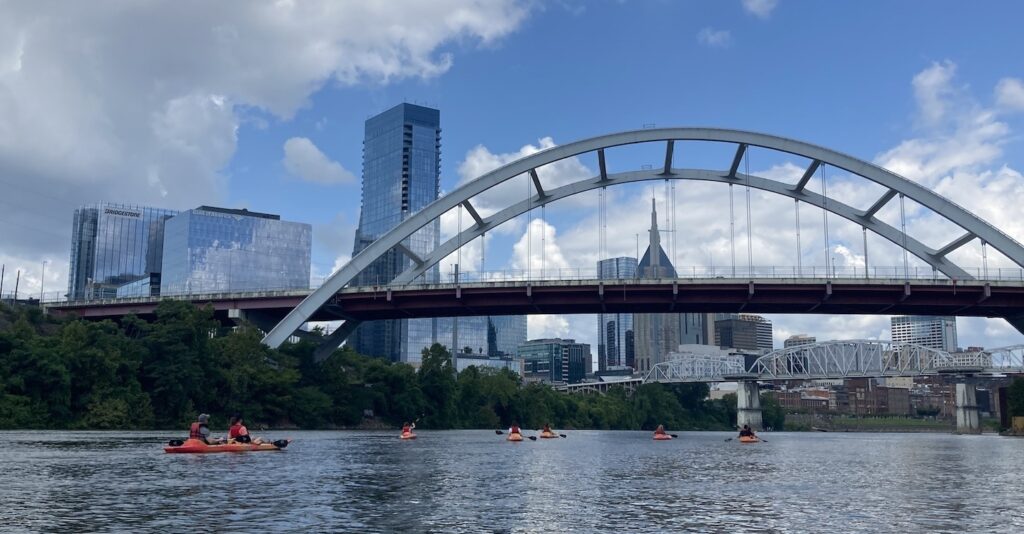 Tony Gonzalez WPLN News
Kayakers paddle on the Cumberland River in Nashville on July 27, 2023.
The city promised to replace asphalt with vegetation on the “East Bank,” the border of the Cumberland River opposite downtown, after the completion of the new Titans stadium.
What other creeks and segments of rivers need buffers? Which wetlands are good spots to see animals?
Parks, night skies and mental health
Safe pedestrian pathways to natural areas, even tiny pocket parks, are linked to better mental health.
A pathway could also become a natural area: Citizens have proposed permanently closing the busiest part of Broadway to traffic, and the city could transform the asphalt road into a park.
On a smaller scale, little patches of unnecessary concrete or asphalt, like unused parking spaces, have been replaced with trees and vegetation through the Cumberland River Compact’s “depave” program. (Scales can be larger: Paris is replacing 60,000 parking spaces with trees.)
Which streets in Nashville have unused pavement or parking?
Lastly, reducing light pollution at night can let people see more stars and perhaps feel less isolated. The city is replacing street lights. What else can be done?
Metro’s survey, open through June 12, is here.

 On Air - 90.3 WPLN-FM