

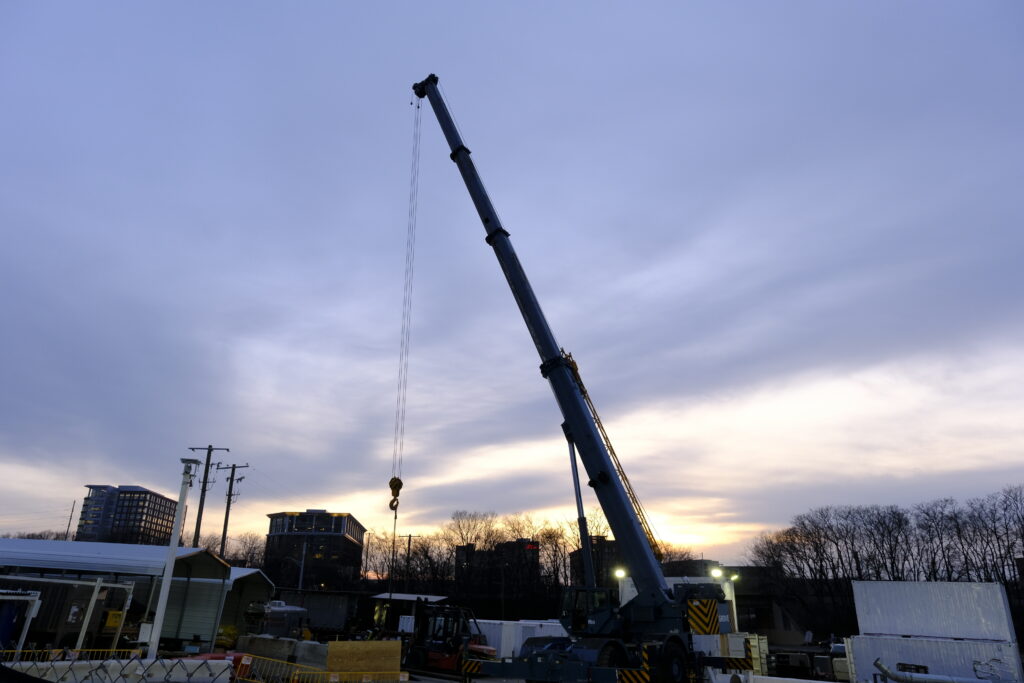
The Boring Company is ready to start digging underneath Nashville.
Just days after the company met publicly with city officials for the first time, the company was cleared for construction by state and federal agencies.
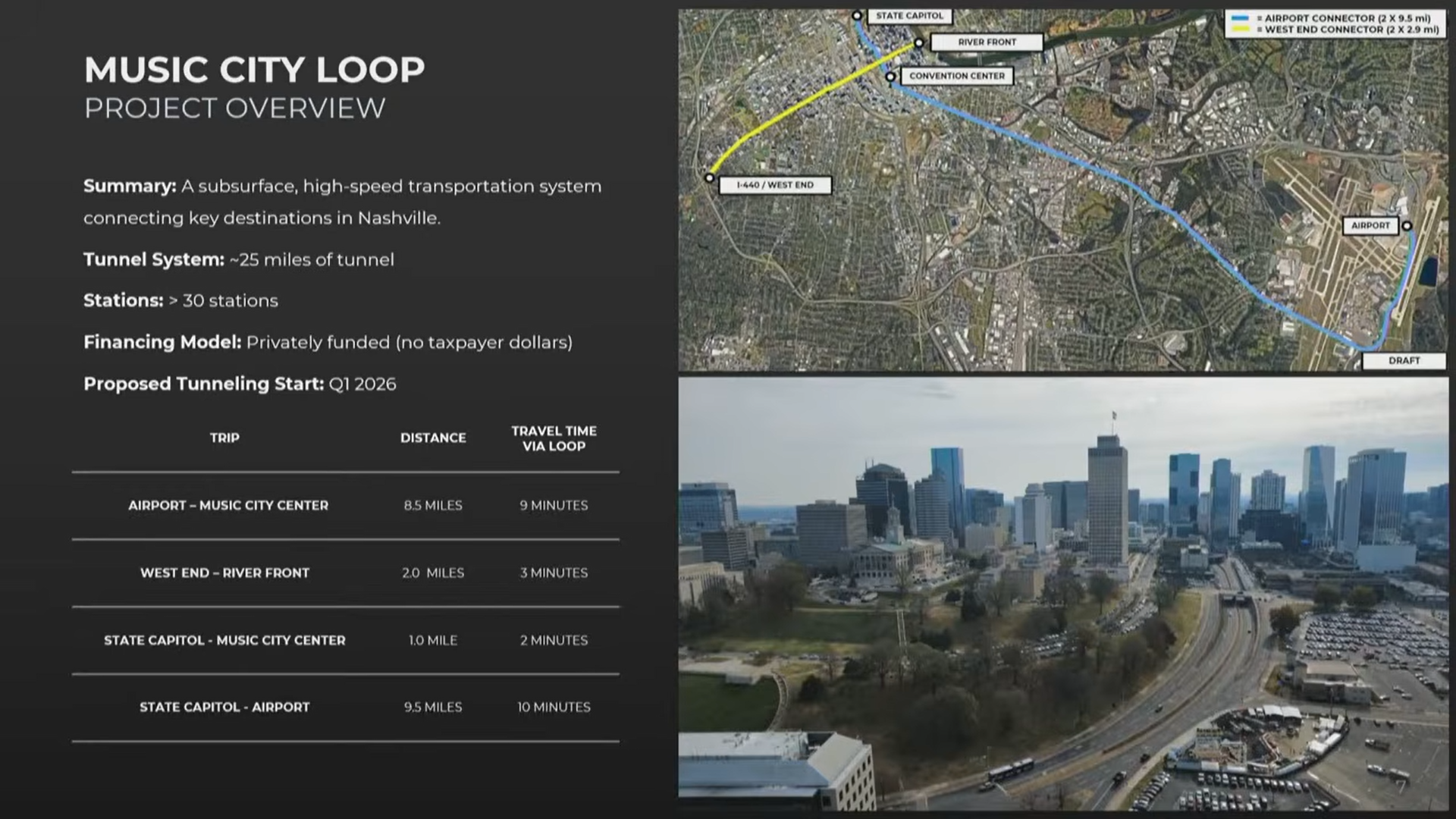
The Boring Company plans to build parallel, one-way tunnels between downtown and the Nashville International Airport, with possible extensions to West End Avenue in Midtown. Each route is located primarily underneath state-owned highways and does not need authorization from Metro Council, Nashville’s legislative body.
The Tennessee Department of Transportation and the Federal Highway Administration approved a lease and a permit for the company, Gov. Bill Lee’s office said Wednesday.
The announcement comes days after The Boring Company’s vice president David Buss met with Metro Council during a special called meeting, during which he said the company still needed five permits.
Buss started the meeting with a sales pitch, similar to presentations he shared in the early stages of project development.
“It is an express travel from directly where you board to your final destination,” Boring Company vice president David Buss said in the city council chambers on Feb. 19.
 Courtesy The Boring Company
 The Boring Company plans to build 25 miles of tunnels across Nashville. The first segment of the system is a roughly 10-mile loop between downtown and the airport.
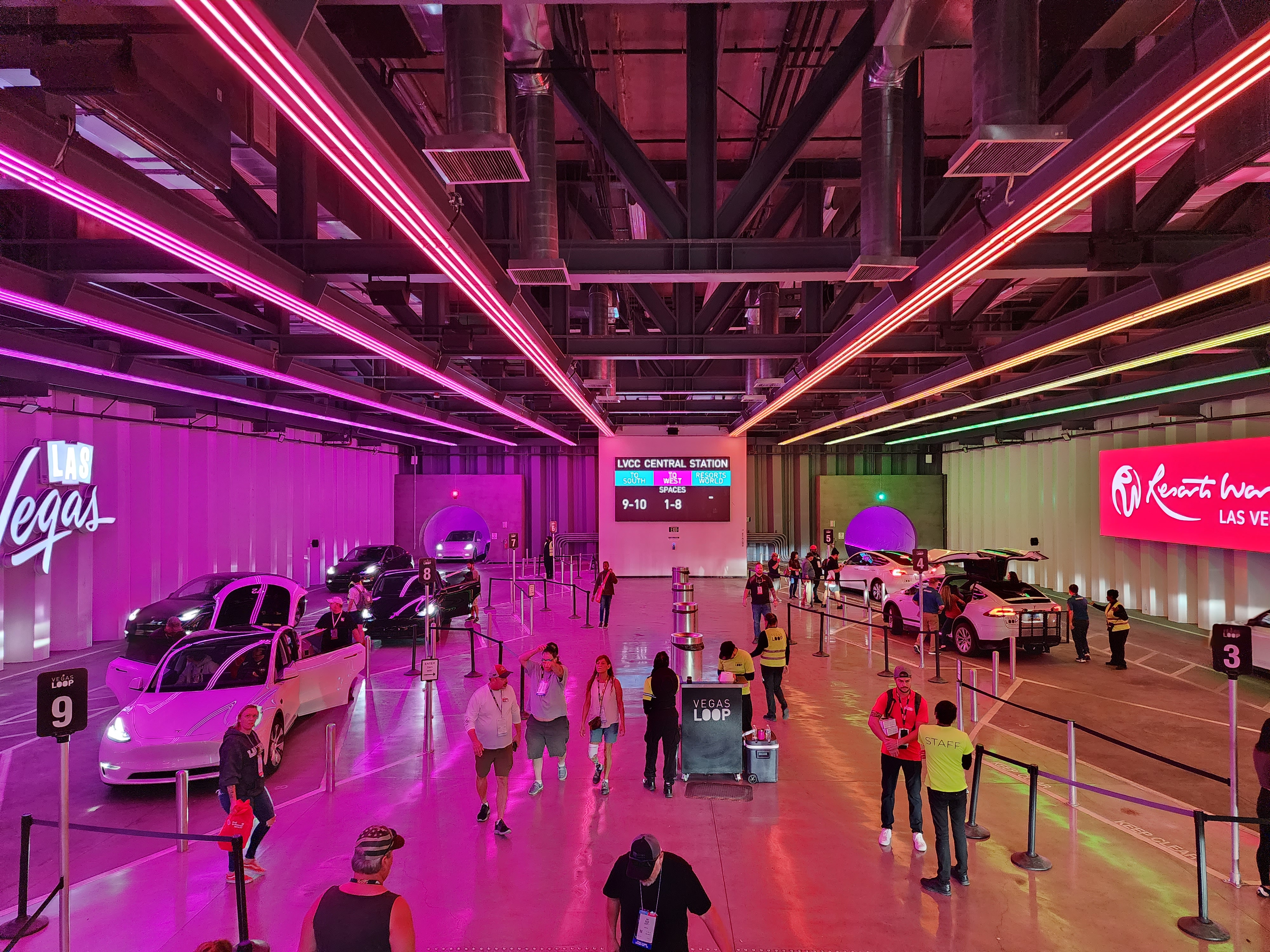
He showed images and security footage of his company’s tunnel project in Las Vegas as a proof of concept.
Some attendees were not convinced, given that the company has fully completed about 5 miles of a proposed 68-mile tunnel network in Las Vegas since 2019.
“But we’re supposed to believe they’ll get 10 miles done here by next year?” said Nashville resident Josh Wesley.
‘This project did not emerge from public demand’
The sales pitch struck a chord with some other residents at the meeting. Craig Bardo pointed out that the city council was not evaluating a proposal: The project had been slowly advancing through government procedures, clearing a key vote with Nashville’s airport body a day prior to the meeting.
Bardo suggested the meeting, which was organized by the Metro Council’s transportation committee, did not offer any real accountability to a company owned by Elon Musk, instead giving an impression of inevitability.
“You’re normalizing a decision structured around the preferences of a decadent billionaire class, not the needs of Nashville residents,” Bardo said. “This project did not emerge from public demand. It did not arise from community planning. It entered the city through elite access.”
The Boring Company asked to meet with the city council publicly for the first time last month — after declining repeated requests — one day before a scheduled vote on a resolution sponsored by Councilmember Delishia Porterfield to formally oppose the project.
“There was no response to this body until I filed legislation,” Porterfield said.
The Boring Company avoided answering some questions
During the meeting, many city council members and a few citizens asked what have, thus far, been unanswered questions. Boring Company leaders navigated around some of those questions, offering partial answers or promising to answer them later in emails.
 Courtesy The Boring Company
 The Boring Company operates about five miles of tunnels in Las Vegas. As of February, the company said it has constructed more than 11 miles of tunnels.
For example, Lindsay Lee, a member of the mayor’s Advisory Committee for People with Disabilities, asked about wheelchair accessibility and emergency evacuation plans for people with disabilities. She said that the company has not responded to emailed questions.
Later, Councilmember Sandy Ewing addressed the company directly about this concern. Buss, the vice president, said the tunnel system will be compliant with the Americans with Disabilities Act.
“We want more people to use this system, including people that require accessibility support,” Buss said during the meeting.
Ewing asked again, after this response, that the company review the full list of questions about accessibility and publish the answers publicly on its website. As of Feb. 25, the company had not updated their blog with any information about access for people with disabilities.
Councilmember Porterfield suggested the company, in addition to dodging some questions, may have provided false information.
“The administration is fact-checking in real time, telling us that what they’re sharing is not true,” Porterfield said. “At this juncture, I don’t understand how anybody in this space could still be supportive of this project.”
Next steps
Metro Council is currently scheduled to vote on its resolution in opposition to the project at its meeting on March 3 — nine council members have also signed on with Porterfield. Several members voiced support for the Boring Company’s project during the meeting last week, while the majority voiced concerns or opposition.
That resolution is largely a symbolic gesture. The Boring Company’s project lies under state and airport property and does not currently need authorization from Metro Council.
The Tennessee General Assembly is considering a bill to create a new 11-member regulatory body, the “Subterranean Transportation Infrastructure Coordination Authority,” to issue permits and provide regulations. The only project that would fall under this authority is the Boring Company’s proposed tunnel network across town. If approved, the company could avoid needing city approval for future segments of tunnels.
In support of that authority, Sen. Jack Johnson, R-Franklin, said it creates a “clear, predictable, and uniform framework” for underground transportation. He argued that underground projects have the potential to relieve congestion on roadways.
“Underground transit can reduce surface congestion, connect our satellite communities more efficiently, and provide Tennesseans with a viable and affordable public transportation option,” he said in an emailed statement.
The measure awaits additional committee hearings.
Marianna Bacallao contributed to this report.

 On Air - 90.3 WPLN-FM