
The music industry evolves at a dizzying pace. And I’m here to help you make sense of the “Key Changes” in this series.
The heydays of MTV and its country counterpart CMT were the era of big-budget epics. The music videos of today may seem significantly shorter and simpler by comparison, but they’re also more ubiquitous, populating social media and streaming platforms alike. And it’s changes in the function of music videos that brought on the variations in form.
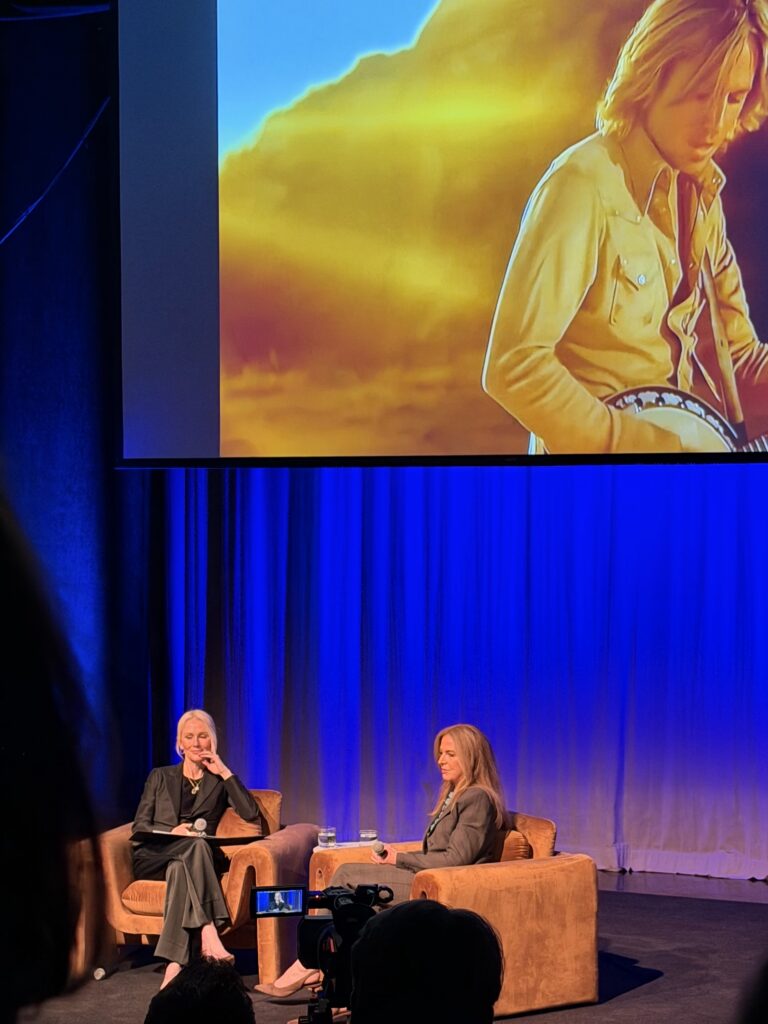
Back in August, the Country Music Hall of Fame and Museum celebrated the career of music video director Trey Fanjoy. It took place at the museum’s annual Louise Scruggs Forum honoring women who’ve shaped the Nashville music industry. And the chronicling of Fanjoy’s accomplishments drew my attention to country music’s video history.
Country Music Television launched in 1983 on the heels of MTV, with a no-frills, live performance clip of ‘50s honky-tonker Faron Young.
During the ‘90s country boom, Fanjoy’s mentor Jon Small transformed Reba McEntire and Garth Brooks songs into melodramatic mini-movies.
By the 2000s, Fanjoy was making her mark, bringing the look and feel of country music videos up to MTV standards with the treatments she wrote and the technology she embraced.
In 2009, she became the first female director to win CMA Video of the Year with Taylor Swift’s Shakespearean romance clip “Love Story.”
The work Fanjoy did with then-rising stars like Swift, Miranda Lambert and Keith Urban helped define their early images. In fact, the sunbaked, West Coast setting she selected for Urban’s “Somebody Like You” video became his visual aesthetic and helped him break through.
By the time that photographer Ford Fairchild expanded into directing in the late 2010s, chances of getting a video played on TV were slim, priorities were shifting and record labels were more hesitant to fund big video shoots.
“If and when that song blew up, then they might move [on] an official music video,” he says.
But there were less expensive solutions too, like lyric videos and visualizers, in which songs are paired with basic graphics. All of those formats worked on YouTube, which became an increasingly attractive outlet.
The list of video content Fairchild was asked to capture grew even longer as the marketing potential of TikTok clips became clear and streaming platforms like Spotify started featuring thumbnail-size videos. As he puts it: “It’s a volume game now.”
He also noticed a pattern: he was continually asked to shoot in the same few settings. A dive bar. A barn. A diner. A roadside motel. He found himself wishing “there was a space that had all of these things in one place instead of spending thousands and thousands of dollars going from location to location.”
So Fairchild made his vision a reality, building all those spaces into his own East Nashville facility, Town Studios. That’s where he’s filmed particularly playful content with the queer country trio the Cowgays. In their songs and videos, they aim to amplify the campiness of ‘90s country music.
“I don’t know if it was perceived as campy then, but it is now,” he observes. “I mean, there was just drama and wind in the hair.”
Fairchild shot one of the Cowgays’ new videos in his staged diner, with all three group members, Adam Mac, Brooke Eden and Chris Housman, exaggerating their exasperation at their judgy puppet clientele. It’s a tongue-in-cheek spin on familiar imagery in a new era.
 On Air - 90.3 WPLN-FM