

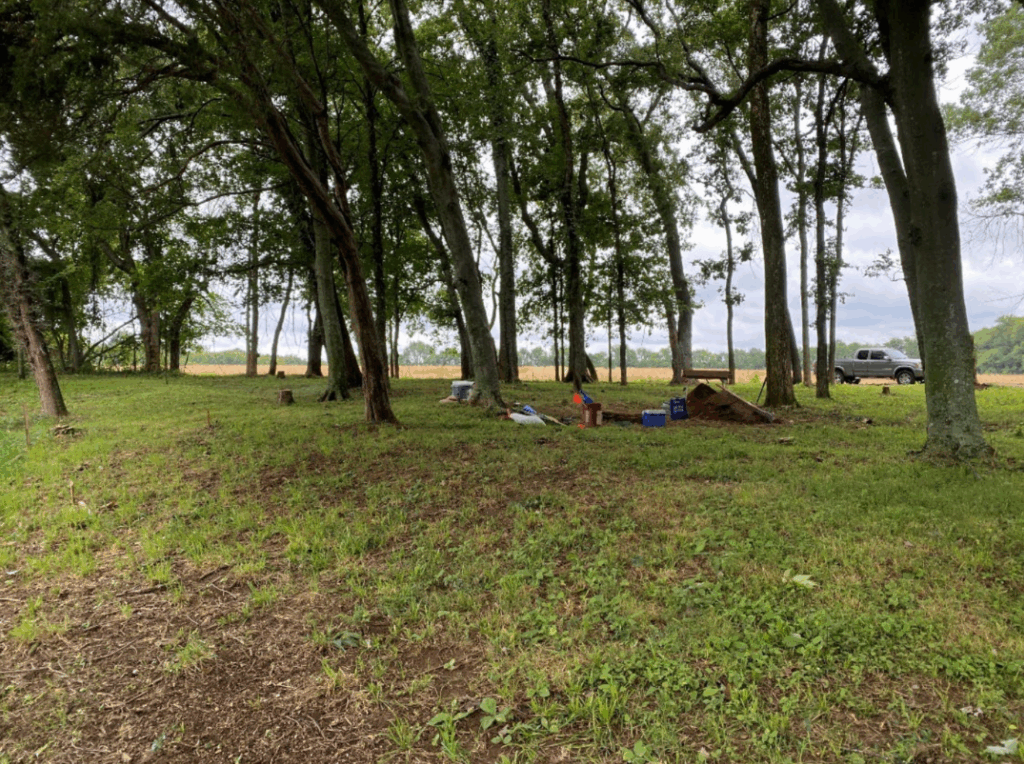
Late in 2024, researchers uncovered a cemetery at The Hermitage for people enslaved by the seventh U.S. president, Andrew Jackson. It was the first time The Hermitage had been able to locate the graves of enslaved people — a mere 1,000 feet from Jackson’s main house.
Since then, a report on the cemetery has been released. It details an investigation into the site conducted by TRC Environmental Corporation, which was contracted by the Andrew Jackson Foundation.
The report details Jackson’s development of The Hermitage, his history of enslaving people and the records of deaths of enslaved people at the site.
Between the years of 1788 and the end of the Civil War, Andrew Jackson and his family enslaved 325 people. An estimated 28 people are buried at the enslaved persons cemetery, identified through ground-penetrating radar.
That number remains an estimate because to verify it further, the report says the cemetery would have to be disturbed — trees would be removed, and soil ripped back.
Instead, investigators leave the number at 28 “probable” and “possible” graves, while acknowledging that “it is likely that additional human remains, beyond the 28 probable or possible graves identified, exist at this cemetery and were not located during the geophysical investigation.”
 Courtesy TRC and the Andrew Jackson Foundation
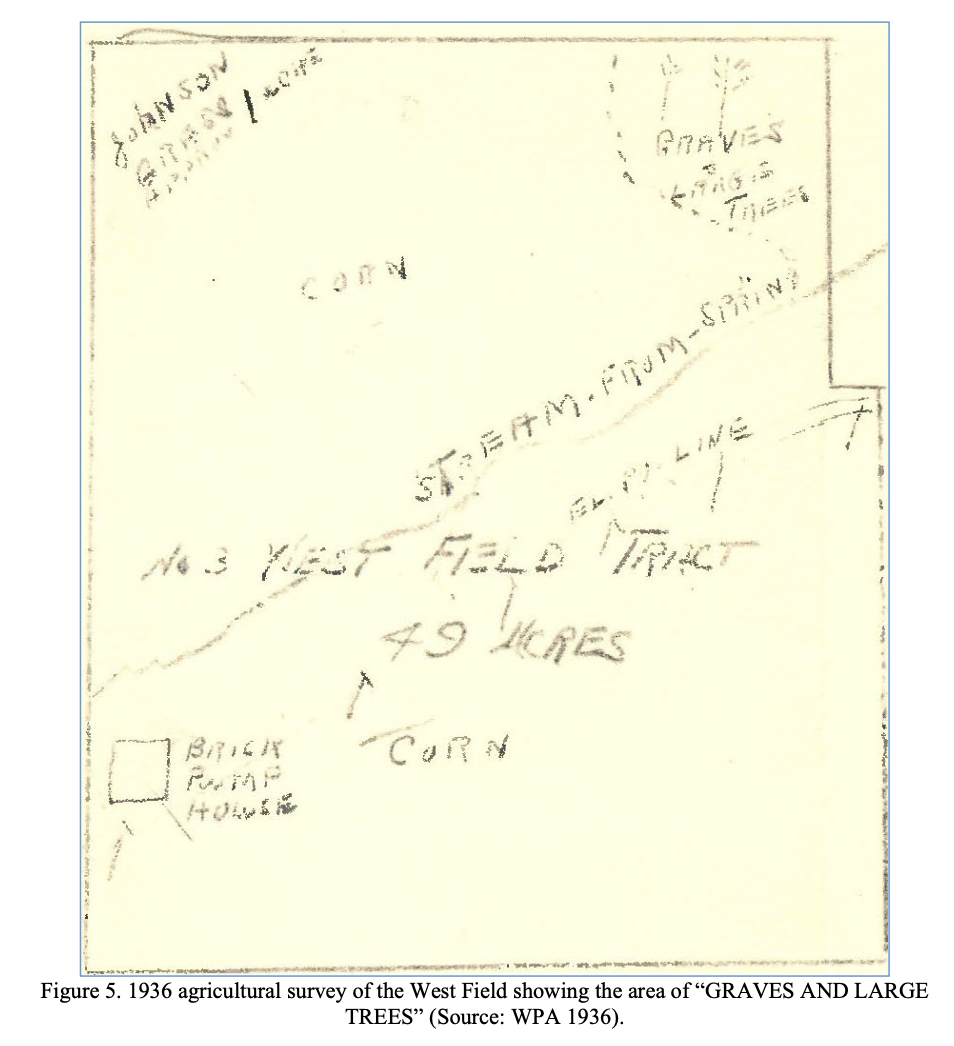
 An agricultural survey from 1936 identifies the cemetery as “graves and large trees.”
The investigation does confirm that the cemetery’s location is in line with historical references to the site — like in an agricultural survey and a book on the Hermitage, both from the 1930s. It also says the location “reflects broader historical patterns of how enslaved persons cemeteries were located across Tennessee and the greater United States.” The cemeteries were often placed in marginal, secluded areas not well suited to agriculture.
The Hermitage is looking to preserve the cemetery — they’ve built a fence around it, and say they are taking time to develop it’s long-term future.
“We’ve hosted multiple conversations with descendant community members, to ensure their voices remain central as we move forward,” The Hermitage told WPLN News. “In addition, we are actively working toward launching a daily, dedicated tour focused on the lives and experiences of the enslaved, though staffing remains our primary challenge in accelerating that effort. Our commitment remains rooted in care, collaboration, and historical responsibility as we continue building a path forward together.”

 On Air - 90.3 WPLN-FM