
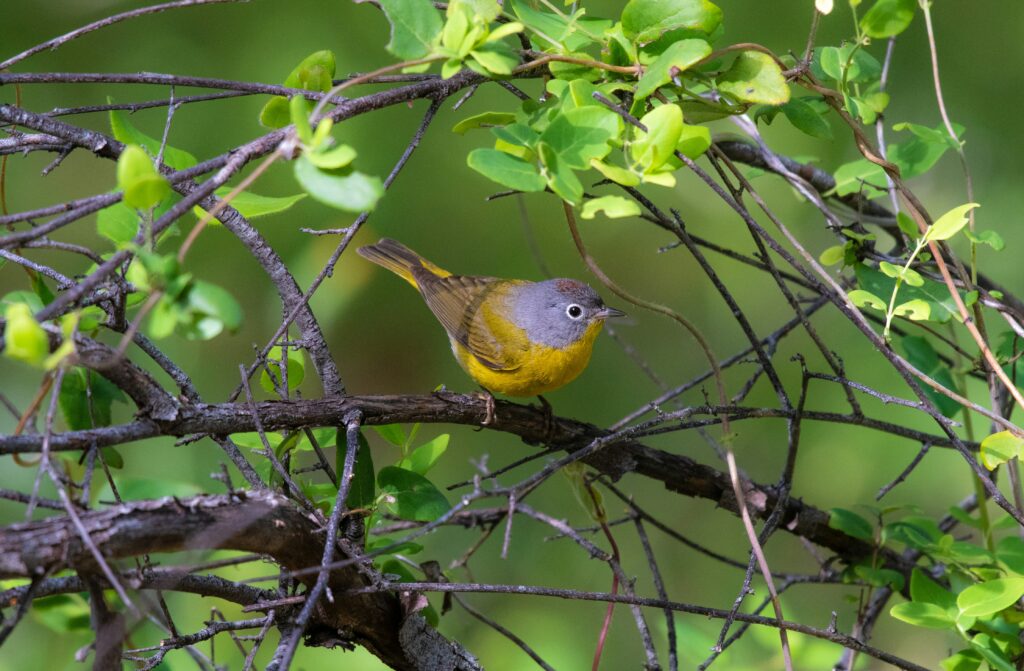
Tennessee has joined a bird conservation network that spans the Americas.
Any city or county across the state can now apply for the Bird City Network, a program from the American Bird Conservancy, Environment for the Americas and the U.S. Fish and Wildlife Service.
The network’s aim is to build programs for education. That includes opportunities for citizen science, reducing common threats to both resident and migratory birds, and protecting parks and green spaces.
“This really just gives you an on-the-ground, local-based grassroots opportunity to start to make a difference and conserve birds in their habitats,” said David Hanni, the bird conservation coordinator for the Tennessee Wildlife Resources Agency.
About a third of the nation and Mexico, Columbia and Brazil are involved in the program. Multinational cooperation is beneficial, given that many birds’ ecosystems extend across continents as they make long migratory journeys each year.
“It’s important to conserve these birds through their full annual cycle,” Hanni said.
Nashville has already signed up. The city is now part of two efforts to conserve local bird habitat and species, having joined the Urban Bird Treaty in 2023.
“This collaboration allows us to combine resources and advance Nashville’s conservation agenda, broadening the tent and launching new initiatives to engage the public and conserve our birds and habitats,” said Nathan Heath, who will serve as the Bird City Nashville coordinator.
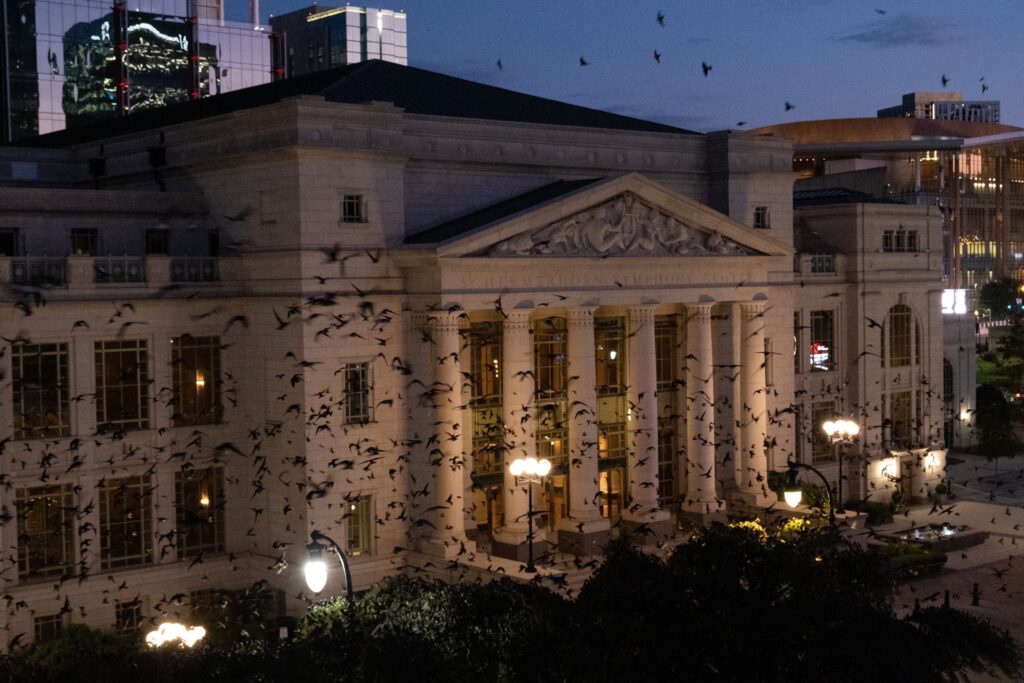
Nashville has wrestled with its own goals in recent years. In 2023, the Nashville Symphony cut down its trees to forcibly remove a roost of purple martins from its doorstep. The next year, after the city committed to conserving habitat for migratory species, Metro Nashville opted to cut down 10 city trees to further evict the songbirds from the symphony.
 Caroline Eggers WPLN News
Purple martins gather in front of the Schermerhorn Symphony Center in downtown Nashville on August 15, 2023.
Since then, the city has enacted some voluntary measures, like guidelines for downtown developers to design bird-friendly windows. Reflective glass kills as many as a billion or more birds in the U.S. each year.
Other key threats to birds include feral cats — which the U.S. Fish and Wildlife Service estimates kill another 1 to 4 billion birds per year — climate change and habitat loss, which is considered the greatest long-term threat to birds.

 On Air - 90.3 WPLN-FM