
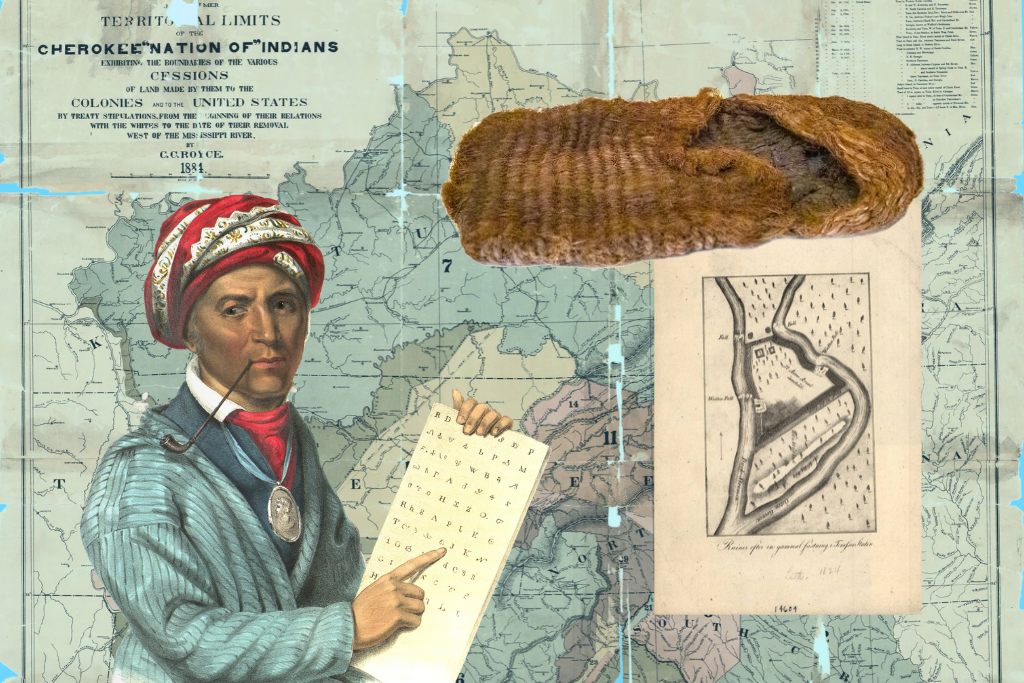
Tennessee once teemed with Indigenous people and cultures. Archaeologists have found evidence for an ancient metropolis along the Cumberland River and a prehistoric ritual site aligned with the summer solstice.
Today, Tennessee has no federally recognized tribes of Native Americans, due in large part to President Andrew Jackson’s Indian Removal Act. However, some Indigenous people still live here and actively work to recognize the First People of Tennessee. In honor of Native American Heritage Month, The Backstory is highlighting stories of Indigenous people of Middle Tennessee, both past and present. We explore the artifacts that tell us more about those ancient societies and recent efforts to recognize Native American culture in Middle Tennessee, from linguistic preservation to the renaming of a prominent park.
In this series, Nina Cardona identifies themes and throughlines in history that help us understand how we became the society we are today.
This project is funded under an agreement with the State of Tennessee administered by the Tennessee Commission for the United States Semiquincentennial.
Table Setting: The historical fairytales we tell ourselves
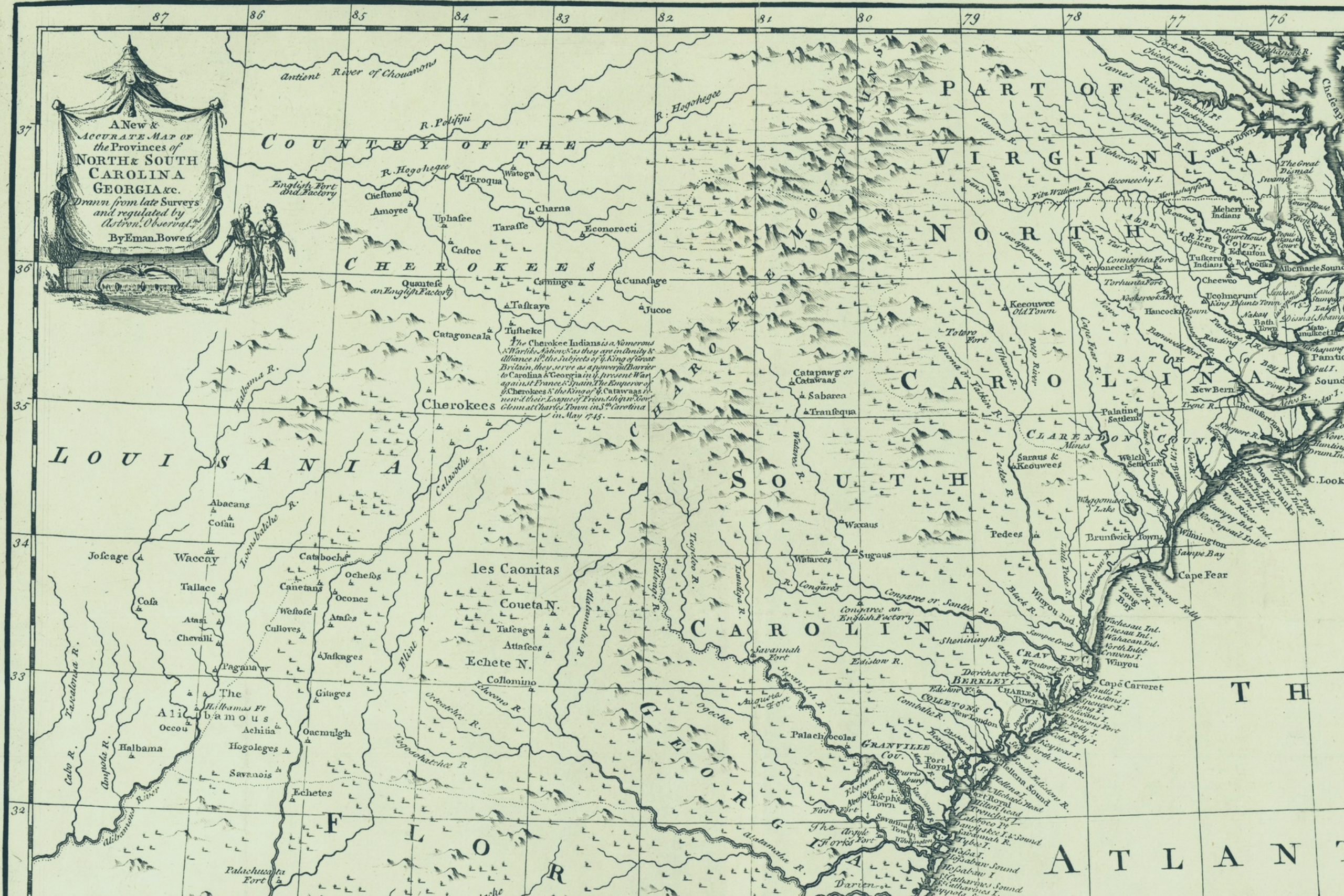 Courtesy Tennessee State Library & Archives
This map from 1752 shows that settlers were aware of Native peoples living in the areas that later became Tennessee, despite popular myths that the land was empty.
In this installment of The Backstory, Cardona meditates on the use of historical myths to obscure uncomfortable truths. One such myth she highlights is the notion that the area we now call Tennessee was uninhabited before white settlers arrived. As she explains in this episode of the Nashvillager podcast, that myth was used “to simplify, to paper over, to create the illusion of a cut and dry situation that is far more comfortable to consider than the messy, complicated facts on the ground.” She also connects that theme to another dark chapter in Tennessee history: chattel slavery. While this episode’s focus is broader than Native American heritage, it offers a helpful lens for the following stories.
1. What does a 1,600-year-old shoe have to say?
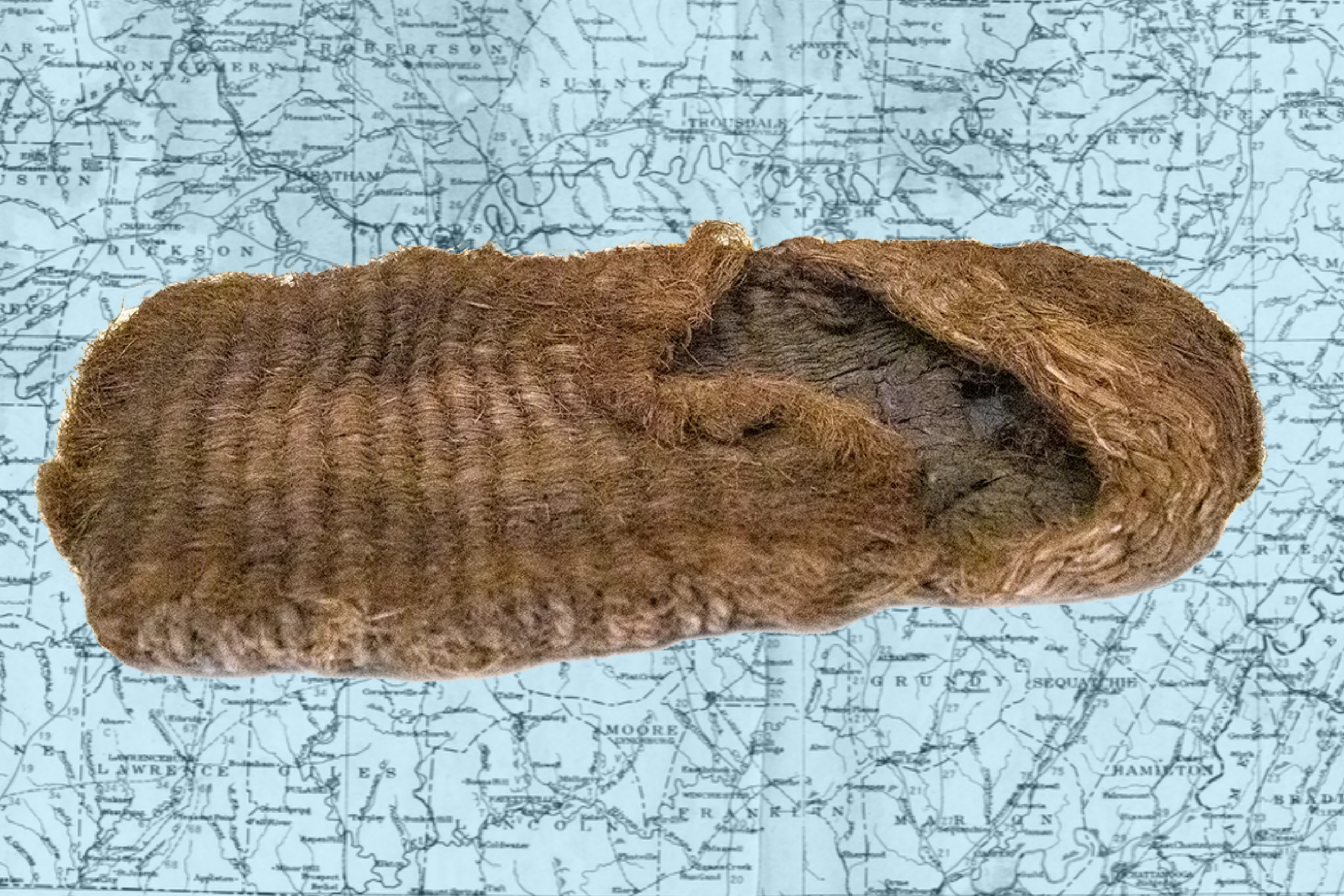 Graphic by Alexis Marshall. Images courtesy of Tennessee State Library & Archives and Tennessee State Museum
A remarkably preserved Native American moccasin can be seen in the First Peoples gallery at the Tennessee State Museum.
This episode analyzes the fascinating intricacies of an everyday item from centuries ago. A moccasin from about the year 375 was found in remarkably good shape under rocks in Grundy County. Cardona’s close observation teases out clues about the person who wore this moccasin, which is on display at the Tennessee State Museum. Its striped pattern, thickness, material and repairs all hint at the person and society that crafted the shoe. The moccasin also leaves viewers with questions.
2. The ancient metropolis that predated Nashville
 Image from Kevin Smith, MTSU Professor and Director of Archaeology
A sherd from a large pot, shows fabric impressions from thousands of years ago. It’s believed pots like this one were used in salt production. The sherd was uncovered during excavation for new baseball stadium in 2014.
When workers were excavating land at Sulphur Dell for what would become a new Nashville Sounds stadium, they found fragments of ancient pottery. Archaeologists moved in quickly to recover what artifacts they could. Then construction continued. What they found were a large number of pots, way more than would be expected in a kitchen. That led them to believe the site was a salt production facility, where ancient people in a large city where Nashville stands today would boil water from a nearby spring to collect and export the salt in a vast trading network.
This is not the only evidence that a Mississippian era metropolis once existed here, but our knowledge of it is limited. That’s partly because the government doesn’t require projects to stop excavation unless they find human remains. One huge development on Nashville’s East Bank has begun, and as Cardona notes, it remains to be seen if East Bank projects take the time to sift for artifacts.
3. Preserving the Cherokee language
 Graphic by Alexis Marshall. Images courtesy of the Tennessee State Library & Archives
A Tennessee Tech professor is using AI technology to help preserve the Cherokee language.
A Cherokee man named Sequoyah created the Cherokee syllabary, a written system for the language that had previously only been spoken. But after forced expulsion and assimilation, the language is at risk of extinction. Now a Tennessee Tech linguistics expert is developing a tool in partnership with members of the Eastern Band of Cherokee to preserve the language for future generations. In this episode, Cardona explains the complicated nature of Cherokee, which is dense with meaning, allowing speakers to express in a single word what would take a sentence to say in English. And she highlights broader language revitalization efforts and the importance of preserving not just the words, but the cultural meanings and worldviews they carry.
4. Reclaiming Nashville’s Shawnee history
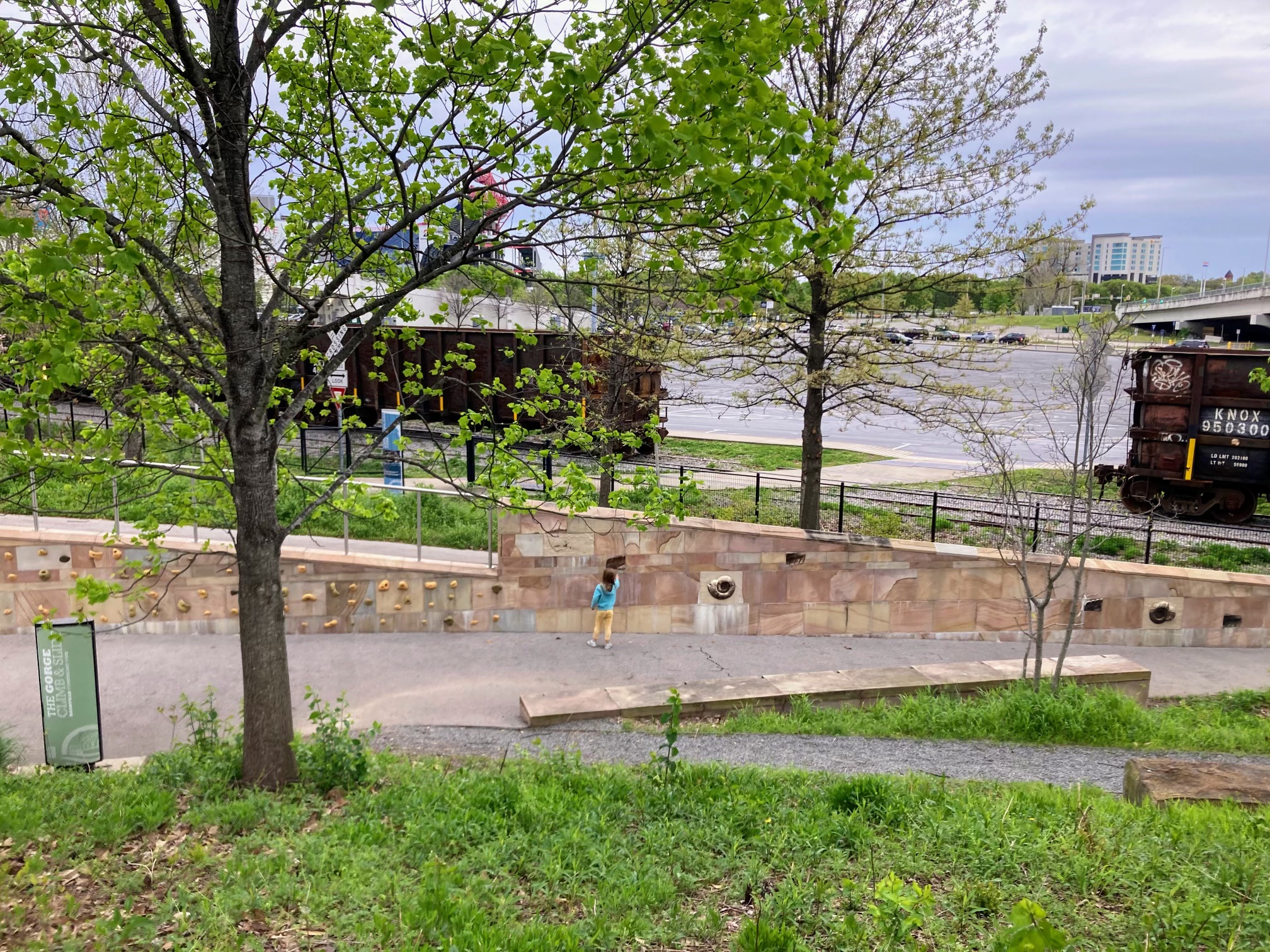 Tony Gonzalez WPLN News
Indigenous activists succeeded in renaming Cumberland Park to Wasioto Park, using the name given to the river by the Shawnee people.
Long before it was called the Cumberland, the river that snakes through Nashville knew the name Wasioto. That’s what the Shawnee called it. In this episode, Cardona reflects on the erasure of Native American people from popular memory. She mentions the myth that this area was uninhabited when white settlers came. The fact is that it was in a transitional period after the Shawnee, who had lived along the river, were forced out after warring with an alliance of Cherokee and Chickasaw. When this episode was recorded, the Indigenous Peoples Alliance was asking the Metro Council to rename Cumberland Park using the river’s Shawnee name. They succeeded, and the council voted unanimously to change the name to Wasioto Park.
5. The summer solstice at an ancient ritual site in Manchester
 Courtesy Tennessee State Library & Archives
A map from 1870 shows the area known as Old Stone Fort. Early antiquarians mistook the site for a defensive outpost, but in reality, it was a gathering place of great ceremonial significance.
In this episode, Cardona takes you on a hiking trip to Old Stone Fort State Archaeological Park. She recounts visiting with her husband for the Summer Solstice. Despite its name, she explains, this place was not a defensive installation. Instead, it’s believed to have been a gathering place for prehistoric Indigenous people. She describes how archaeologists believe a ritual unfolded in perfect alignment with the summer solstice. It’s hard not to be impressed by the precision of the people who built this site; Cardona notes that the daylight on the day of the solstice is just a few seconds longer than the day before and after.
 On Air - 90.3 WPLN-FM