



Candidates for governor are issuing new challenges to bring GOP frontrunner Marsha Blackburn to the debate stage as the Nov. 3 election approaches.
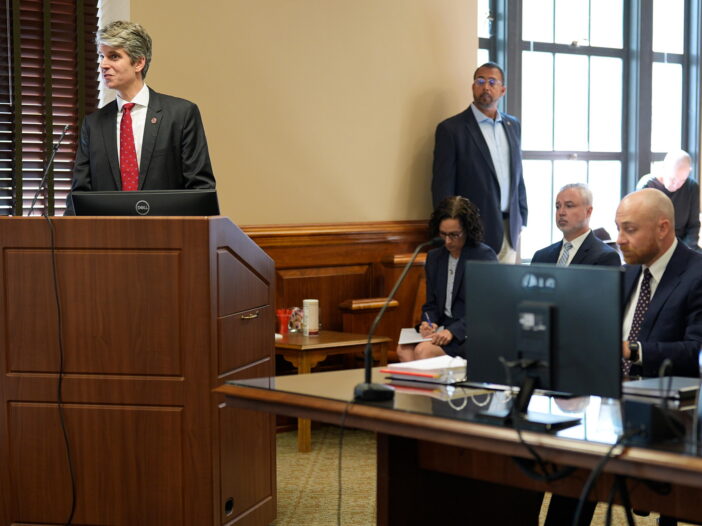
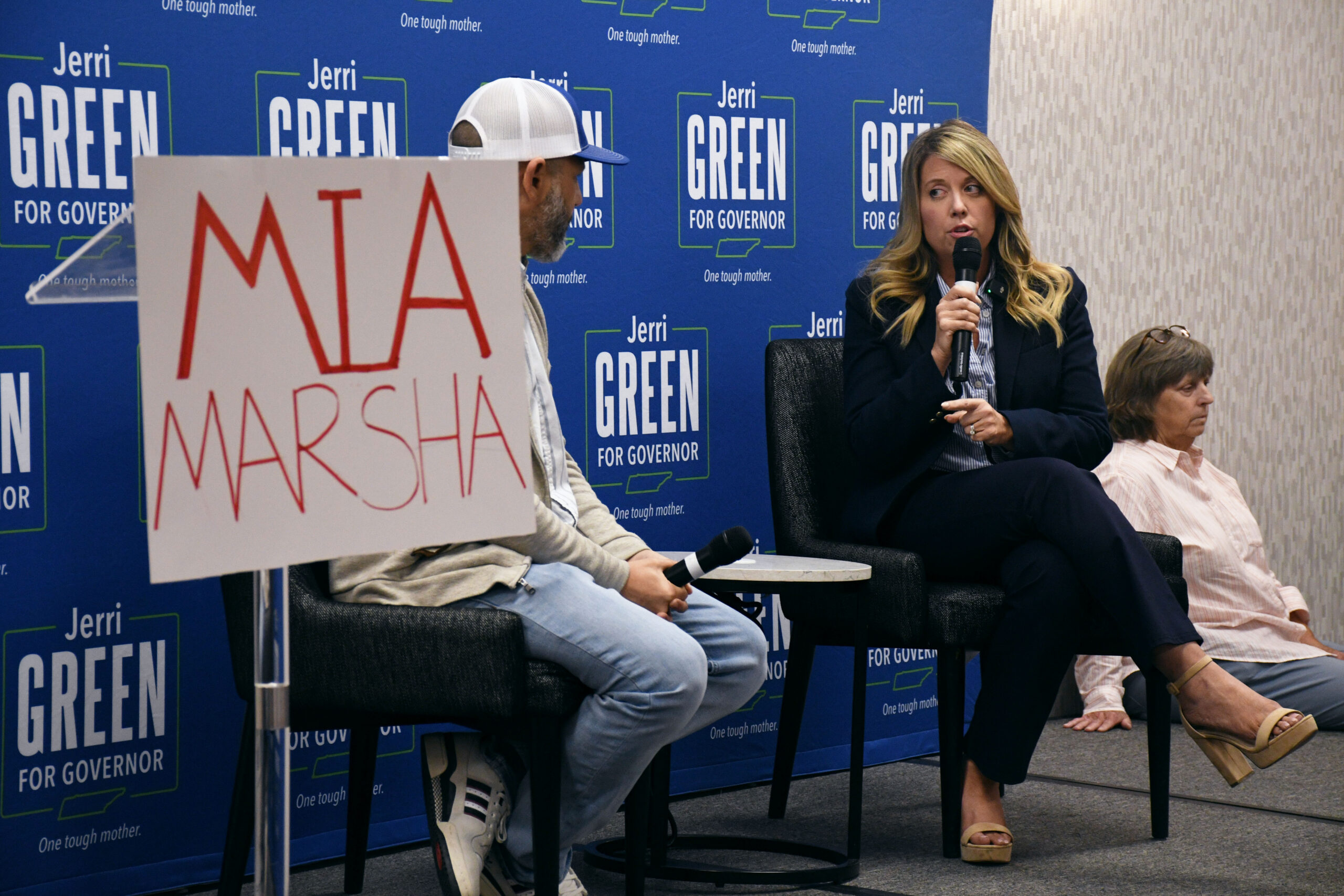
Democratic Memphis City Councilmember Jerri Green has hosted a series of empty podium debates, challenging Blackburn to join her on stage.
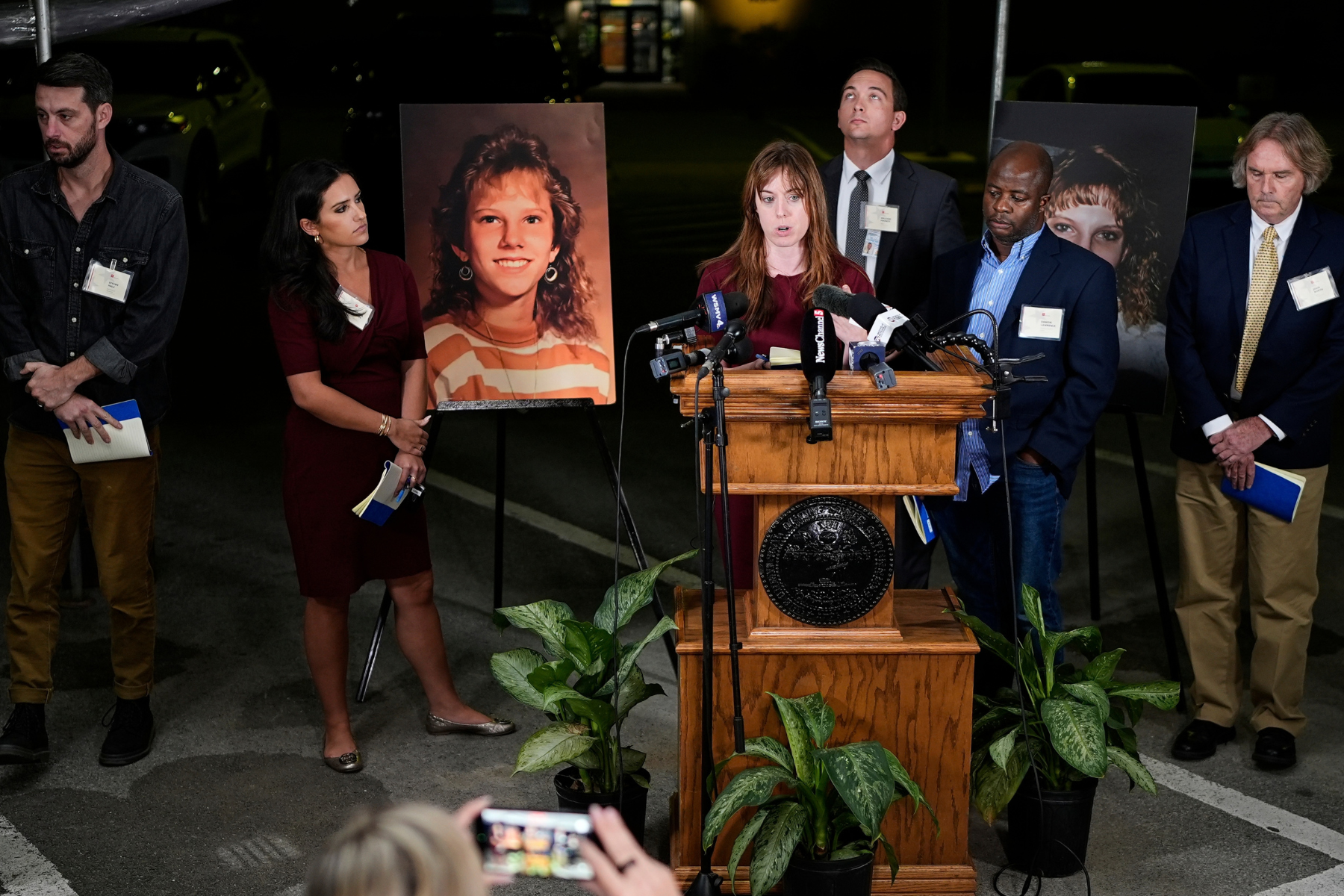
Conservative independent David Hatley has offered to donate $1 million to charity if Blackburn agrees to a debate. He told WPLN’s Marianna Bacallao (@ba.marianna) that the money would go to a series of charities that work directly with domestic violence victims, hungry families and people without homes.
“Personally, if someone asked me to do something for charity, I would run through a wall to do it,” Hatley said. “It seems like she’s just trying to slide into the governor’s seat without answering any questions … What is her real plan for Tennessee?”
In an email, Blackburn’s campaign manager, Abigail Sigler, said, “Tennesseans don’t want gimmicks; they want people who will go work for them.”
Tap link in bio for the full story.
Photos: Marianna Bacallao
Producer: Marianna Bacallao
Editor: Megan Jones

Christa Pike has survived a failed attempt at execution by lethal injection, according to a statement from her legal team. This is the first update about her condition since Friday, according to WPLN’s reporter Catherine Sweeney (@sweeneywpln).
This is part of the statement from Pike’s legal team.
“Against all odds, Christa Pike is conscious, speaking, and continues to receive critical medical care. Despite the severe damage she endured to her arms, she is still handcuffed and shackled to the bed. Her recovery is medically unprecedented. Her prognosis remains unclear but, at a minimum, we expect a long recovery. ...
Christa’s life has been extraordinarily difficult. ... She survived two complete rounds of lethal injection per Tennessee’s protocol, despite her attorneys’ warning to the state of specific challenges with her veins. She is the only person known to have survived a complete execution attempt in the U.S. Christa is a survivor and will take recovery one day at a time. We continue to ask the Governor of Tennessee to commute Christa Pike’s sentence to life imprisonment without the possibility of parole.”
Tap link in bio for the full story and follow for more.
Producer/Editor: Megan Jones
Photo: George Walker IV / AP

Here is a first-hand account of the failed execution of Christa Pike, as witnessed by WPLN reporter Catherine Sweeney (@sweeneywpln).
iAs of Tuesday morning, Pike is still hospitalized after the state attempted to execute her by lethal injection on Sept. 30. After Pike left the execution chamber in an ambulance on Sept. 30, Lee announced he would suspend lethal injections for the rest of the year.
Her attorneys say the lethal drugs were administered improperly, flowing into her muscle and not into her bloodstream. When mistakes happen and prisoners experience needless suffering, Tennessee is opened up to legal challenges.
Sweeney was one of the seven media witnesses who spent the day at Riverbend Maximum Security Institution as the courts fought over whether Tennessee could carry out Pike’s death sentence.
Tap link in bio for the full account by Catherine Sweeney.
Photo: George Walker / AP
Producer/Editor: Megan Jones

Punk artist Henry Rollins (@fanatichenry) moved to Nashville and is mounting a free punk exhibit here in Wedgewood-Houston in November, 2026.
Justin Barney (@justinbarney) reports that Rollins has assembled 1970`s and 1980`s ephemera to show at the exhibit. From the press release, here is Henry Rollins in his own words.
“Hello, Henry Rollins here. I wrote the following in an effort to somehow entice you to come to this event. An incredible amount of time, effort and expenditure has gone into this. I’ve either gotten it extremely right, or catastrophically wrong!
For many years, I’ve been fascinated with historical markers. Physical objects that still remain years after they were created, become irrefutable evidence of time and place. Memories fade and retelling of facts often leads to distortion.
Everything in the Cool Evidence exhibit denotes a time and place, be it an event, or just the fraction of a second it takes for a camera to extract an image—forcing a testimony from Time that humans can be exceptional. There’s always an alternative to misery.
Tap link in bio for full story.
Portrait and venue photos: Justin Barney / WPLN
Exhibit photos: courtesy Henry Rollins
Producer/Editor: Megan Jones

Thank you to everyone who gave during our fall fund drive.
Our high-quality local news is free for all, but it costs money to produce. Your donation helps our community. It includes everyone access trustworthy information about what’s going on in Middle Tennessee, no matter the.
We are so grateful — we cannot do this work without you.
And if you meant to give but it slipped your mind, you can still make a donation right now.
Tap link in bio to help us raise the last $10K to reach our $250K goal!

Like Parton before her, Lambert relishes the thought of inspiring drag performances.
“If I make it into drag shows and I`m a staple there, I feel like that`s a different level of iconic, and I`m chasing it for sure.”
Miranda Lambert was single-minded in her drive to succeed in the country mainstream. While upholding her artistic standards. While holding the line on her approach of undiluted twang, wiry, rocking energy and salty wit. And, as Jewly Hight reports, she managed to become a country superstar without shedding her riveting idiosyncrasies.
What didn’t interest her in the slightest was pop crossover. Not even country remixes held any appeal – until she partied at a New York drag bar during World Pride in 2019 with her brother and his husband. “All they were playing was, like, Reba and Dolly and Loretta and all these remixes on the video screens, and everyone was dancing their ass off,” she recalls. “I always say I want to be [like] them, but I haven`t done that.”
Lambert commissioned her own remix from Nashville-based producer and DJ Jesse Frasure. She embarked on an extended musical collaboration that ultimately led to her new album "Crisco." Before now, she`d never considered dabbling in country disco either. She enjoyed getting swept up in the pursuit of well-crafted, widescreen melodies, extravagant, silken textures, sweeping string arrangements and supreme polish.
It`s quite the musical departure for her. Lambert sees following in the lineage of Dolly Parton and other female country stars by reaching out to her LGBTQ+ fans with this club-ready music.
Tap link in bio for the full story.
Video Producer: Jared Kunish
Editor: Megan Jones
![Like Parton before her, Lambert relishes the thought of inspiring drag performances.
“If I make it into drag shows and I'm a staple there, I feel like that's a different level of iconic, and I'm chasing it for sure.”
Miranda Lambert was single-minded in her drive to succeed in the country mainstream. While upholding her artistic standards. While holding the line on her approach of undiluted twang, wiry, rocking energy and salty wit. And, as Jewly Hight reports, she managed to become a country superstar without shedding her riveting idiosyncrasies.
What didn’t interest her in the slightest was pop crossover. Not even country remixes held any appeal – until she partied at a New York drag bar during World Pride in 2019 with her brother and his husband. “All they were playing was, like, Reba and Dolly and Loretta and all these remixes on the video screens, and everyone was dancing their ass off,” she recalls. “I always say I want to be [like] them, but I haven't done that.”
Lambert commissioned her own remix from Nashville-based producer and DJ Jesse Frasure. She embarked on an extended musical collaboration that ultimately led to her new album "Crisco." Before now, she'd never considered dabbling in country disco either. She enjoyed getting swept up in the pursuit of well-crafted, widescreen melodies, extravagant, silken textures, sweeping string arrangements and supreme polish.
It's quite the musical departure for her. Lambert sees following in the lineage of Dolly Parton and other female country stars by reaching out to her LGBTQ+ fans with this club-ready music.
Tap link in bio for the full story.
Video Producer: Jared Kunish
Editor: Megan Jones](https://wpln.org/wp-content/uploads/sites/7/sb-instagram-feed-images/831021537_18644727280006016_977308033075361925_nfull.jpg)
Join W.P. Ellen in supporting your local, thoughtful, contextual news source: Nashville Public Radio.
So many reasons to become a member today. Because our reporters work hard getting the local news you deserve. Because we don`t have a paywall so our stories are free to anyone. Because our stories aren`t AI-generated.
If you are a member — thank you. If you aren`t, what are you waiting for? Smash that link in bio, and join W.P. Ellen and our whole membership community. We are 100% community supported. We are here for you.
Tap link in bio to give today.
Video: Keri Pagetta
Producer/Editor: Megan Jones

LiveNation opened a new 4,500 person capacity venue in the Wedgewood Houston neighborhood today. It’s called The Truth.
The name takes inspiration from Nashville songwriter Harlan Howard. Who once said that the essence of a good country song is three chords and The Truth.
As Justin Barney (@justinbarney) reports, it’s a big room. Made to feel intimate by building up rather than out. Three stories up and only 150 feet from the front of the stage to the last seat in the house.
The ground floor is general admission and will offer a meat and three inspired sandwich.
The second floor is VIP and has a bar that has 138 different Tennessee Whiskeys. And the top floor has a Japanese listening room inspired rooftop bar. Access is granted at a higher price.
It opens tonight with a show from Maranda Lambert.
Parking will be difficult. The Truth has a capacity of over 4,000 people. There are only 3,000 parking spots in all of Wedgewood Houston.
Photos: Justin Barney / WPLN
Producer/Editor: Megan Jones

-
‘They’re putting kids’ lives at risk’: How abuse in a Tennessee businessman’s juvenile prisons remained under wraps
Tennessee’s highest-security youth prisons are operated by a single private company. Former staff say they felt pressure to hide abuse and other serious incidents from the state and to handle medical emergencies without calling 911.



Curious Nashville Returns!
Back by popular demand, the WPLN fan favorite series Curious Nashville is here to investigate oddities, share local history, tell stories of interesting people, and explain how local institutions operate.
You ask the questions, and we answer.
More Headlines
Trying to execute Christa Pike again would push into uncharted legal territory, experts say
Nashvillager Podcast: What now?
The sometimes-awkward art of asking for a second opinion
Attorneys, doctors, nurses and lawmakers asked for a death penalty moratorium before Pike’s failed execution
Nashville’s sheriff Daron Hall retiring after 24 years
Former HBCU students file lawsuit over underfunding by states, including Tennessee
WPLN Originals












Topics

































 On Air - 90.3 WPLN-FM


