
Power plants, an oil refinery and a chemical plant are among Tennessee’s top climate polluters. If Elon Musk’s sprawling xAI data center campus in Memphis were included in that lineup, it would rank second.
What’s driving those emissions amounts to a private fossil fuel power plant to keep Musk’s artificial intelligence facilities running.
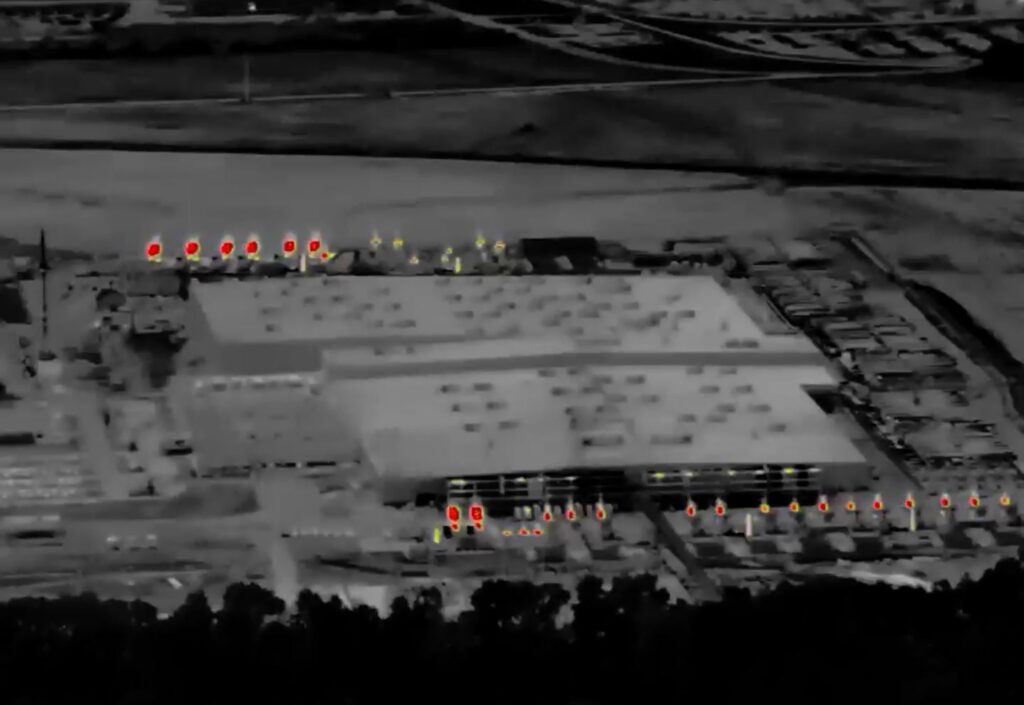
The xAI site currently has two buildings, Colossus 1 and Colossus 2, that support Grok, the AI for the social platform X. The first data center gets power from about a dozen on-site gas turbines, along with about 300 megawatts of power generated by the Tennessee Valley Authority, the utility that serves 10 million people in a seven-state region.
The second data center is powered just across the state line in Mississippi by 59 gas turbines with a generating capacity of 1.4 gigawatts, or 1,400 megawatts.
Those turbines will release between 7 and 8 million tons of carbon dioxide equivalent emissions in a given year, based on the turbine makes and models, emissions rates listed in xAI and TVA permits, and an assumption that the turbines operate full time, according to calculations by the Southern Environmental Law Center, a nonpartisan law firm.
“What is happening in Mississippi is on an unprecedented scale. There is nothing else like this out there,” said Patrick Anderson, an attorney with SELC.
On the lower end, the xAI site’s level of emissions is equivalent to the energy use of nearly 1 million homes or 1.6 million gasoline-powered vehicles driven for one year.
 Courtesy xAI
 Elon Musk’s xAI, now owned by SpaceX, has multiple data centers in the greater Memphis area.
Regionally, only Tennessee’s largest coal plant, Cumberland, which at 2.4 GW is double the size of typical coal plants, produces more climate pollution than xAI. That plant produced about 9.4 million tons of carbon dioxide equivalent emissions in 2023, according to the latest data available from the U.S. Environmental Protection Agency.
No other power plant currently produces as much greenhouse gas emissions in TVA’s entire seven-state service area. The Shawnee Fossil Plant, a coal plant owned by TVA in Kentucky, was the second-biggest emitter in 2023 with 5.8 million tons of carbon dioxide equivalent emissions.
xAI is the largest NOx polluter in Tennessee
For one type of air pollution, xAI’s Mississippi gas turbines, many of which do not have pollution control equipment installed, rank even higher among industries in the Memphis region.
The turbines produce more nitrogen oxides than any facility in Tennessee, Mississippi or Arkansas.
xAI’s own emission data would translate to about 4,400 tons of NOx emissions annually — and an analyst from the Environmental Integrity Project estimated a total closer to 5,300 tons, based on the turbine model type seen in aerial images of the facility. For comparison, the Cumberland Fossil Plant produces 3,921 tons of NOx emissions annually, according to EPA data.
 Roger Smith Flickr
Coal plants like the Tennessee Valley Authority’s Cumberland Fossil Plant emit large amounts of nitrogen oxides, one of the main ingredients in smog.
Nitrogen oxides are a group of gases emitted into the air from fossil fuels burning in vehicles, buildings and power plants. This pollution is linked to higher rates of heart disease, lung disease and asthma.
Air pollution causes hundreds of thousands of premature deaths in the U.S. each year, with a significant number attributed to nitrogen dioxide, one form of NOx pollution.
Power plants have greatly reduced their NOx pollution over the years due to government requirements for pollution controls.
But many of the turbines powering xAI’s Colossus 2 do not have pollution controls, according to SELC.
NAACP suing xAI
The NAACP, represented by SELC and Earthjustice, sued the company in April for running some turbines without permits and pollution controls.
The groups argue that the mobile turbines represent a stationary facility, due to an EPA rule published in January. The agency wrote that “the EPA has not regulated combustion turbines, even those that may be portable, as nonroad engines, but rather as stationary sources.”
The U.S. Department of Justice intervened in the case, later adding EPA to its petition after the groups pointed out that the Clean Air Act only gives EPA the right to intervene.
EPA’s top official Lee Zeldin seemed to confuse details of the case when talking to WPLN on July 14.
“In Mississippi, (the Mississippi Department of Environmental Quality) is the permitting authority for these projects,” Zeldin said. “In this particular case in Tennessee, it’s specifically Shelby County. EPA isn’t the permitting authority for these projects in Tennessee. It’s delegated to the state and local level.”
The lawsuit only pertains to the turbines in Mississippi, however.

 On Air - 90.3 WPLN-FM