
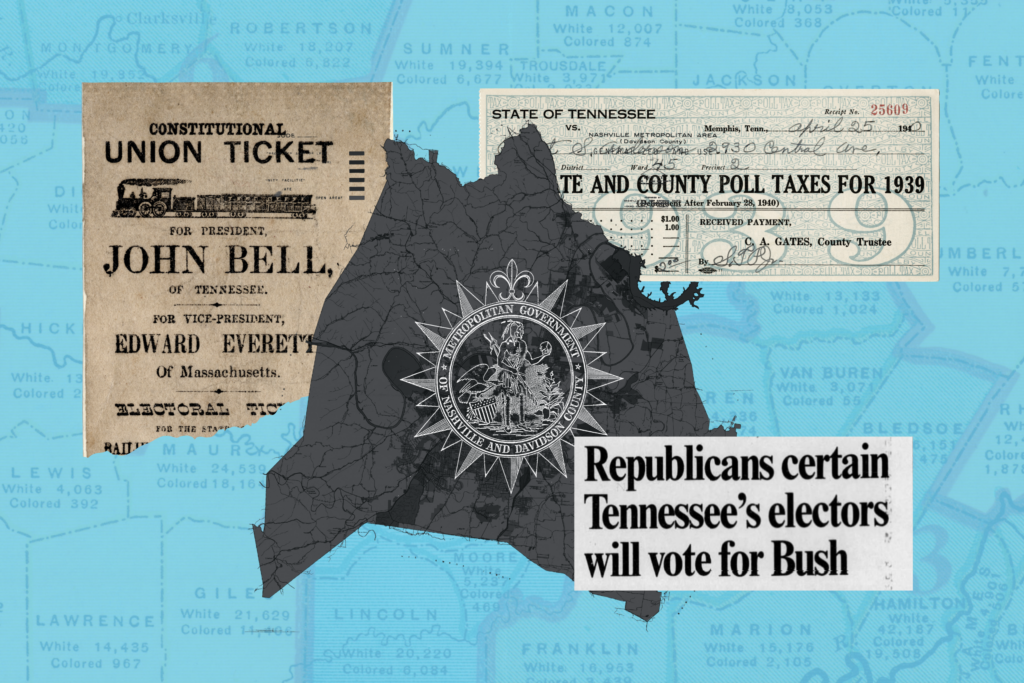
Early voting has begun for the November in election in Tennessee. And to mark the occasion, the NashVillager Podcast is rounding up some of the most influential election stories from our state’s history.
Elections offer a lens for viewing a particular moment in time. They can show us what everyday people — or at least those who had the right to vote — thought about the direction of their communities and country. Examining them more closely can reveal interesting wrinkles and threads that connect to the modern day. In this installment of The Backstory, host Nina Cardona expertly breaks down everything from poll taxes to partisan shifts in Tennessee.
This project is funded under an agreement with the state of Tennessee administered by the Tennessee Commission for the United States Semiquincentennial. If you missed our previous installments, find them here.
1. The presidential election of 1860, and Tennessee’s own spoiler candidate
 Courtesy Tennessee State Library & Archives
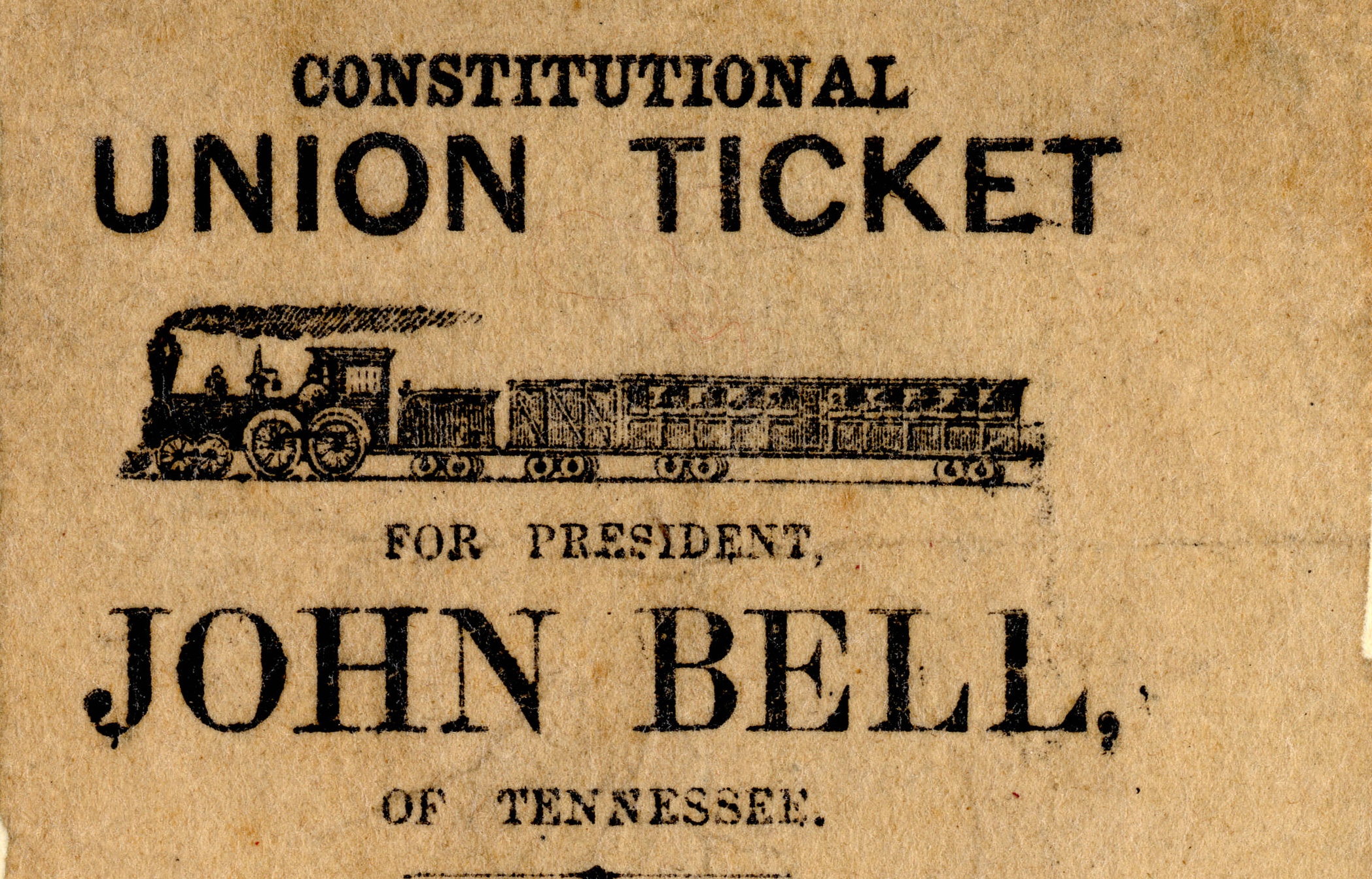
 A pamphlet for the 1860 election promotes third party candidate John Bell of Tennessee.
Did you know that a Tennessee politician ran against Abraham Lincoln in the election of 1860? John Bell ran as a third-party candidate against Lincoln, and two different Democratic nominees, since that party had split into a northern and southern faction. Cardona describes this as one of the most tumultuous elections in American history, and not just due to the crowded field. It took months to count up all the ballots. After the votes were tallied, Lincoln was set to win the electoral college. However, with some southern states vowing not to accept a Lincoln presidency, there was talk that they may boycott the electoral college, or that electors might vote differently than the people they were supposed to represent. In the end, the southern states certified Lincoln’s win… and then seceded from the Union.
2. The long shadow of poll taxes in Tennessee
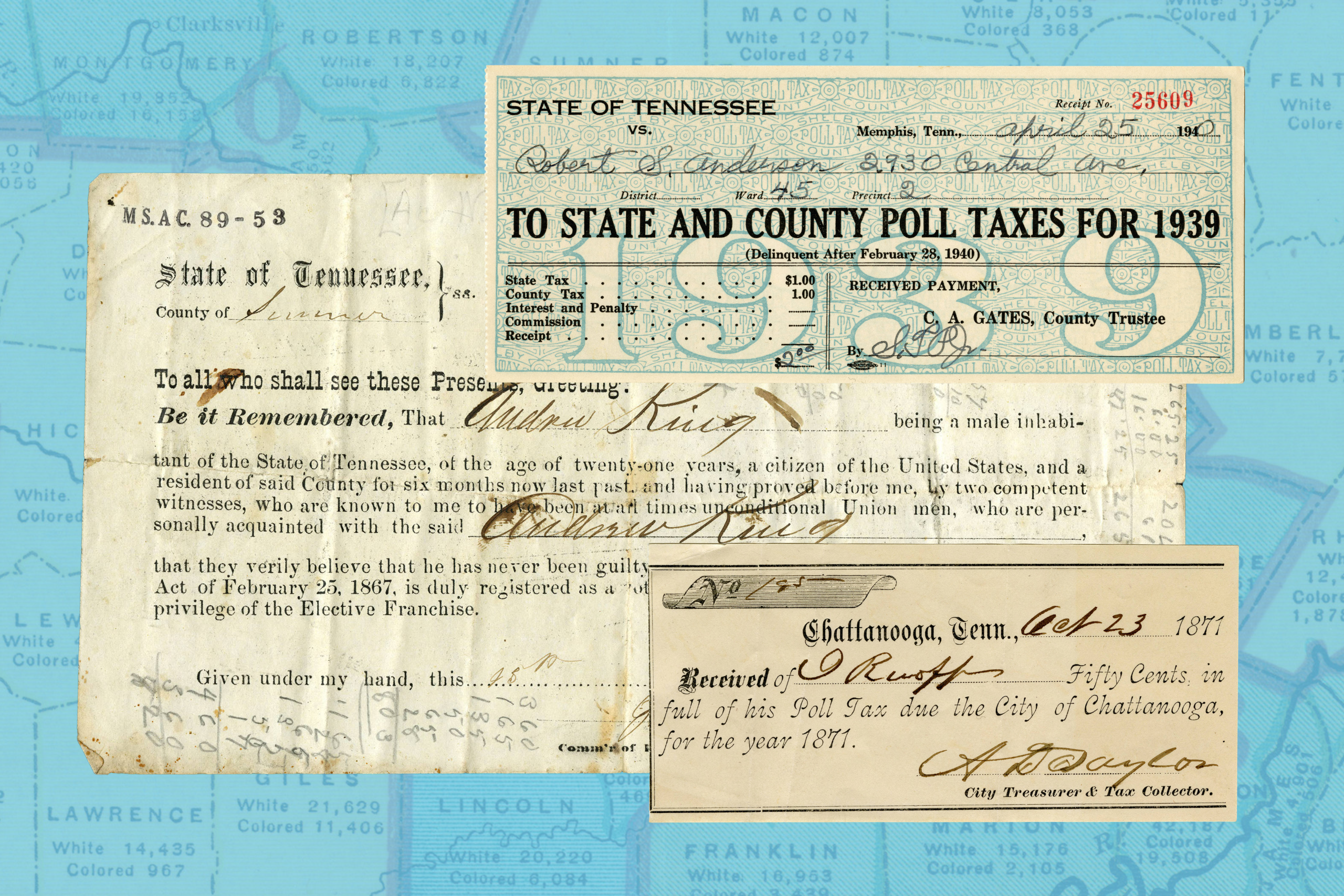
In the aftermath of the Civil War and Reconstruction, Black men won the right to vote through the 15th Amendment. But many southern states, including Tennessee, deployed tactics to discourage them from exercising that right. One of those strategies was the poll tax. As Cardona explains in this episode, when it was established, it was the equivalent of a full day’s wages for the average farm worker.
Other tools used to depress the Black vote included a secret ballot that prevented voters without access to schooling from having somebody read the ballot for them. And even voter registration was initially only required in urban areas with large Black populations. Back then, registering meant having to take two separate trips to central location, and many working people didn’t have the luxury of getting paid time off to do it, so functionally, it added another cost to voting. Cardona shares how Congress sought to address these discriminatory practices with the 1965 Voting Rights Act, and illuminates some of the sneaky barriers that voters still face.
3. The vote that created Nashville as we know it
 Courtesy Tennessee State Library & Archives
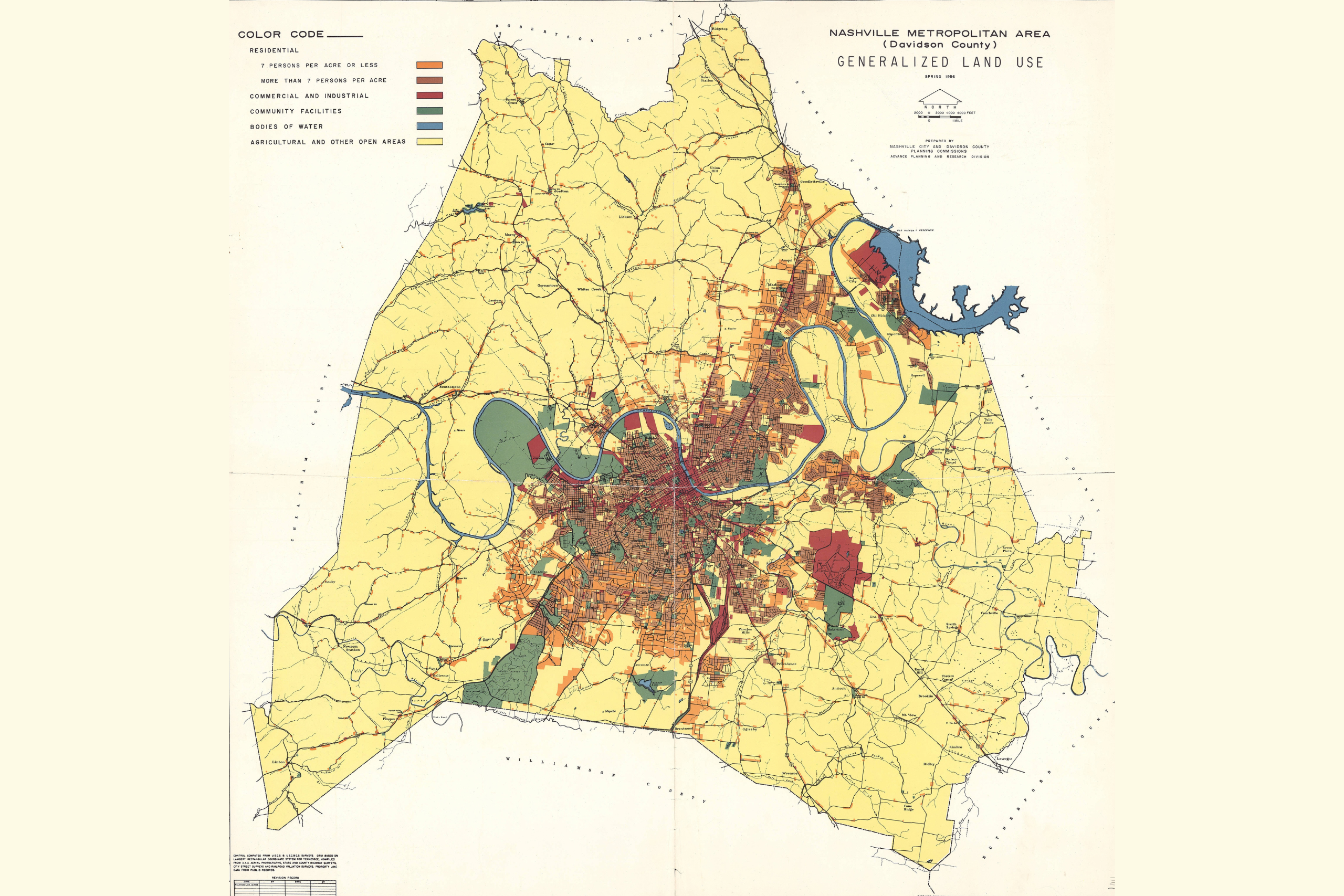
 This 1956 map of Davidson County shows the different land uses and population density across communities of what would become Metro Nashville.
Davidson County and the city of Nashville used to be two separate entities. And there used to be a lot more small towns and cities within the county that operated independently of one another. In this episode, Cardona takes us back to the time before Metro, and explains why it took two referenda and 40 Metro Council districts to unite all the communities of Davidson County into a single entity. She also explains why this matters in the context of ongoing litigation with the state aiming to cut the council size by half.
4. Al Gore’s home state loss and what it signaled for partisan politics
When Al Gore, a native son of Tennessee, lost his home state in the presidential election here in 2000, it wasn’t entirely surprising. But it did signal that the political tides had turned. In this episode, Cardona takes us through Tennessee’s political evolution from post-Civil War through the present day.
Between Reconstruction and 1970, Tennessee had been a Democratic stronghold. And in the final few decades of the 20th century, this state largely alternated between Democratic and Republican governors. But back then most candidates tended to be moderate, and name recognition seemed to motivate voters more then pure part affiliation. Cardona recounts how a Republican governor’s suggestion that Tennessee levy an income tax pushed a lot of voters, both Republican and independents, further to the right. And that shift became evident when Gore lost his home state, and later the whole election to George W. Bush.
 On Air - 90.3 WPLN-FM