

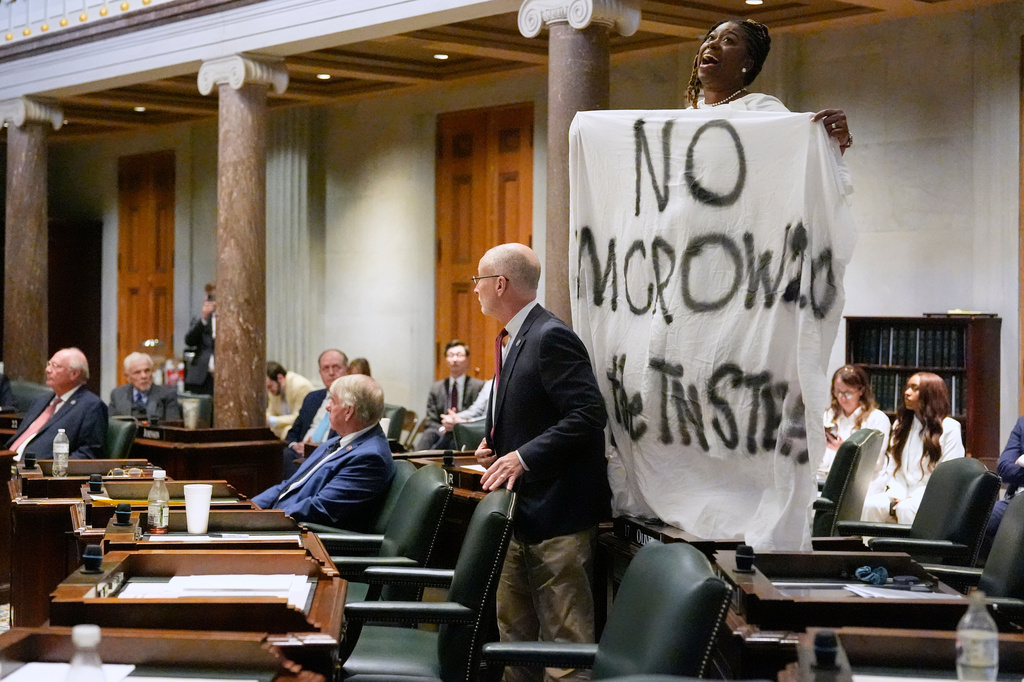
A Tennessee senator is threatening legal action after Republican leadership sanctioned her for protesting redistricting. Lawyers for State Sen. Charlane Oliver, D-Nashville, sent a letter to Senate leadership, arguing that the sanctions against her are unconstitutional.
In May, state lawmakers met for a special session to redraw Tennessee’s congressional districts mid-decade at the behest of President Donald Trump, who called on Southern states to create more GOP-friendly districts ahead of elections.
During a final vote on the maps, Oliver stood on her desk, holding a banner that read “No Jim Crow 2.0,” and her “no” vote was not recorded. In response, outgoing Senate Speaker Randy McNally stripped her of a committee appointment, refused her per diem payment for legislative work done outside of the regular session and denied her reimbursement for legislative conferences.
Oliver remains the only state senator to face sanctions for her protest. McNally did not take action against the other Democrats in the Senate who staged a walkout after the measure passed. House Speaker Cameron Sexton, meanwhile, imposed sanctions against every Democrat in the Tennessee House for staging a similar walkout.
MORE: How Tennessee redistricting mirrors a historic split in Nashville’s Black community
Oliver’s lawyers argue that the sanctions, along with refusing to record Oliver’s “no” vote, infringe on her constituents’ rights to representation. She has also had to cancel townhalls and legislative conferences because of the mounting “financial strain.”
“Depriving Senator Oliver of the ability to vote during the special session, and afterward reducing her pay to the point that it severely hinders her ability to do her work, denies her constituents equal representation in the General Assembly,” the letter reads.
The letter, sent July 8, asked for a response by July 31. Oliver said her lawyers have still not received a response from Senate leadership.
A spokesperson for McNally told WPLN News that Oliver had the chance to vote and correct the record on the day of, calling both her protest and potential legal action “performative.”
“At every stage, Senator Oliver had opportunities to fulfill her responsibilities as a senator. Instead, she chose to prioritize a political performance over the duties of her office,” said Adam Kleinheider, McNally’s communications director.
 On Air - 90.3 WPLN-FM