
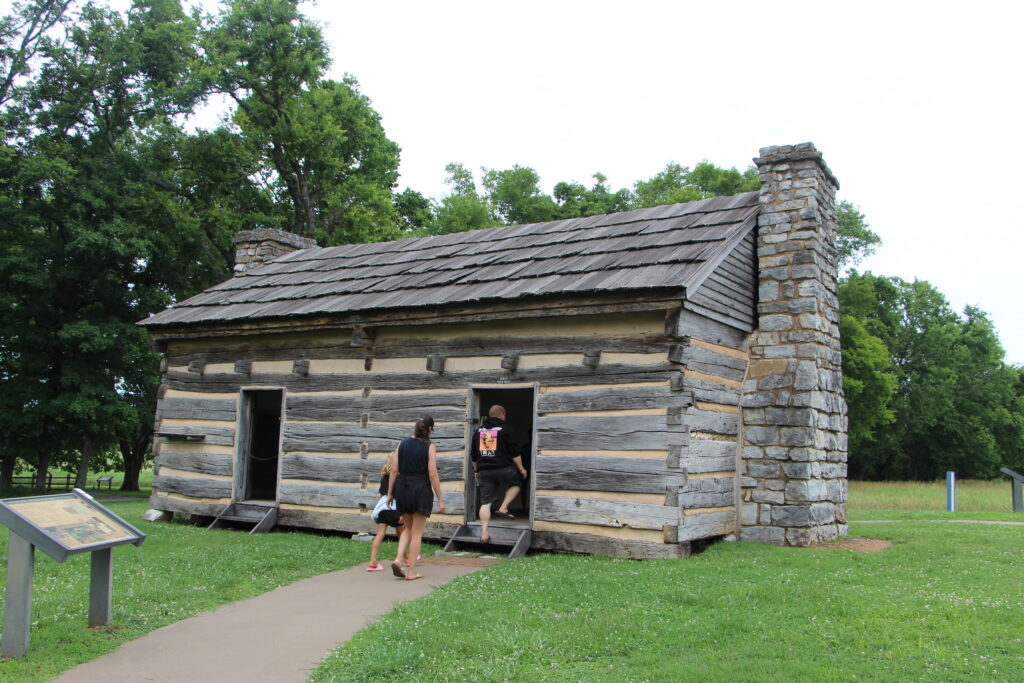
During the “In Their Footsteps” tour at The Hermitage, visitors never enter the looming Greek Revival mansion where U.S. President Andrew Jackson once resided.
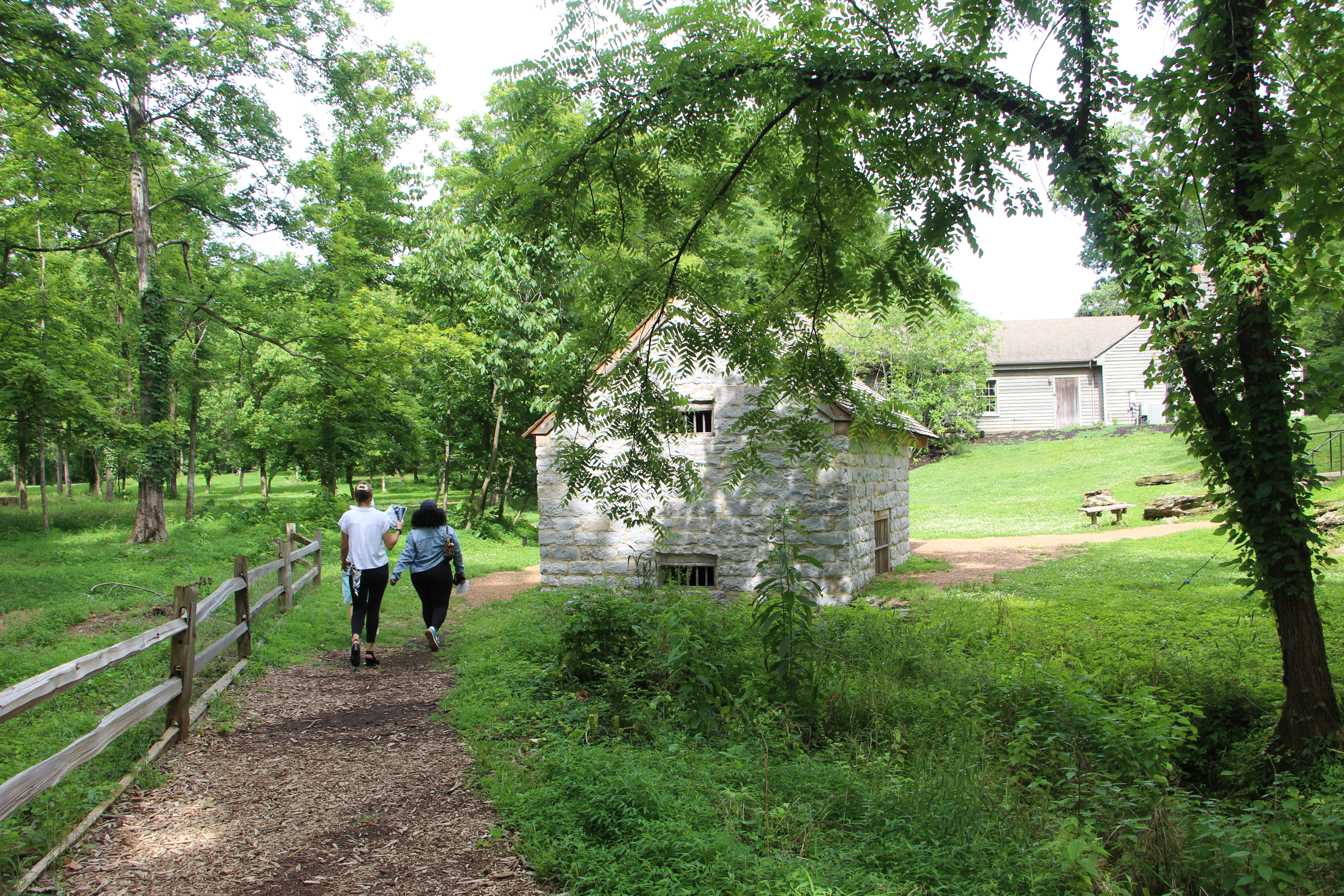
Instead, the tour travels through the living quarters of people who were enslaved there, along with the work yard, the stables, the spring house and the recently-discovered cemetery where many are buried.
This is part of the updated tour The Hermitage is launching this summer. Instead of highlighting the Jacksons, it puts more focus on the lives of those who were enslaved by the seventh president and his family.
Slavery caused immeasurable harm, in ways that are still playing out today. And that poses a challenge for The Hermitage to find a way to portray that history without perpetuating the pain. The new tour is not pleasing everyone — including some historians and descendants.
Jackson’s legacy
A previous iteration of the tour did take visitors into Jackson’s presidential mansion. But curators decided on a change.
“We found that there was too much emphasis on Jackson’s realm and the enslaved people who worked in it,” said Cody Youngblood, the director of visitor experience. “We wanted to focus on the enslaved people’s world and how the Jackson’s fit into that.”
 Cynthia Abrams WPLN News
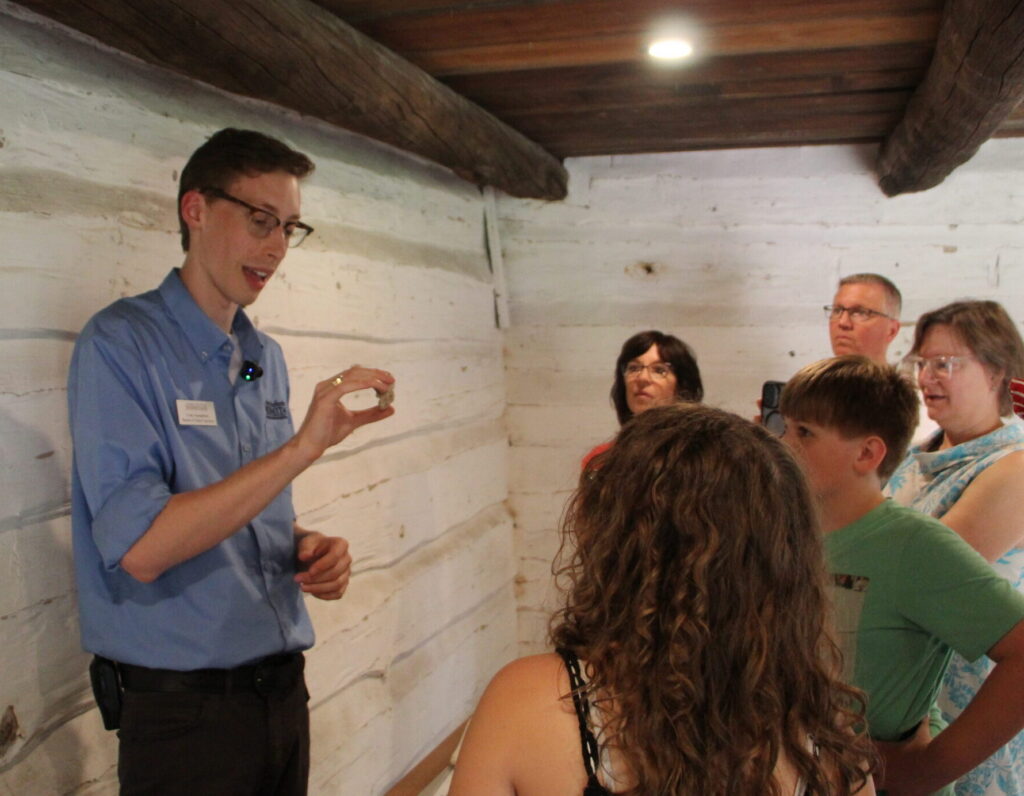
Cody Youngblood, the director of visitor experience at The Hermitage, leads the revised “In Their Footsteps” tour.
Youngblood says the revised tour fills in more facets of Jackson’s life.
“We have been more open and honest about the abuses that Jackson ordered — physical, psychological,” Youngblood said. “We wanted to tell the fuller, more difficult history, because Jackson’s wealth — Jackson’s fame — could not have occurred without enslaved workers.”
It’s not always a pretty portrayal: Youngblood passes around a copy of a violent advertisement where Jackson offered financial incentive for the beating of an enslaved person.
He describes the work yard, where there were no trees, as a “place of surveillance,” and where Jackson “made his money on the backs of coercive labor.” He reads from a letter authored by Jackson ordering the public whipping of a woman who washed neighbors’ clothes for additional money.
Jackson is known for his role in the War of 1812, and his two-term presidency. That’s when he paid off the national debt — and led the forced removal of Indigenous Americans along the Trail of Tears. Over the course of his life, Jackson and his family enslaved more than 300 people.
Some of this information is inevitably new to Hermitage visitors. Laura Ankenman took the tour during a road trip from Indiana with her grandchildren.
“If we don’t learn from history, we do it again,” Ankenman said. “We’ve proven that.”
Expert skepticism
Bridgette Jones is an Atlanta-based historian, and the descendant of people who were enslaved near Memphis. She previously worked at the Belle Meade Plantation, where she crafted the “Journey to Jubilee” tour about enslavement.
Jones says these tours are an opportunity to make sure institutions are being honest about American history.
“So much of where America is right now is rooted in the traumas of yesterday,” Jones said. “Who were the people in power, and how did they use that power? Were they using that power for good or for evil, and who did they disenfranchise along the way? What communities were not included in that ‘We the People’ when ‘We the People’ was written?
“Because I do think that it is America’s promise and responsibility to own up to that.”
The Hermitage has faced its share of criticism over the years. Before 2018, there was no guided tour about slavery.
But Jones said that some aspects of the new tour are still missing the mark. She pointed out that no historians of color were directly involved in developing the tour.
“While it is American history, those experiences were experienced by Black people,” Jones said. “I think it’s lazy. Because there are so many historians right there in Nashville you could have engaged.”
In a statement to WPLN News, The Hermitage says the tour is informed by “more than four decades of archaeological research, historical scholarship, documentary evidence, and ongoing study of the lives of the enslaved community at The Hermitage.”
Leadership points to two National Endowment for the Humanities-funded scholar panels it has convened, as well as recent scholarship integrated into its programming.
‘Capitalism has always exploited us’
There is also the matter of the profits.
A tour ticket costs nearly $50 (and includes the price of admission). The Hermitage told WPLN News that revenue goes back into preservation of the site, and education — like research, staffing, training and interpretation.
But Jones said proceeds should be going toward descendants.
“It’s my belief that if you are selling tickets to a tour that is about slavery, then that institution is still profiting off of enslavement,” Jones said. “Which is still an ethical dilemma.”
She is not alone.
Jamel Campbell-Gooch is a community organizer in North Nashville. His ancestor is Esquire Hayes, who was enslaved by Jackson, and who is mentioned on the tour. Campbell-Gooch says he’d like to see a fund go towards scholarships for descendants, given that the economic legacy of slavery persists.
“I have never met a descendant of Andrew Jackson, and I’m pretty sure the reason why is because they occupy whole different economic bracket than I will ever occupy,” Campbell-Gooch said. “And the reason that they occupy that is because they were able to exploit my ancestors for decades.”
But even before profits, Campbell-Gooch says one crucial thing is missing from The Hermitage: an apology.
“They have never officially apologized for the harm that they have caused generations of the descendants of African chattel slaves,” Campbell-Gooch said. “My suggestion is that before they make our descendants a spectacle, right — before they make us a Southern trope or before they exploit us in the same way that capitalism has always exploited us — maybe they should consider apologizing or just recognizing the harm publicly.”
 Cynthia Abrams WPLN News
The cabin of Alfred Bradley Jackson is included on The Hermitage’s “In Their Footsteps” tour.
Without an apology, he says, a tour feels “exploitative.”
“For me, my family doesn’t want to go there,” Campbell-Gooch says. “Once they found out that they were actually enslaved there, they don’t want to be in that space, right? Because it’s a space of tremendous harm.”
In response to WPLN, the institution’s leadership acknowledged the “deeply personal responses” of descendants.
“Our goal is to ensure that the stories of the enslaved community are told with increasing depth, accuracy, and humanity while continuing to listen, learn, and evolve,” wrote Jason Zajac, president and CEO of the Andrew Jackson Foundation.
‘Not that long ago’
Campbell-Gooch says among descendants, there are a variety of perspectives.
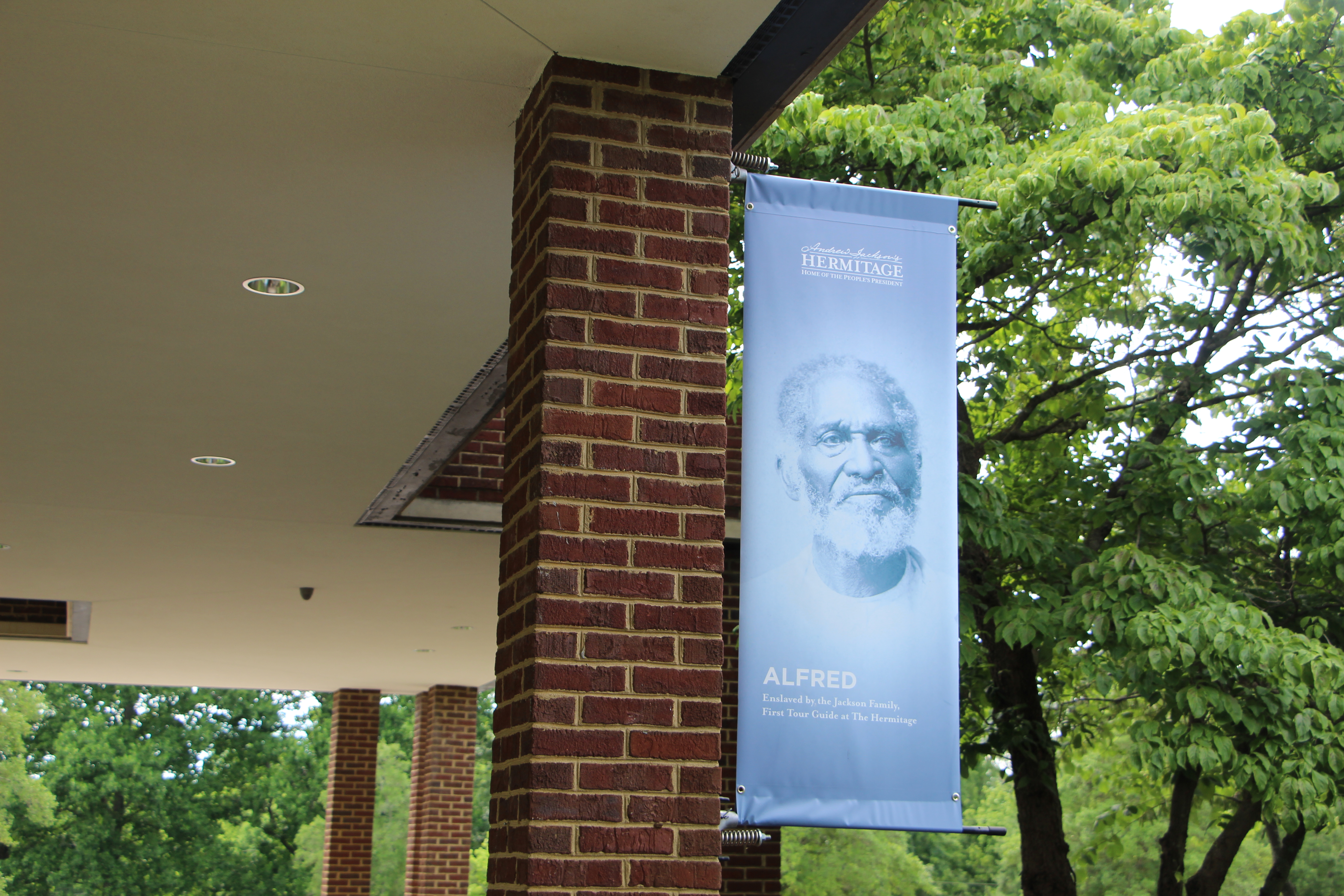
Courtney Clayton and her mother Beverly are related to Alfred Bradley Jackson, who was enslaved by Jackson — his cabin is where the tour begins. Beverly once attended reunions held by the Hermitage (she says they have since ceased).
Meanwhile, Courtney says she has mixed feelings.
“I don’t mind you doing the tour, but you need to tell the truth about what actually happened and how it happened and how those actions have affected generations on down,” Courtney said. “Candidly, I don’t want the whitewashed version.”
But that can be difficult to do, Clayton says, when people of color have been cut out of history for decades.
The Claytons agree with Campbell-Gooch: they want to see more effort from the Hermitage — like the scholarship idea, or help with keeping lineages up-to-date.
“I’m proud of my lineage,” Beverley said. “I’m proud just to know, because not too many people can reach back and be able to find, ‘Hey, this is my ancestor. He did this and he did that.’ … I’m passing it on to my children so they will know where they came from and the sacrifices that were made.”
And Courtney says that efforts today are important, given that the ramifications of slavery are still playing out.
“Slavery was not that long ago,” she said. “You have living people quite literally walking around the city of Nashville that are descendants of these people … I encourage the people visiting to think about those things and just, like, do better. Be better.”
 Cynthia Abrams WPLN News
The “In Their Footsteps” tour at The Hermitage takes visitors past the property’s spring house.

 On Air - 90.3 WPLN-FM