
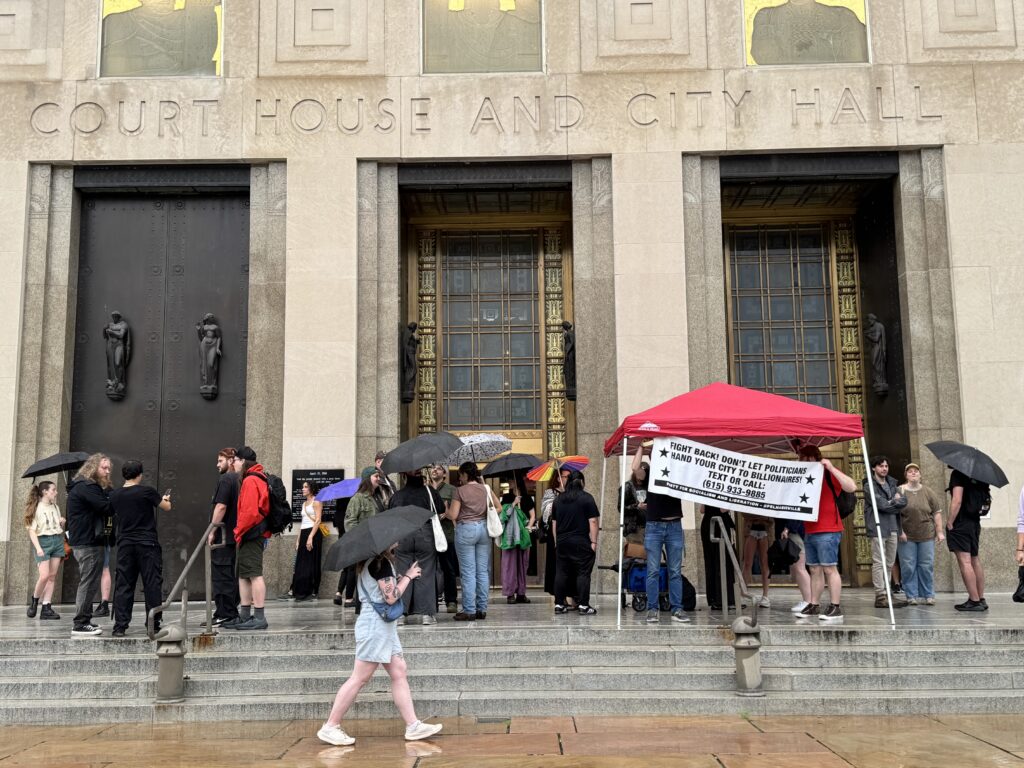
A data center planned near the Nashville Zoo may still be able to muscle through legal hurdles, new city legislation and an enormous wave of community pushback.
Nashville Mayor Freddie O’Connell and other city officials are trying to block the project proposed by DC BLOX, with several pieces of legislation moving forward this week.
But the company is pressing ahead with its plans to build a more than $700 million facility. Here’s what to know.
Metro Council advances ordinances to regulate data centers
The Metro Council advanced four measures targeting data centers this week, but it is unclear if any could halt the project.
Two bills proposed by Councilperson Rollin Horton would set up new regulations for data centers, including zoning rules that would restrict a project of that size near a zoo or other sensitive spaces like schools, parks and daycares. Another bill proposes a moratorium to allow time to set up new regulations, but that would be moot if Horton’s measures pass. The council is scheduled to consider these bills on final reading on July 21.
However, even if the bills pass before DC BLOX is able to move ahead with next steps for the project, the company’s plans may be unaffected — because of a recently amended state law concerning “vested rights doctrine.” A developer can argue that they have “vested rights” to a project if they filed for a permit before local regulations changed. A few weeks ago, DC BLOX filed with the city’s codes department for a building permit in an area currently zoned for industrial facilities. That means any new zoning laws might not apply under the vested rights doctrine. But this could all become subject to court challenges.
 Caroline Eggers WPLN News
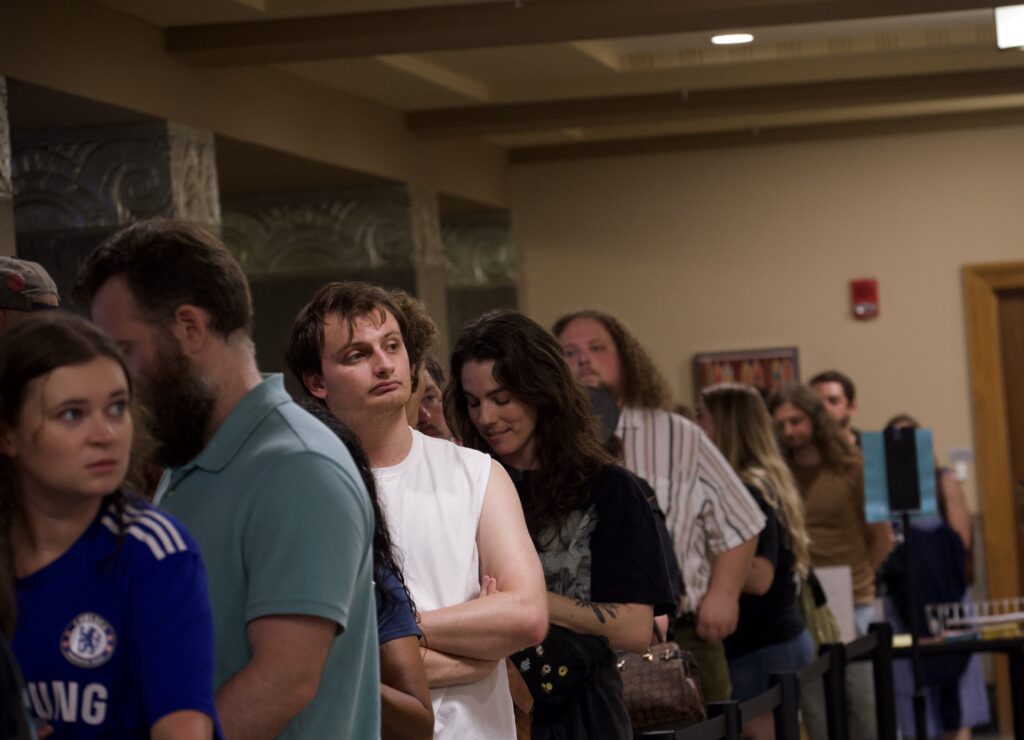
Hundreds of people waited in line for hours to speak in front of Nashville’s Metro Council on July 7, 2026.
Then there’s the fourth bill, which comes from Mayor O’Connell. He filed eminent domain legislation to buy the property where DC BLOX intends to build its data center, but DC BLOX could buy that land sooner.
The mayor’s bill passed on the first of three readings Tuesday, and at the earliest, the Metro Council could finalize its approval on Aug. 3. Then, the city could begin legal action to obtain the property. Whether that effort succeeds could hinge on whether Metro can prove a public purpose for the land.
‘Divorced from reality.’ Nashville mayor disputes DC BLOX collaboration claims
A few hours before Tuesday’s council meeting, DC BLOX issued a statement about meeting with the mayor and Nashville Zoo leaders to discuss environmental guardrails for the project.
DC BLOX said it made commitments to reduce noise, control pollution and pay its fair share for energy.
But shortly afterwards, Mayor O’Connell said that’s “wishful thinking,” even “divorced from reality,” calling it a PR play and possibly an attempt to influence the council’s votes.
“The timing would suggest an attempt to disrupt tonight’s Council votes on data center legislation,” Mayor O’Connell said in a statement.
Who is DC BLOX?
DC BLOX is an Atlanta-based developer with 23 data centers in operation or development, according to the company. It plans to purchase a 24-acre site in Nashville’s Grassmere Park from a local developer, Market Street Enterprises, for about $23 million in July. The company has estimated that the project will total more than $700 million.
DC BLOX is owned by a group of investors, including Future Standard, which manages more than $90 billion in assets. DC BLOX has secured multiple loans worth more than $1.5 billion for its data center buildout in the US. Earlier this year, it secured about $240 million in “holdco” financing from BlackRock subsidiary Global Infrastructure Partners, which will basically raise debt on behalf of DC BLOX to help fund its buildout.
Nearly 200 people speak in favor of restricting data centers
The project has faced considerable pushback from the Nashville community and Tennessee politicians and celebrities, including gubernatorial candidate Sen. Marsha Blackburn and country singer Brad Paisley. A petition created by the Nashville Zoo opposing the project had more than 540,000 signatures on Wednesday.
Nearly 200 people spoke before Nashville’s Metro Council Tuesday night to support new data center regulations. Folks began filing into the Metro Courthouse that afternoon to get tickets to speak hours later during a meeting that stretched well past midnight — a few weeks after many residents stood in line outside in 93-degree heat to speak in front of Nashville’s planning commission.
“The toll it takes on our grid and our water supply isn’t sustainable. I think this is a step in the right direction to say this industry needs to be reined in,” Nashville resident Adam Nicholson told WPLN.
Rita Pfeiffer, from Nashville, said the proposed regulations will not be enough.
“I wonder why we are once again reactively drafting rushed policy because of public outrage instead of proactively planning for our future,” Pfeiffer said. “Our infrastructure is already strained and outdated.”
Many people spoke out against the DC BLOX project specifically and expressed support for the Nashville Zoo and its critters.
 Courtesy Nashville Zoo
 The Nashville Zoo says a neighboring data center could impact endangered wildlife housed at its facilities.
The proposed data center campus is located near endangered animals, including clouded leopards at the Nashville Zoo and, in nearby streams, the native Nashville crayfish, according to the Center for Biological Diversity and the Southern Environmental Law Center. Together, they’ve sent a letter to the city and DC BLOX.
Noise and light disturbances from the site could alter breeding patterns and other behaviors of the crayfish in Mill Creek and its tributaries, according to the groups, which could be illegal under the Endangered Species Act.
“Innovation and technology should not come before humans, animals or the environment,” Olivia Pace, from Williamson County, said Tuesday night. “I’m certain the animals that live in the zoo and the humans that live near the zoo do not want air, water or soil polluted from a proposed data center.”

 On Air - 90.3 WPLN-FM