
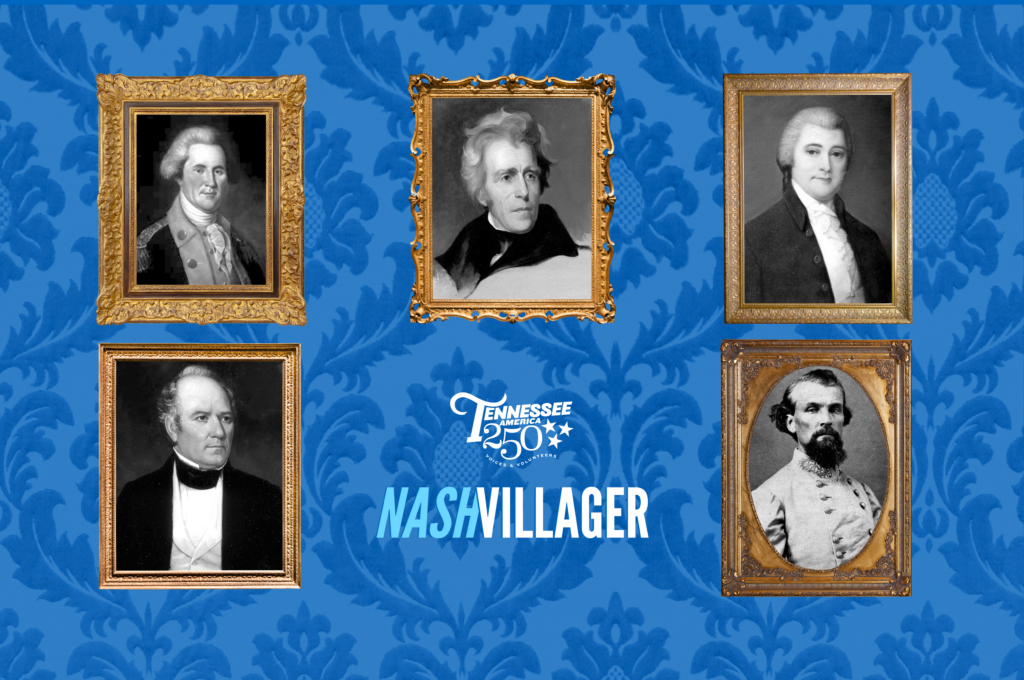
Nobody’s perfect. That’s true even — and perhaps especially — for people in public office. For as long as there have been politicians, there have been political scandals and controversies. And Tennessee is no exception.
In this installment of The Backstory, we have collected the stories of several early leaders of Tennessee who got caught up in scandals, violence and conspiracy. We highlight these stories of bad behavior not to condemn or exonerate any particular character, but to better understand some of the figures that have helped shape our state and recognize the lasting marks they’ve left.
Each of these stories are curated from the backlog of the NashVillager Podcast, a daily digest of what’s going on in Middle Tennessee with a healthy dose of history and context.
This project is funded under an agreement with the State of Tennessee administered by the Tennessee Commission for the United States Semiquincentennial.
1. Tennessee Governor John Sevier squares up for an (almost) duel with Andrew Jackson
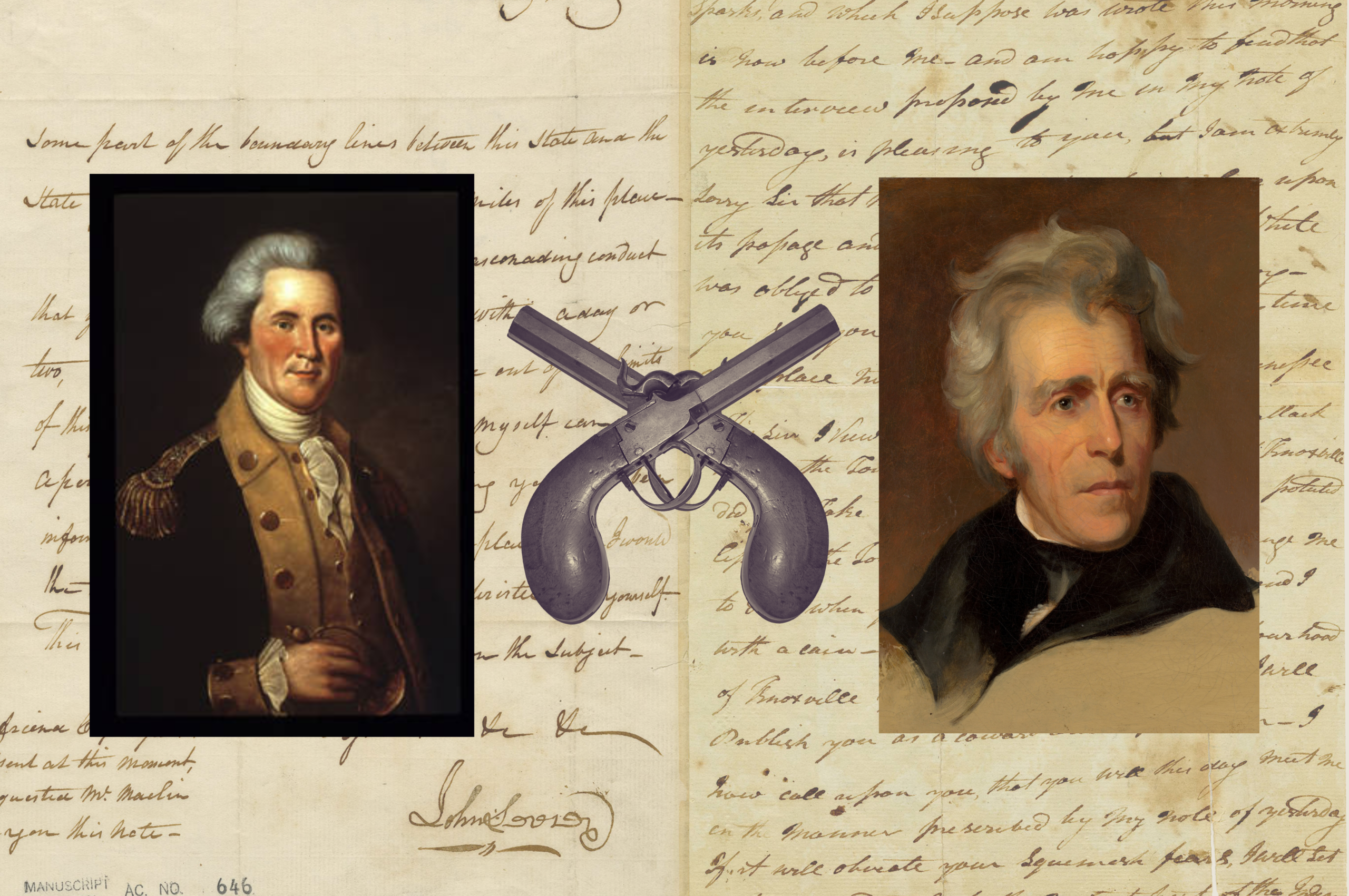
Two of Tennessee’s highest ranking officials once met for an illegal duel following an argument in Knoxville.
Back in 1803, Andrew Jackson was not yet president or general, but he was serving on Tennessee’s highest court. And John Sevier was finishing his first term as governor, running for a second. On Oct. 1, both men were in Knoxville. Sevier was giving a speech just outside the courthouse, and Jackson came outside to see what was going on. These men did not like each other. When Sevier saw Jackson, he began launching insults, including a spicy one about Jackson’s wife, who had not legally divorced her previous husband before marrying him. The argument devolved into violence, with Sevier drawing his sword, Jackson threatening with a cane, and their friends fired shots, grazing one person in the crowd.
While they didn’t come to blows that day, they planned to in the future. Jackson challenged Sevier to a duel in a letter, and he accepted. They corresponded back and forth launching more insults and deciding where they would hold the duel, which was illegal in Tennessee. They eventually did meet to duel, but their friends convinced them to call it off. However, Jackson did duel a Nashville lawyer two years later and killed him.
As host Nina Cardona explains in the episode, it’s easy to dismiss dramatic stories like these as simply products of their time. But dueling wasn’t widely accepted in 1803 either. And both Sevier and Jackson likely thought their high positions would protect them from the consequences. Cardona also points out a silver lining to stories like these: people have the power to set up new guardrails. Case in point: in 1834, Tennessee’s second constitution barred people who participate in duels, or even send out a challenge, from serving in public office.
2. Founding father William Blount attempts treason
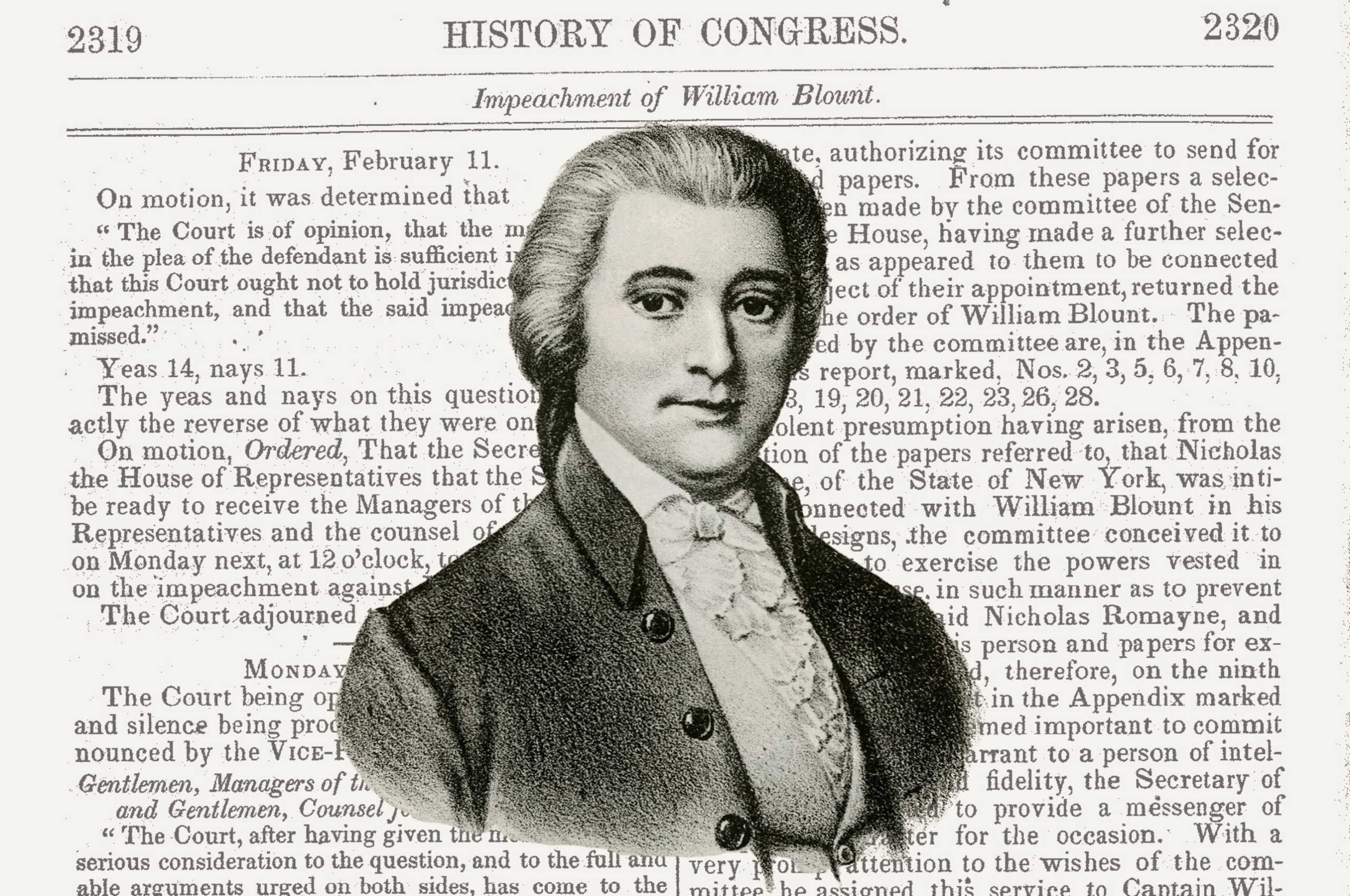 Courtesy Tennessee State Library & Archives and U.S. Congress
 U.S. Senator William Blount of Tennessee became the first senator ever expelled from Congress after plotting against America’s ally, Spain, with the British.
William Blount was a founding father of the United States and Tennessee and a land speculator who had made a fortune off of land that later became Tennessee. That business model led him to buy property stretching from the Carolinas to the Mississippi River and all the way down to the Gulf of Mexico. Some of that land was under the jurisdiction of the U.S., but other parcels were under Spanish control. When he became a Senator for Tennessee in 1797, creditors came knocking about some of those latter properties in modern day Florida, Mississippi and Louisiana. He tried to use his status as a Senator to buy him more time. And then he resorted to a more underhanded approach.
In July of 1797, Blount was busted for plotting to help the British take control of Spain’s territory. The move would have made the land more attractive to English-speaking buyers and likely made him a lot of money. At that time, Spain was an ally to our young nation, and the dust had barely settled after the bloody Revolutionary War against the British. President John Adams’ cabinet had been investigating the conspiracy, and found a letter written in Blount’s hand spelling out the timing of the plan, describing the ways he manipulated the leaders of the Creek Native Americans, and confirming that their group had a man on the ground in England.
The Senate swiftly expelled him from the chamber, and ended up missing its opportunity to impeach him for high crimes and misdemeanors. Congress had never expelled one of its own before. So while Blount himself was not impeached, he was the catalyst for figuring out the order of operations in future impeachment trials.
3. Governor Sam Houston flees the state, earns the nickname “Big Drunk”
 Public domain
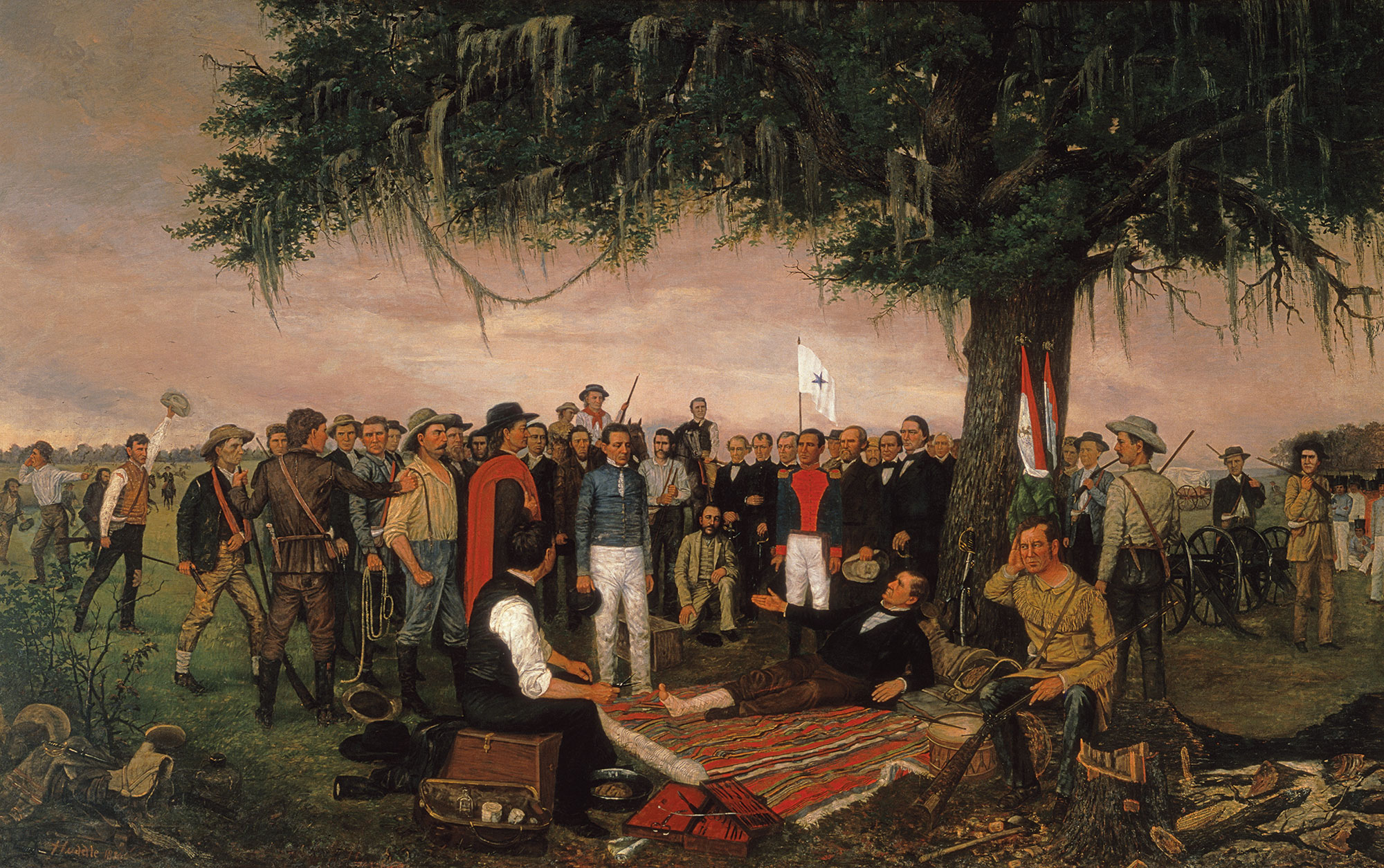
 This painting from William Henry Huddle depicts the moment Sam Houston accepted the surrender of Mexican forces, making Texas an independent nation. Houston was elected as its first president and later served as governor after Texas became a state.
Before he became the first elected president of the Texas Republic, Sam Houston had a political career in Tennessee. He grew up in Maryville, and as kid he’d often run away from home to a nearby band of the Cherokee nation. While he was there, the Cherokee taught him their language and customs, and a man named Oolooteka took Houston under his wing. That relationship ended up being important later in his life.
One of Houston’s other big mentors was Andrew Jackson. With Jackson’s guidance Houston quickly climbed the ranks of state politics. He developed a reputation for giving great speeches — and for getting very drunk. He represented Tennessee in Congress and eventually became governor of Tennessee.
But just after announcing his bid for reelection, he married a woman from a politically influential family. And just 11 weeks later, for reasons that remain mysterious, he resigned as governor and fled Tennessee. He went all the way to Oklahoma, where his second father, Oolooteka had been forced during Jackson’s Trail of Tears. The Cherokee took him in as they had when he was a child and made him a member of the tribe. But one of Houston’s old habits followed him to Oklahoma. He earned a new nickname there that translates to “Big Drunk.”
4. Slave dealer and Confederate General Nathan Bedford Forrest
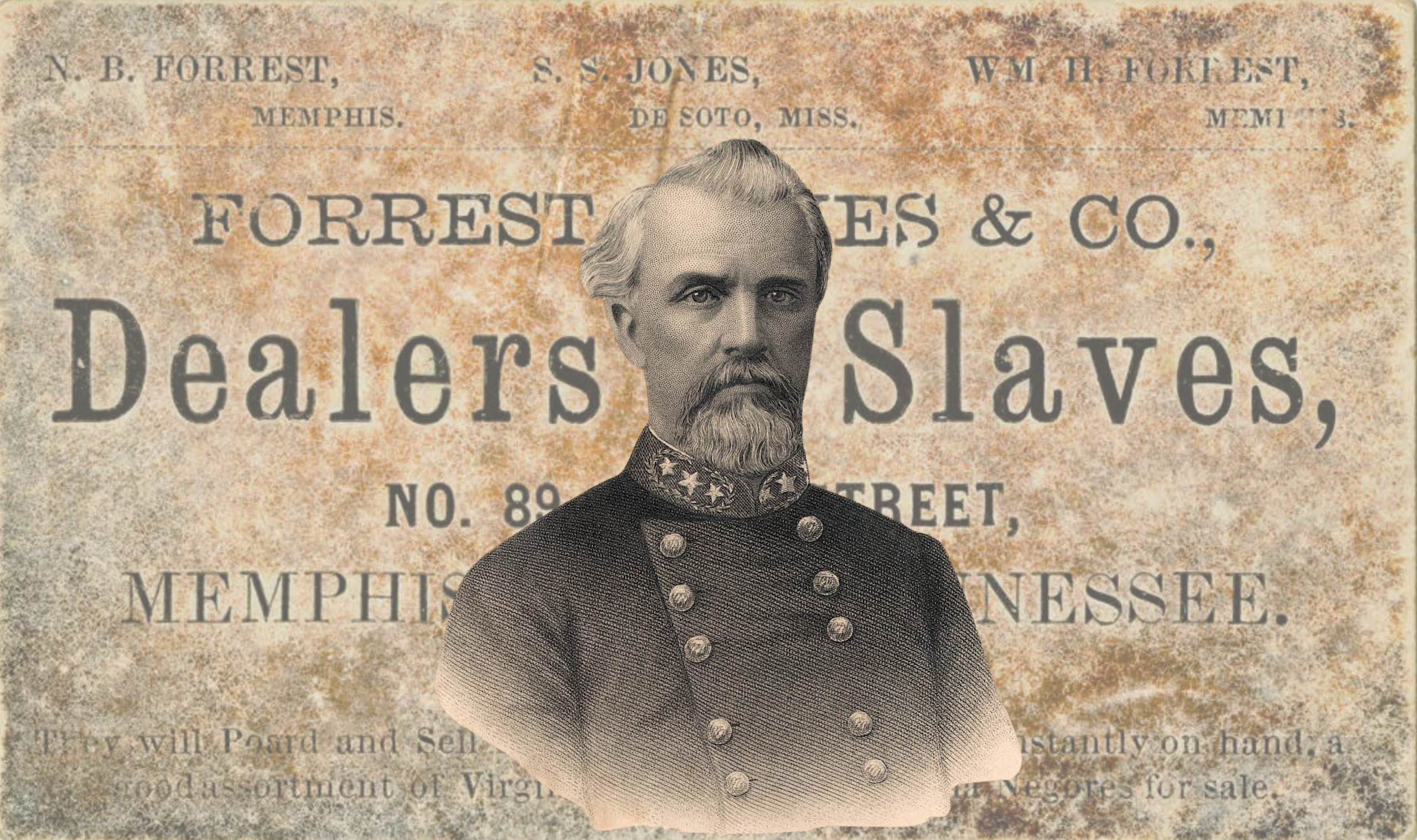 Courtesy Tennessee State Library & Archives
 A drawing of Nathan Bedford Forrest appears over an advertisement of his Memphis-based business trafficking in enslaved people.
Anybody who’s been in Tennessee long enough has seen something associated with Nathan Bedford Forrest: a statue, a building, a street or subdivision. Forrest grew up poor in Chapel Hill, Tennessee before moving to Memphis to make his fortune as a slave dealer. Then, during the Civil War, he became a general who employed guerrilla tactics against the Union. He also led the Battle of Fort Pillow, which most modern historians recognize as a massacre of mostly Black Union soldiers.
As Cardona explains in this episode, Forrest’s name is ubiquitous in Tennessee in part because he’s the local guy and partly because Confederate apologists can shape his legacy to their liking. He was likely mostly illiterate and left no journals explaining his motivations. So what we’re left with are his few recorded interviews and speeches, the things other people said about him and his own track record.
As Tennessee continues to reckon with Forrest’s legacy, there have been many efforts to remove his name and image from places of honor. His bust was moved from the state house to the Tennessee State Museum. His name remains on the Army ROTC building at Middle Tennessee State University. Many of those who oppose the removals argue they’re an attempt to erase history. Cardona asks what history that is and whether it’s being represented in its totality.
 On Air - 90.3 WPLN-FM