

Some states get a lot of recognition for their influential roles in our country’s history. Places like Pennsylvania, New York and Massachusetts occupy large portions of American history books for the pivotal parts they played when the United States was in its infancy. Tennessee has done its fair share of influencing as well.
In honor of America’s 250th birthday, we want to highlight some of the key ways Tennessee has shaped the nation, through presidents, a Supreme Court case and even amendments to the U.S. Constitution. In this installment of The Backstory, we take you through five moments Tennessee changed the trajectory of the nation — and how those changes are still visible today.
Each of these stories are curated from the backlog of the NashVillager Podcast, a daily digest of what’s going on in Middle Tennessee with a healthy dose of history and context.
This project is funded under an agreement with the state of Tennessee administered by the Tennessee Commission for the United States Semiquincentennial. If you missed our first installment, find it here.
1. The Indian Removal Act and the Trail of Tears
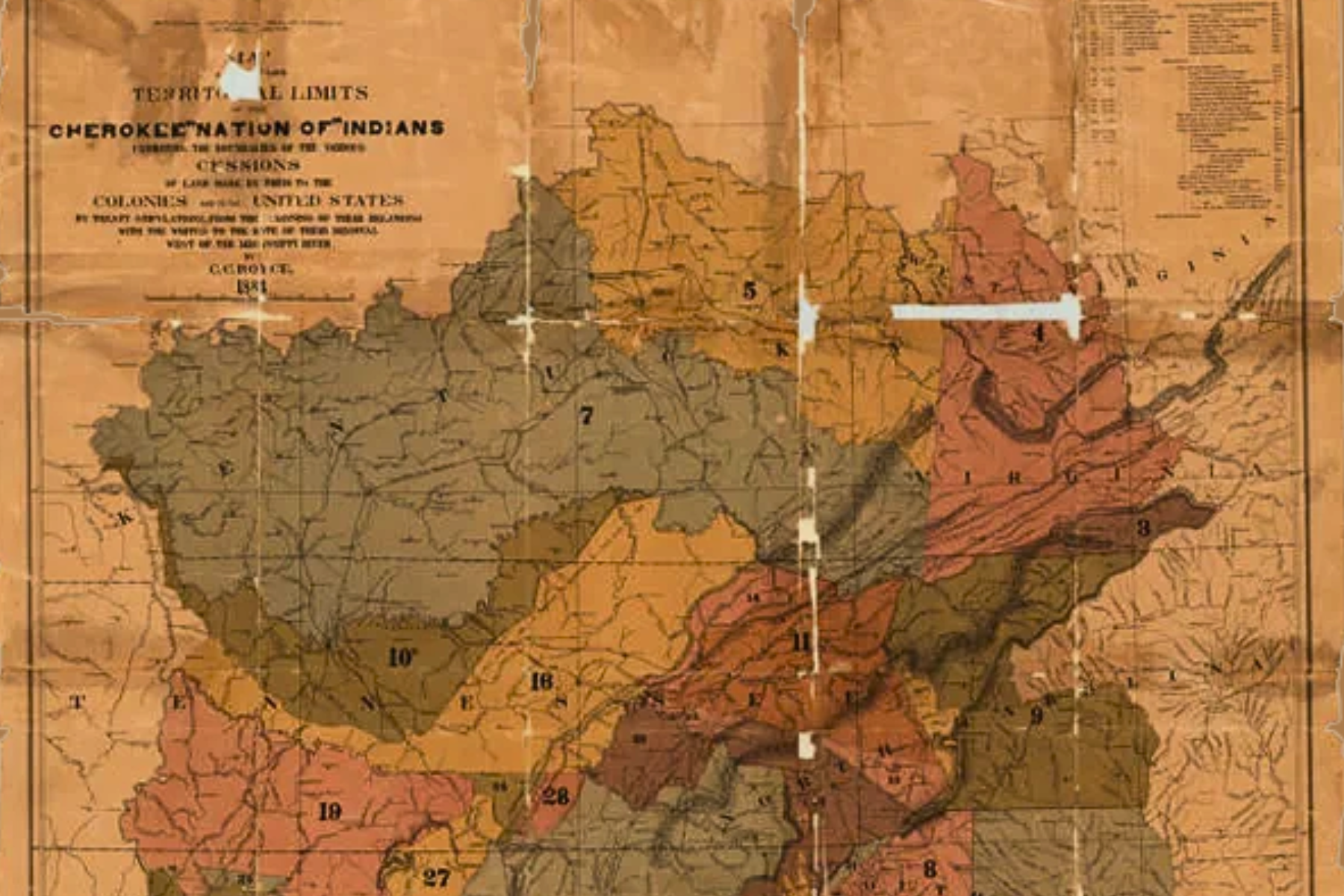 Courtesy of Tennessee Virtual Archive (TeVA)
 Map of the former territorial limits of the Cherokee Nation of Indians.
Long before Tennessee became a state, the Southeast was inhabited by tens of thousands of indigenous people. This region’s mountains, hills, grasslands and swamps were occupied people belonging to the Cherokee, Creek, Chickasaw, Choctaw, and Seminole nations. In this episode, host Nina Cardona marks the day in 1830 when President Andrew Jackson of Tennessee signed the Indian Removal Act, forcing them to leave their ancestral homelands and move to what is now Oklahoma. The paths they took became known as the Trail of Tears. And as Cardona explains, those paths varied widely depending on the group traveling and the time of year they were making the treacherous journey.
Despite the enormous size of the groups walking through Tennessee, the forced displacement got very few mentions in local newspapers, and many white settlers seemed to turn a blind eye. For years after, people tried to pretend it didn’t happen. But the tribes who were expelled never forgot. And little by little, more markers and memorials are going up to remember the places where families were forced to flee.
2. The Memphis Massacre and the 14th Amendment
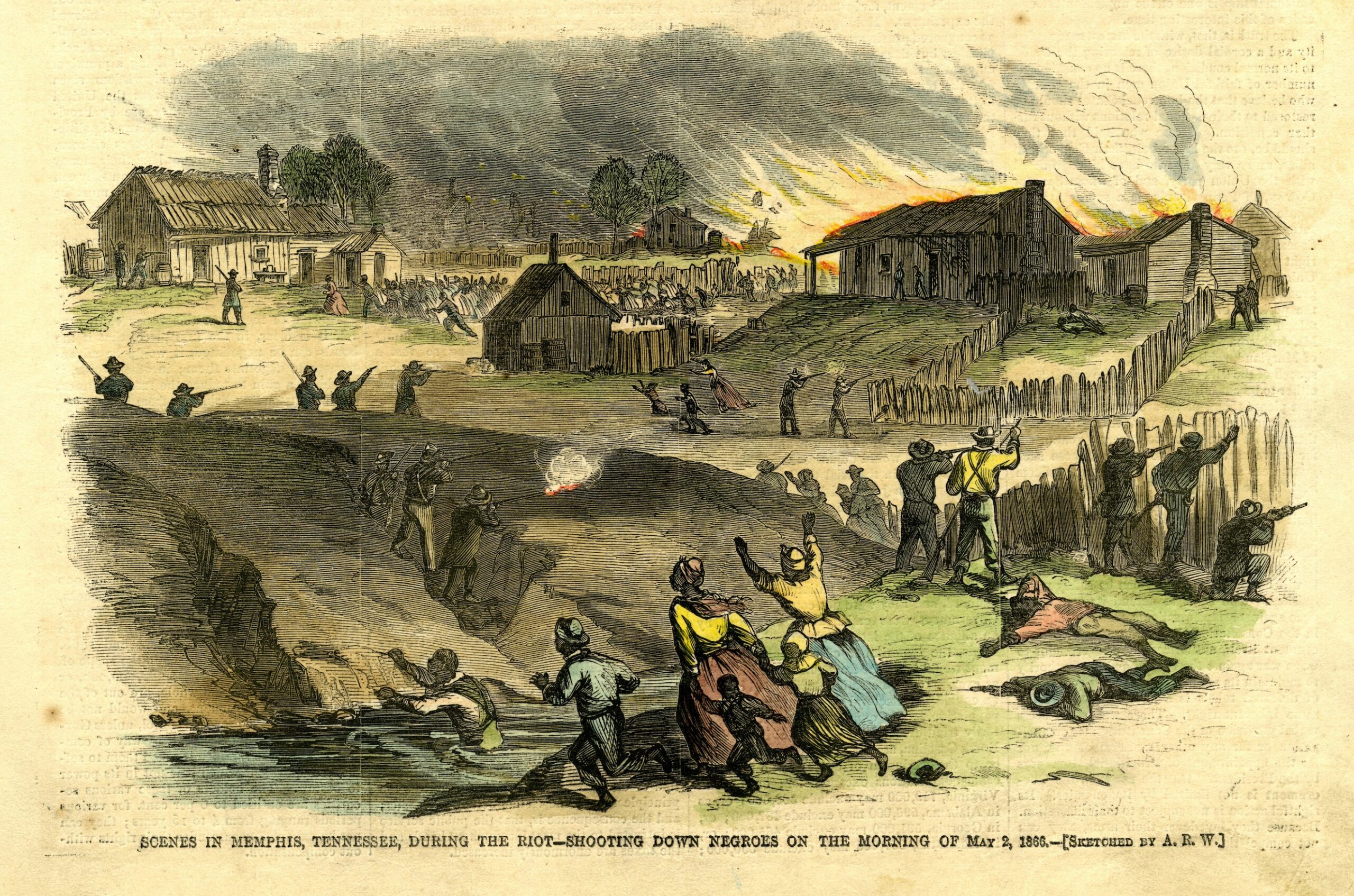
An illustration from Harper’s Weekly depicts the burning of a Freedmen’s Bureau and shooting of Black people in Memphis shortly following the end of the Civil War.
On May 1, 1866, a brutal massacre of the Black residents of Memphis began. The mob wiped out every single Black church and school in the city and killed dozens of people. The massacre started about a year after the end of the Civil War, just as the Union army was beginning to thin its ranks. Black soldiers were being decommissioned and getting paid for their service, which aggravated racial tensions in a South that was still struggling economically after losing the war.
In this episode, Cardona shares how what started as a sidewalk scuffle turned into three full days of violence. During the riot, one Memphis official encouraged white residents to kill all Black people they saw and run the survivors out of the city.
The massacre scandalized the nation and prompted a Congressional investigation. A committee traveled to Tennessee to interview nearly 200 people about what happened in an effort to make sure it didn’t happen again. But not long after it was published, a similar massacre took place in New Orleans. These events showed that racialized atrocities were not isolated incidents, but symptoms of a massive systemic issue, one that required a systemic solution. They galvanized Congress to pass the 14th Amendment, guaranteeing equal rights and equal protection under the law.
3. Tennessee ratifies women’s right to vote (with the help of a mother’s advice)
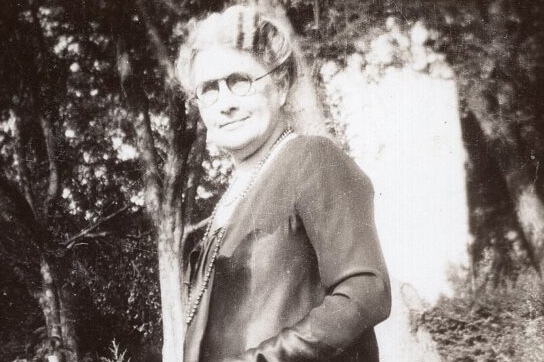 Credit Tboyd5150 via Wikimedia commons. Image cropped.
 Phoebe “Febb” Burn convinced her son to switch his vote in favor of women’s right to vote.
It really didn’t look like women’s suffrage was going to pass in Tennessee. On Aug. 18, 1920, the pro-suffrage camp appeared to fall short of the votes they needed to ratify the 19th Amendment to the U.S. Constitution. But a young lawmaker got a letter that from his mother, Phoebe “Febb” Burn, that changed the course of history. She wrote to her son, Harry Burn, who had publicly opposed women’s right to vote, urging him to change his mind. “Don’t keep them in doubt,” she told him, and “don’t forget to be a good boy.”
When the vote was called, Burn was a yes. And Tennessee became the state that solidified suffrage for women across the nation.
Despite this massive increase in representation, Tennessee’s voting record has lagged in more recent years. The state has one of the highest rates of disenfranchised voters, thanks largely to stringent rules on restoring voting rights for people with criminal records.
4. Baker v. Carr sets precedent for SCOTUS ruling on election maps
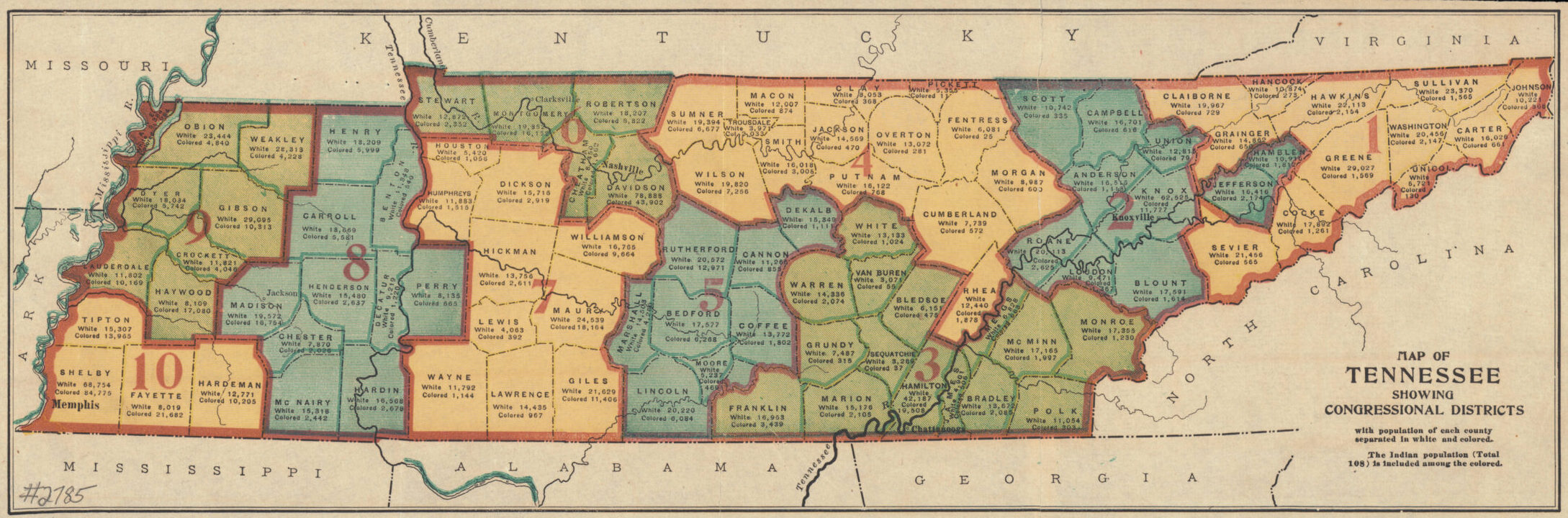
This archival map shows Tennessee’s Congressional Districts in 1920 which kept counties whole. That policy was later challenged in the Supreme Court case Baker v. Carr.
In recent years, Tennessee’s Congressional maps have made headlines for significant changes, altering the area, political and racial makeup of many districts. But there was a time when the maps stayed stagnant. Lawmakers let decades go by without shifting district lines, even though the voting population and demographics of those districts had changed drastically. That prompted a lawsuit against that state from a Memphis resident, claiming that Tennessee failed to offer appropriate representation.
The case, Baker v. Carr, ended up making it all the way to the Supreme Court. In 1962, justices found that Tennessee had clearly violated both the 14th Amendment of the U.S. Constitution and the state’s Constitution, which required districts to be revisited after every U.S. Census.
It ultimately meant that Tennessee needed to redraw its maps with the aim of creating equal voting power for each person. But it made a huge difference for other states across the country, too. According to the Supreme Court Historical Society, the Baker v. Carr decision set precedent that congressional redistricting is an issue that the court can rule on. And it paved the way for future cases in which the court would develop the “one person, one vote” standard.
5. A hijacking threat to Oak Ridge changed airport security forever
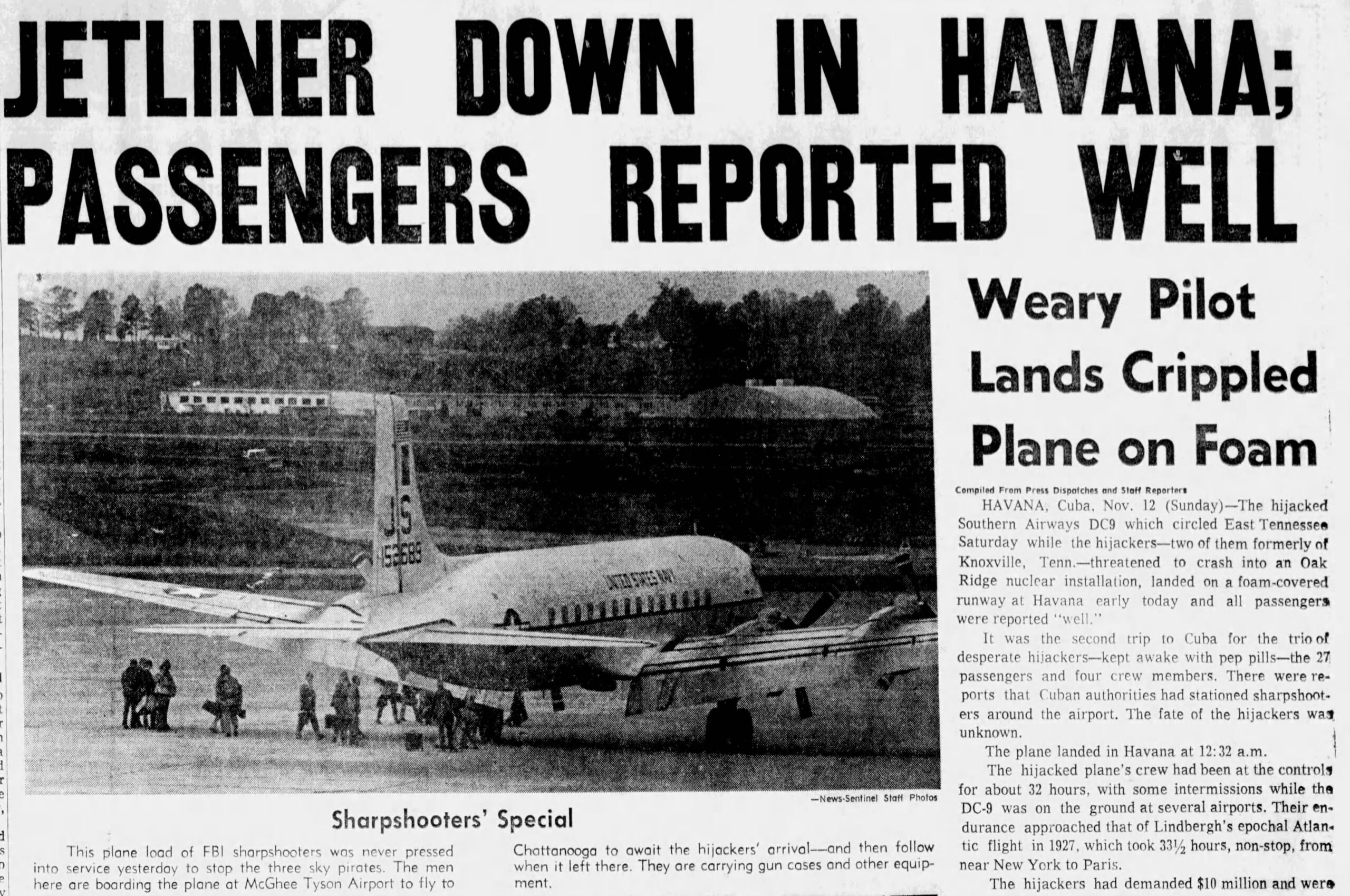 Knoxville News Sentinel via Newspapers.com
 The hijacked plane made the front page of the Knoxville News Sentinel on November 12, 1972.
Before airports required you to take off your shoes and limit liquids, you still had to pass through metal detectors and put your bag through an X-ray machine. But it wasn’t always that way. As Cardona explains in this episode, authorities implemented those early security measures after a wild hijacking that criss-crossed the country and at one point threatened Oak Ridge National Laboratory.
On Nov. 10, 1972, a Southern Airways flight was traveling from Memphis to Miami, with planned stops in Birmingham and Montgomery, Alabama. Shortly after takeoff on the second leg of the journey, three men with guns and hand grenades commandeered the plane. They demanded a $10 million ransom, initially from the city of Detroit, where one hijacker had a grievance against police. Then they forced the pilot to fly to to Cleveland, and eventually to Knoxville, the hometown of one of the hijackers. There, they threatened to crash the plane into Oak Ridge’s nuclear facility. Southern Airways eventually bluffed the hijackers, giving them $2 million in cash in Chattanooga. But the hijackers didn’t let the passengers free there. Finally, the ordeal ended in Cuba, after American authorities had shot the tires of plane’s landing gear. The plane landed on a runway prepared with foam, forcing an end to the chaotic chase.
American airports started screening passengers for weapons the next year.
 On Air - 90.3 WPLN-FM